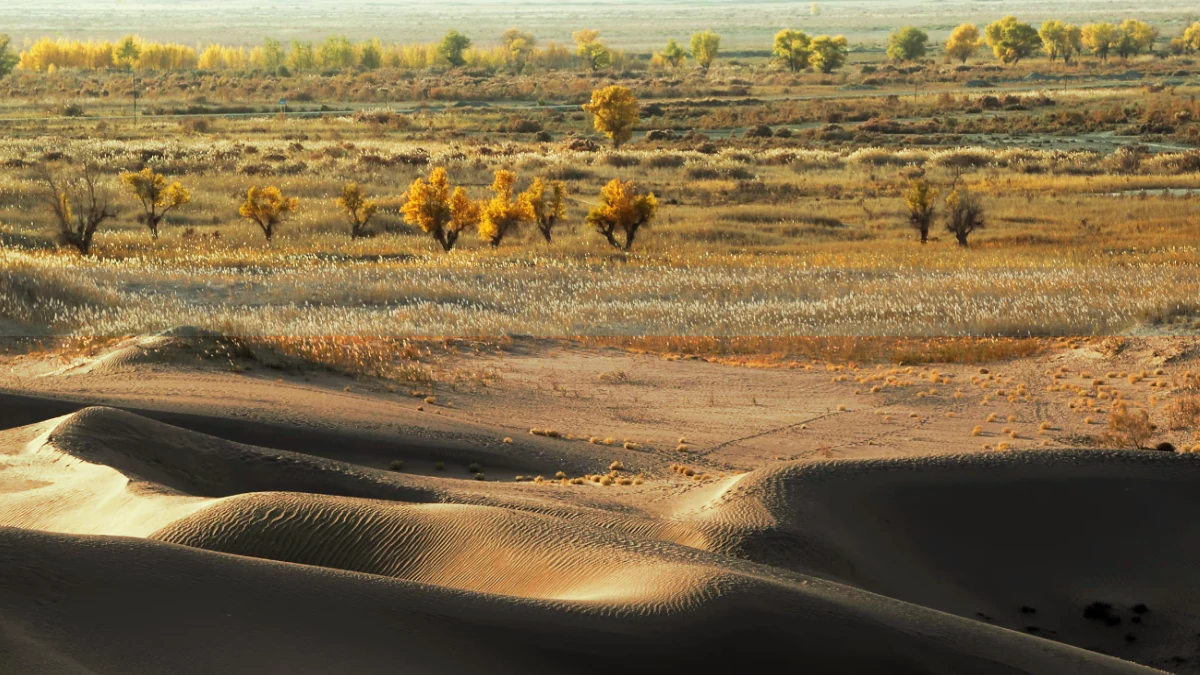
In the heart of China’s most unforgiving landscape, a remarkable transformation is underway. Where once endless dunes of shifting sand stretched as far as the eye could see, a vast forest now stands, absorbing carbon and breathing life into the once-barren Taklamakan Desert.
This ambitious project, part of China’s “Green Great Wall” initiative, is not just a triumph of human ingenuity, but a bold attempt to combat the devastating effects of climate change. By planting resilient, drought-tolerant trees across the desert, the government aims to create a natural barrier against desertification and turn the Taklamakan into a powerful carbon sink.
But as the trees take root and thrive, concerns are rising about the true cost of this environmental reclamation — both in terms of resources and the potential impact on local communities.
Reclaiming the Taklamakan: A Herculean Task
The Taklamakan is no ordinary desert. Spanning an area larger than the state of Florida, it is one of the harshest and most inhospitable environments on Earth. Scorching temperatures, punishing winds, and a complete lack of rainfall have long made the Taklamakan a formidable adversary to human settlement and cultivation.
Yet, undeterred by the immense challenge, China has mobilized a massive, coordinated effort to tame this unforgiving landscape. Thousands of workers have been deployed to the region, armed with specialized equipment and a steadfast determination to transform the Taklamakan into a thriving, tree-covered oasis.
The key to their success lies in the careful selection of tree species that can withstand the Taklamakan’s harsh conditions. From hardy, drought-resistant poplars to resilient Chinese pine, these carefully curated trees are not only surviving, but thriving in their new desert home.
Harnessing the Power of Photosynthesis
As the trees take root and grow, they are playing a crucial role in combating climate change by sequestering vast amounts of carbon dioxide from the atmosphere. Through the process of photosynthesis, these trees are transforming the Taklamakan into a natural carbon sink, absorbing and storing the greenhouse gases that are driving global warming.
Experts estimate that the Taklamakan’s reforestation efforts could potentially remove millions of tons of CO2 from the atmosphere each year, a significant contribution to China’s ambitious climate goals. The impact of this project, if successful, could reverberate far beyond the desert’s borders, offering a blueprint for large-scale, nature-based solutions to the climate crisis.
- ➡The Shocking Trick to Bake the Richest, Fudgiest Chocolate Cake (No Mixer Required)
- ➡The Explosive 6.7 Billion Euro Deal That Could Change the Future of Indian Air Power
- ➡The Shocking Truth About This Year’s Extreme Polar Vortex Disruption in the Arctic
- ➡Millionaire vs Skeptic — The Surprising Winner That Silenced the Doubters
However, the true scale of the Taklamakan’s carbon sequestration capabilities remains to be seen, as the long-term viability and growth of these desert-adapted trees is still largely untested.
Confronting the Water Challenge
One of the most significant obstacles to the Taklamakan’s reforestation efforts is the scarcity of water. In a region that receives less than 50 millimeters of rainfall annually, sustaining a thriving forest poses an immense logistical and environmental challenge.
To address this issue, the Chinese government has invested heavily in innovative water management techniques, including the construction of extensive irrigation systems and the use of desalination technology to convert brackish groundwater into a reliable source of freshwater. However, the long-term sustainability of these water-intensive practices remains a source of concern for both environmentalists and local communities.
As the trees continue to grow and mature, the strain on the region’s limited water resources is expected to intensify, raising questions about the project’s long-term viability and the potential impact on the surrounding ecosystem.
Balancing Ecological and Economic Priorities
The Taklamakan reforestation project is not just an environmental undertaking; it also carries significant economic implications for the region and its people. By transforming the desert into a thriving, tree-covered landscape, the government aims to create new economic opportunities, from sustainable forestry and ecotourism to the development of a vibrant green industry.
However, the integration of local communities into this ambitious project has proven to be a delicate balancing act. While the reforestation efforts have the potential to bring much-needed economic development to the region, some residents have expressed concerns about the impact on their traditional livelihoods and the potential displacement of indigenous populations.
As the project continues to evolve, finding a way to harmonize ecological and economic priorities will be crucial to ensuring the long-term success and sustainability of the Taklamakan’s transformation.
Scaling Up and Looking to the Future
The Taklamakan reforestation project is just the beginning of China’s broader “Green Great Wall” initiative, which aims to create a massive, tree-covered barrier against the encroaching deserts of the north. If successful, the lessons learned and the techniques developed in the Taklamakan could be applied to other arid regions across the country, potentially transforming millions of acres of desert into thriving, carbon-sequestering forests.
- ➡DNA Test Joke Turned Life-Changing Surprise: Man Discovers Long-Lost Relative in His Contact List
- ➡Are Common Household Metals Actually Controlling the Global Economy?
- ➡The Robot Brain Surgeon — But It Can’t Stop Laughing
- ➡The Heartwarming Story of a Lonely Diner and the Waiter Who Noticed Her – A Viral Receipt That Reminded Us All to Be Kind
However, the path forward is not without its challenges. Maintaining the delicate balance between environmental, social, and economic considerations will require continued investment, innovative solutions, and a deep commitment to sustainable development.
As the world grapples with the ever-increasing threat of climate change, the Taklamakan reforestation project stands as a bold and ambitious attempt to harness the power of nature to combat the crisis. While the ultimate success of this endeavor remains to be seen, it serves as a testament to the human capacity for resilience, innovation, and a deep-rooted desire to create a more sustainable future.
The Taklamakan’s Untold Stories
Beneath the surface of the Taklamakan’s dramatic transformation, there are countless human stories that have yet to be told. From the skilled workers who brave the desert’s harsh conditions to the local communities grappling with the changes, the true impact of this project extends far beyond the boundaries of the reforested landscape.
As the Taklamakan’s trees continue to grow and thrive, it is essential to ensure that the voices and perspectives of those most affected by this monumental undertaking are heard and their concerns addressed. Only by fostering a truly inclusive and transparent process can the Taklamakan’s reforestation efforts truly succeed in creating a sustainable and equitable future for all.
- ➡Turkey Stuns France With Unexpected Aerospace Partner — But the Twist Is…
- ➡Flying in 2026? Passport Rule Changes Australian Seniors Should Know…
- ➡Unlock the Secret to Happiness After 70: Ditch the Purpose and Find Freedom
- ➡Shocking New Driving Age Revealed: What Every Driver Needs to Know Before It’s Too Late
The journey to transform the Taklamakan Desert into a flourishing, carbon-absorbing oasis is far from over. But as the trees take root and the project’s impact continues to unfold, the world will be watching, eager to see whether this ambitious endeavor can truly pave the way for a more resilient and climate-conscious future.
Experts Weigh In on the Taklamakan’s Transformation
“The Taklamakan reforestation project is a groundbreaking and ambitious attempt to tackle climate change through large-scale, nature-based solutions. If successful, it could serve as a model for other arid regions around the world facing the threat of desertification.”
— Dr. Mei Li, Atmospheric Scientist, Chinese Academy of Sciences
“While the carbon sequestration potential of the Taklamakan’s trees is undoubtedly impressive, the long-term sustainability of this project remains a concern. The strain on limited water resources and the impact on local communities must be carefully addressed to ensure a truly holistic and equitable approach.”
Also Read
- ➡Unexpected Twist: Retiree Turns Social Housing Into Second Home, Defies Eviction
- ➡$730,000 Super Target Criticised – Here’s What Actually Matters in Retirement…
- ➡The Surprising Superpower of the Quiet Ones: How the Most Respected People Captivate Without Saying Much
- ➡Newborn Supplement Australia 2026: Who Gets It and How to Apply…
— Sarah Huang, Environmental Policy Analyst, Greenpeace China
“This is an incredible feat of human ingenuity and determination. By transforming one of the world’s harshest deserts into a thriving, carbon-absorbing forest, China is demonstrating the transformative power of nature-based solutions in the fight against climate change.”
— Dr. Liam Fitzgerald, Climate Adaptation Specialist, World Resources Institute
| Tree Species | Drought Tolerance | Carbon Sequestration Potential |
|---|---|---|
| Poplar (Populus) | High | Moderate |
| Chinese Pine (Pinus tabuliformis) | Very High | High |
| Elm (Ulmus) | Moderate | Moderate |
| Tamarisk (Tamarix) | Extremely High | Low |
Resilience and Adaptability: The Keys to Thriving in the Taklamakan
| Adaptation Mechanism | Description |
|---|---|
| Deep Root Systems | Trees in the Taklamakan have developed extensive, deep root systems to access scarce groundwater resources. |
| Waxy Leaf Coatings | The leaves of many Taklamakan tree species are coated in a waxy substance that reduces water loss and helps them withstand high temperatures. |
| Reduced Leaf Area | Some trees in the Taklamakan have smaller leaves or even needle-like foliage, which minimizes surface area and transpiration. |
| Dormancy Strategies | During periods of extreme drought, certain Taklamakan tree species can enter a state of dormancy to conserve resources. |
What is the Taklamakan Desert?
The Taklamakan Desert is a vast, arid desert located in western China, covering an area larger than the state of Florida. It is one of the harshest and most inhospitable environments on Earth, characterized by scorching temperatures, punishing winds, and a complete lack of rainfall.
What is the “Green Great Wall” initiative?
The “Green Great Wall” is a massive reforestation project launched by the Chinese government to combat desertification and climate change. The Taklamakan Desert reforestation is a key part of this broader initiative, which aims to create a vast, tree-covered barrier against the encroaching deserts of northern China.
What tree species are being used in the Taklamakan reforestation?
The Chinese government has carefully selected a variety of drought-resistant and resilient tree species to thrive in the Taklamakan Desert, including poplars, Chinese pines, elms, and tamarisks. These species have developed specialized adaptations, such as deep root systems and waxy leaf coatings, to survive the harsh desert conditions.
How much carbon can the Taklamakan’s trees absorb?
Experts estimate that the Taklamakan’s reforestation efforts could potentially remove millions of tons of CO2 from the atmosphere each year through the process of photosynthesis. However, the long-term carbon sequestration capabilities of these desert-adapted trees remain largely untested and will depend on their continued growth and survival.
What are the challenges of the Taklamakan reforestation project?
The primary challenge of the Taklamakan reforestation project is the scarcity of water in the region. Sustaining a thriving forest in this arid desert requires extensive irrigation systems and the use of desalination technology, which raises concerns about the long-term sustainability and environmental impact of these water-intensive practices.
How are local communities impacted by the Taklamakan reforestation?
While the Taklamakan reforestation project has the potential to bring new economic opportunities to the region, such as sustainable forestry and ecotourism, there are concerns about the impact on traditional livelihoods and the potential displacement of indigenous populations. Ensuring the integration and participation of local communities is crucial to the project’s long-term success and sustainability.
- ➡This Note Transformed My Life In Ways I Never Imagined
- ➡This Inheritance Law Change Just Arrived and It’s Disrupting Families Across America
- ➡This Woman Saved A Stranger From Drowning – And Then Realized She Knew Him From 12 Years Ago
- ➡She Scrubbed Her Shower for Years — The Secret Hotel Trick Left It Sparkling Like New
What are the global implications of the Taklamakan reforestation?
If successful, the lessons learned and techniques developed in the Taklamakan reforestation project could be applied to other arid regions around the world facing the threat of desertification. This could potentially transform millions of acres of desert into thriving, carbon-sequestering forests, making a significant contribution to the global fight against climate change.
What are the long-term goals of the “Green Great Wall” initiative?
By 2050, the Chinese government aims to have planted over 88 million acres of new forest as part of the “Green Great Wall” initiative, creating a massive, tree-covered barrier against the encroaching deserts of northern China. The Taklamakan reforestation project is a crucial component of this broader effort to combat desertification and climate change through large-scale, nature-based solutions.