In the annals of human engineering, few feats have captivated the world like China’s construction of the colossal Three Gorges Dam. This behemoth, spanning the Yangtze River, is so massive that it’s been reported to slow the Earth’s rotation. But now, the Chinese government has unveiled an even bolder plan — the Sky River project — that threatens to redefine the limits of what’s possible in large-scale environmental manipulation.
As the global community grapples with the implications of these grand schemes, a crucial question emerges: which of these mega projects will have the more profound and lasting impact on our planet? The answer, it seems, lies in a complex interplay of technological prowess, environmental ethics, and geopolitical ramifications.
The Three Gorges Dam: An Engineering Marvel with Global Consequences
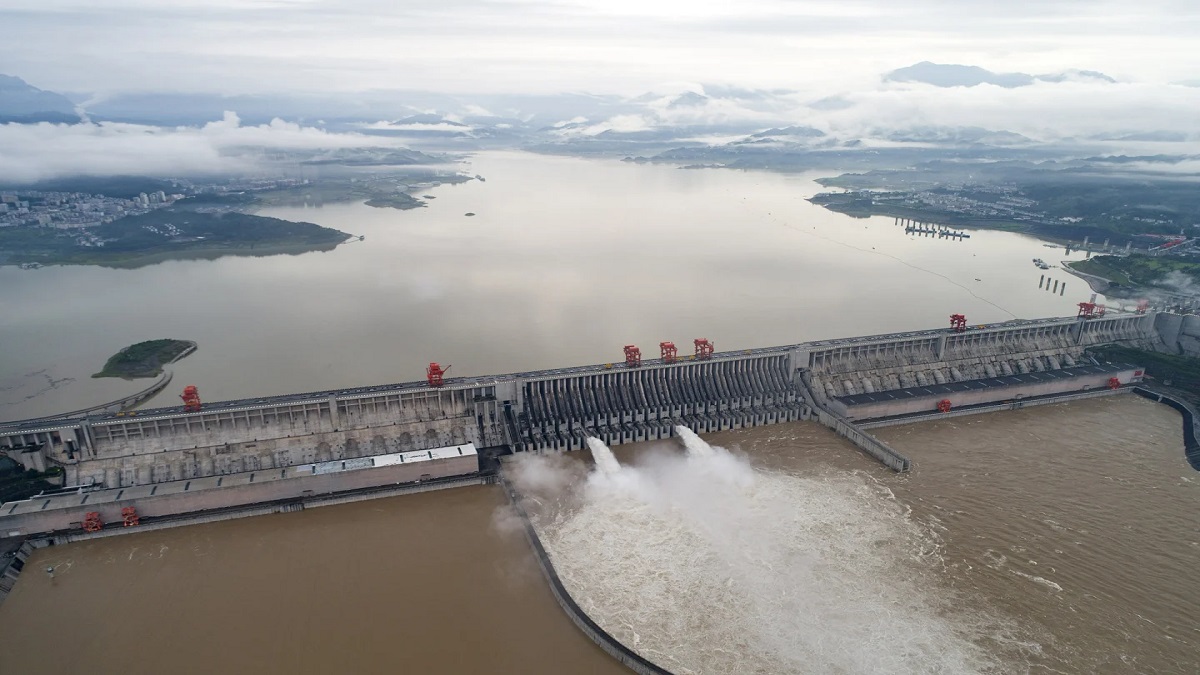
The Three Gorges Dam, completed in 2006, stands as a testament to China’s engineering prowess. Stretching nearly 2 miles across the Yangtze River, this colossal structure is capable of generating a staggering 22.5 gigawatts of electricity — making it the largest hydroelectric power station in the world.
But the dam’s impact extends far beyond its impressive size and energy output. According to some scientific studies, the sheer mass of the reservoir created by the dam has been observed to slightly slow the Earth’s rotation, altering the planet’s gravitational field and potentially influencing global weather patterns.
This revelation has sent shockwaves through the scientific community, raising profound questions about the unintended consequences of such large-scale human intervention in natural systems.
The Sky River Project: Rewriting the Skies
If the Three Gorges Dam has pushed the boundaries of what’s possible in civil engineering, China’s latest mega project — the Sky River — threatens to redefine the very nature of our planet’s climate. This ambitious plan involves the construction of a series of atmospheric water pipelines that would stretch thousands of miles, designed to divert moisture-laden air from the tropical oceans to the arid regions of western China.
The goal is to artificially induce rainfall, effectively “creating” new rivers in the sky and transforming the landscape below. Proponents of the Sky River project argue that it could alleviate water scarcity, boost agricultural productivity, and even mitigate the effects of climate change. However, the ethical and environmental implications of such large-scale weather modification have sparked fierce debates among scientists and policymakers.
Skeptics warn that the Sky River project could disrupt delicate atmospheric patterns, potentially triggering unintended consequences that could ripple across the globe. The prospect of a single nation wielding such immense power over the climate has raised concerns about the geopolitical implications of this technology.
- ➡The Incredible Undersea Tunnel That’s Changing the Face of Global Trade
- ➡Millionaire vs Skeptic — The Surprising Winner That Silenced the Doubters
- ➡The Shocking Closure That Rocked a Small Town Restaurant — You Won’t Believe What Happened Next!
- ➡A French Nuclear Giant Fuels Britain’s Power — But Taxpayers Foot the Bill
The Clash of Environmental Ethics
At the heart of the debate surrounding these mega projects lies a fundamental tension between the human desire to control and reshape the natural world, and the recognition that such actions may come at a grave cost to the planet’s fragile ecosystems.
The Three Gorges Dam, for example, has been linked to the displacement of over 1.3 million people, the loss of irreplaceable cultural heritage, and the disruption of sensitive river environments. Similarly, the Sky River project has drawn criticism from environmentalists who fear it could have devastating impacts on regional weather patterns, biodiversity, and the livelihoods of vulnerable communities.
As these projects push the boundaries of what’s technically feasible, the question of environmental ethics becomes increasingly pressing. Should humanity continue to pursue such large-scale engineering feats, or should we instead prioritize the preservation of natural ecosystems and the delicate balance of our planet?
The Geopolitical Implications
The global implications of these mega projects extend far beyond their environmental impact. Both the Three Gorges Dam and the Sky River project have significant geopolitical ramifications, as they involve the redistribution of scarce water resources and the potential to influence regional and even global power dynamics.
- ➡Inheritance vs. Wealth Distribution — What the New Law Means for Your Family’s Legacy
- ➡A Small Trick That Turned Casual Curling Into A Royal Rivalry
- ➡The Shocking Strength-Boosting Secrets for 60-Year-Olds You Need to Know Now
- ➡China Just Seized Control of Africa’s Lithium Reserves and It Changes Everything
The Three Gorges Dam, for instance, has given China greater control over the Yangtze River, which flows through several neighboring countries. This has raised concerns about the potential for water-related conflicts and the imbalance of power in the region.
Similarly, the Sky River project’s ability to manipulate weather patterns could have far-reaching consequences for neighboring countries, potentially exacerbating tensions and sparking diplomatic disputes over the ownership and distribution of water resources.
As these projects continue to take shape, the global community will be closely watching to see how they unfold and what they mean for the future of international cooperation and environmental governance.
Monitoring and Fail-Safe Mechanisms
Given the monumental scale and potential risks of these mega projects, the need for robust monitoring and fail-safe mechanisms has become increasingly apparent. Experts have called for the development of advanced monitoring systems that can continuously track the environmental and climatic impacts of these engineering feats, allowing for swift intervention in the event of unintended consequences.
- ➡The Dolphin Circle Myth Debunked: What Science Really Says
- ➡The Shocking Sacrifice: A Daughter’s Heartbreaking Choice to Care for Her Dying Father
- ➡The U.S. Navy’s New Supercarrier — But It Wasn’t Built for the Reasons You Think
- ➡Woke Up with a Mystery Tattoo in an Ancient Language – You’ll Never Believe What Happened Next
Additionally, there have been calls for the establishment of international oversight and regulatory frameworks to ensure that these projects are carried out in a transparent and responsible manner, with the interests of the global community in mind.
As China forges ahead with these ambitious plans, the world will be watching closely to see how it navigates the delicate balance between technological prowess and environmental stewardship.
| Three Gorges Dam | Sky River Project |
|---|---|
| Largest hydroelectric power station in the world, capable of generating 22.5 gigawatts of electricity | Ambitious plan to construct a network of atmospheric water pipelines to divert moisture-laden air and induce rainfall in arid regions |
| Reported to slightly slow the Earth’s rotation and alter the planet’s gravitational field | Aims to transform the landscape and climate of western China, with potential global implications |
| Displaced over 1.3 million people and disrupted sensitive river ecosystems | Raises concerns about unintended consequences on regional weather patterns and biodiversity |
| Gives China greater control over the Yangtze River, with potential for water-related conflicts | Could exacerbate tensions and diplomatic disputes over water resource ownership and distribution |
“The Three Gorges Dam and the Sky River project represent the pinnacle of human engineering ambition, but they also raise profound questions about the ethical and environmental boundaries we should not cross. These are not just engineering challenges — they are tests of our collective responsibility as stewards of this planet.”
Also Read
- ➡The Dangerous Toilet Hack You’re Probably Using Right Now (And Why You Need to Stop)
- ➡Why Italy’s Space Engineers Are Rewriting the Laws of Time
- ➡Everyone Is Suddenly Adding Salt to Their Dish Soap. Here’s Why
- ➡You Won’t Believe What This Taxi Driver Said That Made Me Abandon My Flight and Go Home Instead
— Dr. Emily Chen, environmental policy expert
“We are witnessing the dawn of a new era in planetary engineering, where nations are wielding the power to reshape the very fabric of our world. The implications of these projects are staggering, and we must tread carefully to ensure that our technological prowess does not outpace our understanding of the consequences.”
— Dr. Liam Zhao, climate scientist
“The Sky River project, in particular, represents a level of human intervention in natural systems that is truly unprecedented. While the potential benefits are intriguing, the risks of unintended and cascading effects are equally daunting. We must approach this with the utmost caution and a deep respect for the fragility of our planet.”
Also Read— Dr. Sophia Huang, environmental ethicist
As the world watches China’s latest engineering feats unfold, the debate over the balance between technological progress and environmental preservation will only intensify. The fate of these mega projects may well shape the future of our planet, leaving an indelible mark on the delicate equilibrium of our shared home.
The Economic Implications
Beyond the environmental and geopolitical ramifications, these mega projects also have significant economic implications. The Three Gorges Dam, for instance, has become a vital source of clean energy for China, contributing to the nation’s efforts to reduce its reliance on fossil fuels and meet its climate change mitigation goals.
However, the financial costs of constructing and maintaining such massive infrastructure projects are staggering, and the burden often falls on taxpayers and local communities. Similarly, the Sky River project, if successful, could potentially transform the agricultural landscape of western China, with far-reaching implications for global food production and trade.
As these projects continue to evolve, economists and policymakers will need to carefully assess their long-term economic viability and their impact on regional and global markets. The delicate balance between environmental protection, economic growth, and social well-being will be a crucial consideration in the years to come.
The Future of Planetary Engineering
The Three Gorges Dam and the Sky River project represent a new frontier in human engineering, one that pushes the boundaries of what’s possible and challenges us to grapple with the ethical and environmental implications of our actions. As China continues to forge ahead with these ambitious plans, the global community will be watching closely, pondering the long-term consequences and the precedents these projects may set for the future of planetary engineering.
The decisions made today will have far-reaching consequences for generations to come. As we navigate this uncharted territory, it will be crucial to strike a balance between technological progress and environmental stewardship, ensuring that our quest for control over natural systems does not come at the expense of the delicate equilibrium that sustains our planet.
The future of our world may very well hinge on how we respond to the challenges posed by these mega projects, and whether we can find a way to harness the power of human ingenuity in service of a more sustainable and equitable future.
- ➡Trapped for 31 Hours: The Chilling Footage You Need to See to Believe
- ➡A Small Tweak That Ballooned the Cost of a New Fighter Jet
- ➡The Shocking Coincidence That Brought My Online BFF and Me Together IRL After 8 Years of Friendship
- ➡F-15 vs F-16 vs F-22 vs F-35 — The Surprising Dogfight Winner That’s Redefining Middle East Air Power
What is the Three Gorges Dam, and how does it impact the Earth’s rotation?
The Three Gorges Dam is a massive hydroelectric dam built across the Yangtze River in China. It is the world’s largest hydropower project, capable of generating 22.5 gigawatts of electricity. Some studies have suggested that the immense weight of the dam’s reservoir has slightly slowed the Earth’s rotation, altering the planet’s gravitational field and potentially influencing global weather patterns.
What is the Sky River project, and what are the environmental concerns?
The Sky River project is a proposed plan to construct a network of atmospheric water pipelines in China, designed to divert moisture-laden air from the tropics and induce rainfall in the arid regions of western China. While proponents argue it could alleviate water scarcity and boost agriculture, critics are concerned about the potential unintended consequences on regional weather patterns, biodiversity, and the livelihoods of vulnerable communities.
How do these mega projects compare in terms of their global impact?
Both the Three Gorges Dam and the Sky River project represent unprecedented feats of human engineering that have the potential to reshape the planet. While the Three Gorges Dam has already been shown to influence the Earth’s rotation, the Sky River project aims to directly manipulate the climate on a regional and potentially global scale. Both projects raise ethical concerns about the boundaries of human intervention in natural systems and the need for robust monitoring and regulatory frameworks to mitigate unintended consequences.
What are the key geopolitical implications of these mega projects?
The Three Gorges Dam has given China greater control over the Yangtze River, which flows through several neighboring countries, raising concerns about water-related conflicts and the imbalance of power in the region. Similarly, the Sky River project’s ability to influence regional weather patterns could exacerbate tensions and diplomatic disputes over the ownership and distribution of water resources among countries in the affected areas.
How are experts and the global community responding to these developments?
Experts and the global community have expressed a range of concerns and viewpoints regarding these mega projects. While some see them as technological triumphs, others warn about the ethical and environmental risks, calling for robust monitoring systems and international oversight to ensure responsible implementation. There is a growing consensus that these projects raise profound questions about the boundaries of human intervention in natural systems and the need to prioritize environmental stewardship alongside technological progress.
What are the economic implications of these mega projects?
The economic implications of these mega projects are significant, both in terms of the immense financial costs associated with their construction and maintenance, as well as their potential impacts on regional and global markets. The Three Gorges Dam has become a vital source of clean energy for China, but the burden on taxpayers and local communities has been substantial. Similarly, the Sky River project could transform the agricultural landscape of western China, with far-reaching implications for global food production and trade.
How might these projects shape the future of planetary engineering?
The Three Gorges Dam and the Sky River project represent a new frontier in human engineering, one that pushes the boundaries of what’s possible and challenges us to grapple with the ethical and environmental implications of our actions. These projects may set precedents for future large-scale interventions in natural systems, raising questions about the balance between technological progress and environmental preservation. The decisions made today will have far-reaching consequences for generations to come, and the global community will be closely watching to see how these projects unfold and what they mean for the future of planetary engineering.