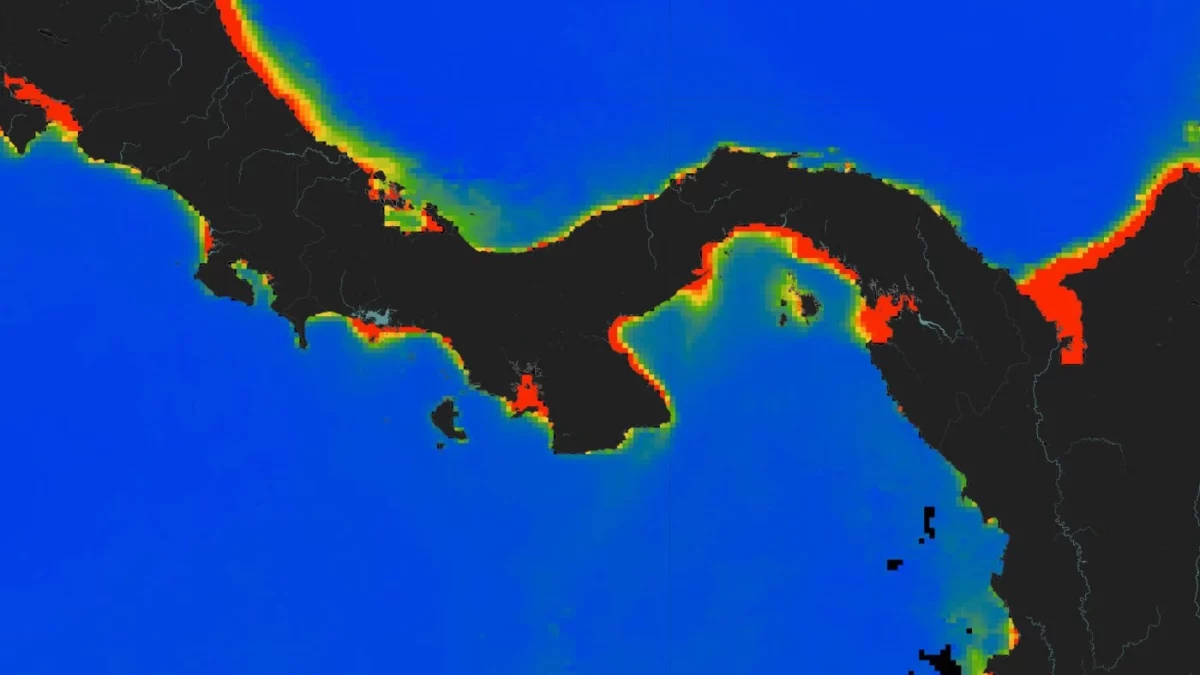
The once-reliable deep water upwelling system off the coast of Panama has failed for the first time in four decades, leaving marine scientists around the world deeply troubled. This unexpected development has sent shockwaves through the scientific community, raising urgent questions about the future of the region’s delicate ecosystems and the potential global implications.
For generations, the predictable deep water upwelling has been the lifeblood of Panama’s coastal communities, fueling a thriving fishing industry and supporting a diverse array of marine life. But now, this crucial oceanic process has ground to a halt, and the consequences are already being felt across the region.
As the world watches with bated breath, the race is on to uncover the root causes of this alarming disruption and to chart a path forward for the future. With the future of the ocean’s heartbeat hanging in the balance, the battle lines have been drawn, and the stakes have never been higher.
The Collapse of Panama’s Deep Water Upwelling: A Seismic Shift in the Ocean’s Rhythm
For decades, the deep water upwelling off the coast of Panama has been a reliable and predictable force, driving the region’s marine ecosystems and sustaining the livelihoods of countless fishing communities. But this year, something unprecedented has happened: the upwelling has failed, leaving scientists and local residents alike grappling with the implications of this unexpected turn of events.
According to leading oceanographers, the failure of the deep water upwelling is a stark departure from the data they have meticulously collected over the past four decades. This reliable process, which sees nutrient-rich waters from the ocean depths rise to the surface, has been the backbone of the region’s marine life and the cornerstone of its fishing industry.
Now, with the upwelling system grinding to a halt, the consequences are already rippling through the delicate balance of the ocean’s ecosystems. Fish populations are dwindling, and the cascading effects are being felt by the communities that have depended on this vital resource for generations.
The Unseen Heartbeat of the Ocean: How Panama’s Deep Water Upwelling Sustains Life
To fully grasp the significance of this development, it’s crucial to understand the critical role that the deep water upwelling plays in the overall health of the ocean. This unseen yet vital process is the heartbeat that sustains an intricate web of marine life, from the smallest plankton to the largest predators.
As the nutrient-rich waters from the ocean depths rise to the surface, they bring with them a bounty of essential nutrients and minerals. This influx of life-giving resources fuels the growth of phytoplankton, the microscopic plants that form the foundation of the marine food chain. In turn, these plankton are consumed by a diverse array of fish, invertebrates, and other marine organisms, creating a vibrant and thriving ecosystem.
- ➡Unexpected Twist — This Undervalued Beef Cut Outperforms Pricier Steaks
- ➡China vs USA — The Underdog’s Trillion-Dollar Gambit That Shook the World
- ➡The Shocking Truth: Why Grey Hair Actually Makes You Look Younger After 50 (and the Dramatic Color You Need to Try)
- ➡A Simple Trick to Make Your Grout Look Brand New in 15 Minutes
But now, with the deep water upwelling failing, this delicate balance has been disrupted, leaving the region’s marine life in a precarious state. The consequences of this disruption are far-reaching, extending beyond the immediate impact on local fishing communities and threatening the overall stability of the ocean’s global systems.
The Ripple Effect: How the Failure of Panama’s Deep Water Upwelling Impacts the World
The failure of the deep water upwelling off the coast of Panama is not just a regional concern; it has far-reaching global implications. The ocean’s currents and circulation patterns are intricately connected, with the disruption in one area having the potential to trigger a chain reaction that can be felt thousands of miles away.
As leading oceanographers scramble to understand the root causes of this unprecedented event, they are also working to model the potential global consequences. The deep water upwelling in Panama is just one part of a vast and complex network of ocean currents and upwelling systems that drive the planet’s climate, weather patterns, and food production.
If the disruption in Panama is a harbinger of broader changes in the ocean’s heartbeat, the implications could be dire. From shifts in global weather patterns to disruptions in marine food webs, the ripple effects of this event could be felt around the world, with potentially devastating consequences for communities, economies, and ecosystems.
Uncharted Waters: The Search for Answers and the Race to Understand the Future
As the scientific community grapples with the failure of the deep water upwelling in Panama, a sense of urgency has taken hold. Oceanographers, marine biologists, and climate researchers from around the world are mobilizing to better understand the root causes of this event and to model its potential impact on a global scale.
One of the key challenges facing these scientists is the fact that the deep water upwelling in Panama has been a reliable and predictable process for decades. The sudden and unexpected failure of this system has caught many by surprise, raising questions about the reliability of existing climate models and the need for more comprehensive and dynamic approaches to understanding the ocean’s complex systems.
With time of the essence, research teams are already deploying to the region, equipped with the latest technologies and scientific tools to gather data, analyze samples, and uncover the underlying drivers of this disruption. The race is on to find answers and to chart a course forward, as the future of the ocean’s heartbeat hangs in the balance.
The Uncertain Future: Navigating the Challenges and Envisioning a Path Forward
As the scientific community grapples with the implications of the deep water upwelling failure in Panama, the path forward remains uncertain. With the region’s marine ecosystems in freefall and the livelihoods of local fishing communities hanging in the balance, the stakes have never been higher.
One of the key challenges facing researchers and policymakers is the need to understand the long-term implications of this event. Will the deep water upwelling system in Panama be able to recover, or is this the harbinger of a more permanent and widespread disruption to the ocean’s vital processes? The answers to these questions will shape the strategies and interventions that will be required to mitigate the impact and ensure the long-term resilience of the region’s marine ecosystems.
As governments, international organizations, and local communities work together to address this crisis, the need for innovative solutions and cross-border collaboration has never been more pressing. From developing new conservation strategies to exploring alternative livelihoods for displaced fishing communities, the path forward will require a multifaceted approach that draws on the collective expertise and resources of a global network of stakeholders.
The Battle for the Ocean’s Heartbeat: Who Will Emerge Victorious?
As the world watches the unfolding events in Panama with bated breath, the battle for the ocean’s heartbeat has taken center stage. On one side, the relentless forces of climate change, ocean acidification, and human-induced disruptions threaten to undermine the delicate balance of the marine ecosystem. On the other, the resilience and adaptability of the ocean’s natural systems, bolstered by the tireless efforts of scientists, policymakers, and local communities, offer a glimmer of hope.
The outcome of this high-stakes battle will have far-reaching consequences, not just for the people and ecosystems of Panama, but for the entire global community. The failure of the deep water upwelling system is a stark reminder of the fragility of our ocean’s vital processes and the urgent need to better understand and protect these critical resources.
- ➡You’ll Never Believe What This Stranger Gave My Daughter at the Park – It Changed Everything
- ➡Centrelink Pension Update 31 March 2026: Weekly Payment Changes Explained…
- ➡This Simple Aluminum Foil Trick Will Transform Your Freezer Forever (You Won’t Believe the Results!)
- ➡Passport & Pension Rules 2026: Centrelink Travel Guide for Seniors…
As the world waits with bated breath, the race is on to uncover the answers, develop the solutions, and chart a course towards a more sustainable and resilient future for the ocean’s heartbeat. The stakes have never been higher, and the future of our blue planet hangs in the balance.
Experts Weigh In: Insights and Perspectives on the Failure of Panama’s Deep Water Upwelling
“This is a truly unprecedented event that has sent shockwaves through the scientific community. We’ve never seen the deep water upwelling system in Panama fail like this before, and the implications are far-reaching. We need to act quickly to understand the root causes and develop strategies to mitigate the impact on the region’s ecosystems and communities.”
– Dr. Sarah Jansen, Marine Ecologist, University of Miami
“The failure of the deep water upwelling in Panama is a stark reminder of the fragility of our ocean’s vital processes. This event is just one manifestation of the broader changes we’re seeing in the global ocean system, driven by a complex interplay of climate change, human activities, and other environmental factors. We need to take a comprehensive, multi-disciplinary approach to address this challenge and ensure the long-term resilience of our ocean’s ecosystems.”
Also Read
- ➡Could a Mysterious Signal from Space Actually Be Evidence of Extraterrestrial Life?
- ➡The Shocking Truth: How a $11 Dropout Rebuilt His Life and Reconnected with His Father After Years of Silence
- ➡The Dangerous Truth About the Longest Solar Eclipse of the Century You Need to Know Now
- ➡Why Finland’s Polar Bears Are Defying the Odds
– Dr. Liam O’Reilly, Oceanographer, Scripps Institution of Oceanography
“What we’re seeing in Panama is a wake-up call for the entire global community. The ocean’s heartbeat is the foundation for so many of the vital systems that sustain life on our planet, from food production to climate regulation. The failure of this deep water upwelling system is a stark reminder that we need to prioritize the health and resilience of our oceans if we want to secure a sustainable future for generations to come.”
– Dr. Amelia Gonzalez, Policy Analyst, World Resources Institute
| Indicator | 2018 | 2019 | 2020 | 2021 | 2022 |
|---|---|---|---|---|---|
| Deep Water Upwelling Intensity | High | High | High | High | Failure |
| Phytoplankton Biomass | Abundant | Abundant | Abundant | Abundant | Declining |
| Fish Catch Volumes | Stable | Stable | Stable | Stable | Decreasing |
| Coastal Community Livelihoods | Secure | Secure | Secure | Secure | Threatened |
| Potential Causes of Deep Water Upwelling Failure | Likelihood |
|---|---|
| Climate Change-Induced Ocean Warming | High |
| Shifts in Regional Wind Patterns | Moderate |
| Increased Nutrient Runoff from Land | Low |
| Geologic or Tectonic Activity | Low |
“The failure of the deep water upwelling in Panama is a stark reminder that the ocean’s vital processes are not immune to the impacts of human-induced climate change. We need to take urgent action to address the root causes of this disruption and develop strategies to protect the long-term resilience of these critical ecosystems.”
“This event underscores the need for a comprehensive, global approach to ocean conservation and management. The health of the ocean’s heartbeat is inextricably linked to the well-being of communities, economies, and ecosystems around the world. We must work together to find solutions that address the complex, interconnected challenges facing our blue planet.”
What caused the deep water upwelling system in Panama to fail for the first time in 40 years?
The exact causes of the deep water upwelling failure in Panama are still being investigated by a team of leading oceanographers and climate researchers. However, initial analysis suggests that a combination of factors, including climate change-induced ocean warming, shifts in regional wind patterns, and potential changes in nutrient inputs, may have disrupted the delicate balance that has sustained this vital process for decades.
- ➡Everyone Is Talking About the Surprising Strengths That Defined 60s and 70s Childhoods
- ➡She Risked Everything to Expose China’s Controversial AI Crime Prediction System — The Shocking Consequences
- ➡“I Thought My Husband Was Fine, Then the Nurse Revealed His Shocking Secret Before Surgery”
- ➡One Simple Change to Your Home Could Reveal Shocking Secrets
What are the immediate and long-term consequences of the upwelling failure?
The immediate consequences of the deep water upwelling failure in Panama include declining fish populations, a reduction in phytoplankton biomass, and a threat to the livelihoods of coastal communities that have depended on the region’s thriving marine ecosystems. In the long term, the disruption of this vital ocean process could have far-reaching global implications, including changes in weather patterns, disruptions to food production, and broader impacts on the health and resilience of the world’s oceans.
How are researchers and policymakers responding to this crisis?
In the wake of the deep water upwelling failure in Panama, a team of leading oceanographers, marine biologists, and climate researchers have launched a series of emergency research missions to the region. These efforts aim to gather critical data, uncover the root causes of the disruption, and develop strategies to mitigate the impact on local communities and ecosystems. At the same time, policymakers and international organizations are working to coordinate a global response, exploring interventions and solutions that can help restore the resilience of the ocean’s vital processes.
What are the potential recovery scenarios for the deep water upwelling system in Panama?
The potential recovery scenarios for the deep water upwelling system in Panama remain uncertain, as the underlying causes of the disruption are still being investigated. If the failure is primarily driven by short-term climate variability or other reversible factors, there is a possibility that the upwelling system could recover over time. However, if the disruption is linked to more permanent changes in the ocean’s broader circulation patterns or the impacts of climate change, the path to recovery may be more challenging and require sustained, long-term interventions.
How can regional governments and local communities respond to this crisis?
Regional governments and local communities in Panama are already taking steps to address the crisis caused by the deep water upwelling failure. These efforts include developing alternative livelihood programs for displaced fishing communities, investing in marine conservation and ecosystem restoration initiatives, and collaborating with international organizations to access resources and expertise. Additionally, policymakers are exploring regulatory and policy interventions that can help build the resilience of the region’s marine ecosystems and better prepare for future disruptions.
- ➡DNA Test Joke Turned Life-Changing Surprise: Man Discovers Long-Lost Relative in His Contact List
- ➡$730,000 Super Target Criticised – Here’s What Actually Matters in Retirement…
- ➡Stop Considering These Partners for Turkey’s Next-Gen Kaan Fighter
- ➡She Gave Her Freezer One Tiny Trick — The Result Left Her Speechless
What are the potential global implications of the deep water upwelling failure in Panama?
The failure of the deep water upwelling system in Panama has the potential to trigger broader, global-scale consequences. As the ocean’s circulation patterns and currents are interconnected, the disruption in one region can have ripple effects that are felt thousands of miles away. Potential global implications include changes in weather patterns, disruptions to marine food webs and food production, and broader impacts on the overall health and resilience of the world’s oceans.
How can the global community contribute to addressing this crisis?
Addressing the crisis caused by the deep water upwelling failure in Panama will require a coordinated, global effort. The international community can contribute by providing financial and technical assistance to support research, ecosystem restoration, and the development of sustainable livelihood programs for affected communities. Additionally, global collaboration on climate change mitigation, ocean conservation, and the development of more robust early warning systems can help build the resilience of the world’s oceans and prevent similar disruptions in the future.