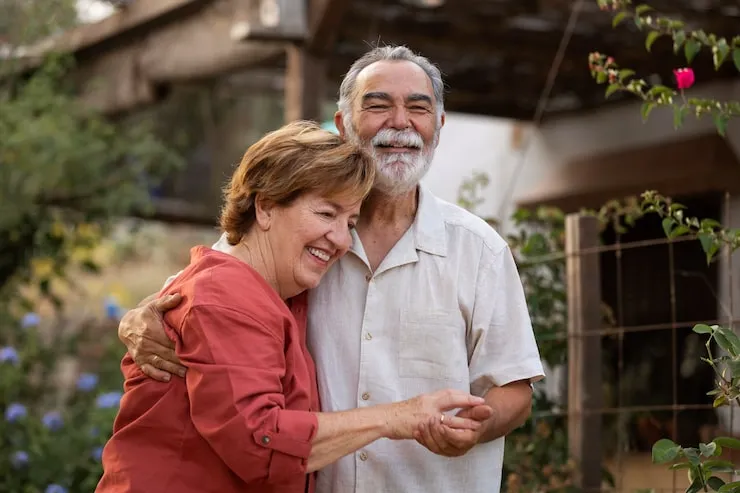
As we grow older, the pursuit of happiness can feel like an endless and elusive quest. Many assume that finding a sense of purpose is the key to fulfilling our golden years, but a fascinating shift in psychological understanding suggests that the true path to contentment may lie in something far simpler: the permission to exist without constantly producing, achieving, or proving ourselves.
In a world that relentlessly demands that we justify our every moment, the idea of embracing a life without purpose may seem radical, even heretical. But for those who have weathered the storms of life, this newfound freedom may be the very thing their happiness has been waiting for all along.
The Purpose Industrial Complex We’ve Been Sold
For decades, the mantra of “finding your purpose” has been drilled into our collective psyche, fueling a multi-billion dollar industry of self-help books, motivational speakers, and life coaches. We’ve been told that the key to a fulfilling life lies in uncovering our unique calling, our reason for being.
But what if this relentless pursuit of purpose is actually a trap, a weight that grows heavier with each passing year? As we age, the pressure to constantly prove our worth can become increasingly burdensome, leaving little room for the simple joys and quiet moments that truly nourish the soul.
It’s time to challenge this narrative and explore a radical new perspective on the path to happiness in our later years.
The Achievement Treadmill Finally Stops
For many of us, the first seven decades of life have been a never-ending race, a constant striving to climb the proverbial ladder of success. We’ve been conditioned to believe that our worth is inextricably linked to our achievements, our productivity, and our ability to contribute to society.
But as we enter the later stages of life, the relentless treadmill of accomplishment finally grinds to a halt. The pressure to prove ourselves, to constantly justify our existence, begins to lift. It’s in this moment of pause that a new opportunity for happiness emerges.
Ironically, it’s the very thing we’ve been conditioned to fear – the loss of purpose and productivity – that may hold the key to our greatest fulfillment.
- ➡Driver’s License Age Limits 2026: The Real Maximum Age for Driving According to Modern Traffic Regulations
- ➡One Simple Tweak to Turn Your Lemon Drizzle Cake Into a Moist, Crowd-Pleasing Masterpiece
- ➡Antarctica Just Stunned the World with a Rare Shark Sighting
- ➡She Quit Meat for 1 Year — The Dramatic Change It Caused in Her Body Will Shock You
The Permission Nobody Gave You
The irony is that the permission to simply be, without the constant need to prove our worth, is something that has been ours all along. Yet, it’s a gift that society, and often our own inner voice, has been withholding from us.
We’ve been taught that our value lies in our achievements, our contributions, and our ability to make a tangible impact on the world around us. But what if the greatest gift we can give ourselves is the freedom to exist without the burden of constantly justifying our presence?
This permission, this radical act of self-acceptance, may be the very thing that unlocks the door to true happiness in our later years.
What Happiness Actually Wants After 70
As we age, our priorities and needs often shift in subtle but profound ways. The relentless pursuit of purpose and achievement that once drove us may start to feel more like a burden than a source of fulfillment.
- ➡The Shocking Truth My Son Uncovered About His Father’s Secret Life
- ➡Poland’s Tiny Zoo Celebrates a Big Conservation Win as Endangered Amur Leopard Cub Takes First Steps
- ➡The Shocking Truth Behind the Man Who Woke Up in a Hospital with a Different Identity
- ➡$961 Road Fine in 2026 Australia: What Drivers Need to Know
What if happiness, in its purest form, is not about constantly striving and proving ourselves, but rather about the freedom to simply be? To savor the quiet moments, to indulge in the simple pleasures, and to let go of the need to constantly justify our existence.
This shift in perspective may be the key to unlocking a newfound sense of contentment and joy in our later years.
The Quiet Revolution of Doing Nothing
In a world that values productivity, efficiency, and constant self-improvement, the idea of “doing nothing” can feel like an act of rebellion. But for those who have weathered the storms of life, this quiet revolution may be the very thing that brings them the greatest happiness.
Embracing the freedom to simply be, without the pressure to achieve or prove ourselves, can be a radical and liberating act. It’s a reclaiming of our right to exist, to find joy in the present moment, and to let go of the constant need to justify our worth.
- ➡She Cooked Broccoli for 30 Days — The Results Were Life-Changing
- ➡Construction Workers Uncover Ancient Roman Treasure — But What They Found Underneath Will Shock You
- ➡$1,178 Pension Confirmed April 2026: Full Centrelink Payment Breakdown
- ➡Top Psychologists Reveal How the “Benign Neglect” of the 1960s and 70s Accidentally Produced a Generation of Emotional Superstars
This quiet revolution, this permission to do nothing, may be the secret to unlocking a new level of contentment and fulfillment in our golden years.
How Society Gets in the Way
One of the biggest obstacles to this newfound freedom is the persistent societal pressure to constantly be productive, to contribute, and to find a sense of purpose. From the moment we’re born, we’re bombarded with messages that our value is directly tied to our achievements, our contributions, and our ability to make a tangible impact on the world.
This pressure can be particularly intense as we age, with the expectation that we’ll continue to be active, engaged, and “useful” members of society. But what if the true path to happiness lies in embracing our right to simply be, without the need to constantly prove our worth?
Overcoming this societal conditioning and granting ourselves the permission to exist without the burden of purpose may be one of the greatest challenges, and greatest rewards, of our later years.
- ➡Breaking: Centrelink Launches New Age Pension Payment System in 2026…
- ➡$1,800 Centrelink Change for New Parents — What the Payment Boost Really Means…
- ➡After Years of Burning Trays, She Found the Pantry Hack That Saved Her Bakeware for Good
- ➡Car Seat Safety Rule Changes in Australia 2026: What Drivers Must Know…
Building a Life Without Purpose (And Why It Works)
The idea of building a life without purpose may seem counterintuitive, even radical, but the research suggests that it may be the key to unlocking greater happiness and fulfillment in our later years.
Studies have shown that the happiest older adults are often those who have embraced the freedom to simply be, without the constant need to achieve or prove their worth. They’ve learned to let go of the relentless pursuit of purpose and instead focus on the simple joys and quiet moments that nourish the soul.
By removing the pressure to constantly justify our existence, we can free up the mental and emotional space to truly savor the present moment, to indulge in our passions and hobbies, and to cultivate deeper connections with the people and experiences that truly matter to us.
The Permission You Can Grant Yourself Right Now
The good news is that the permission to exist without the burden of purpose is something that we can grant ourselves, right here and now. It’s a radical act of self-acceptance, a reclaiming of our inherent worth and the freedom to simply be.
This doesn’t mean that we have to abandon all sense of purpose or meaning in our lives. Rather, it’s about finding a balance, where our pursuit of purpose is not a constant source of stress and pressure, but rather a joyful and fulfilling exploration of our interests and passions.
By embracing this newfound freedom, we can open ourselves up to a world of possibilities, where happiness is not something to be chased, but rather something that naturally blossoms when we allow ourselves to simply be.
Conclusion: Embracing the Quiet Revolution of Doing Nothing
In the end, the secret to happiness in our later years may not lie in the relentless pursuit of purpose, but rather in the permission to exist without the constant need to prove our worth. By embracing the quiet revolution of doing nothing, we can free ourselves from the societal pressure to constantly achieve and contribute, and instead focus on the simple joys and quiet moments that truly nourish the soul.
So, as we enter the golden years of our lives, let us grant ourselves the permission to be, to savor the present moment, and to find joy in the freedom to exist without the burden of purpose. For in that permission, we may just unlock the key to a happiness that has been waiting for us all along.
- ➡Are Your Brown Eggs Actually Better Than White Ones?
- ➡You’ll Never Guess What This Waitress Did After Receiving a $1,000 Tip
- ➡The Longest Solar Eclipse of the Century — But It Comes With a Catch
- ➡Is the Universe Trying to Tell Us Something? NASA Detects a 13 Billion-Year-Old Signal From the Dawn of Time
FAQ
What does the research say about happiness and purpose in older adulthood?
Recent studies have found that the happiest older adults are often those who have embraced the freedom to simply exist without the constant need to achieve or prove their worth. Letting go of the relentless pursuit of purpose can free up mental and emotional space to focus on the simple joys and quiet moments that nourish the soul.
How can I start granting myself permission to exist without purpose?
Start by acknowledging the societal pressure to constantly be productive and contributing. Recognize that your inherent worth is not tied to your achievements or ability to prove yourself. Intentionally make time for activities and experiences that bring you joy, without the need to justify their purpose. Embrace the freedom to simply be.
Isn’t finding purpose an important part of a fulfilling life?
Purpose and meaning can certainly be important sources of fulfillment, but the key is finding a healthy balance. The problem arises when the pursuit of purpose becomes a constant source of stress and pressure, rather than a joyful exploration of our interests and passions. The permission to exist without the burden of purpose can actually open us up to discovering new sources of meaning and purpose.
How can I overcome the societal pressure to constantly be productive and contributing?
It’s not easy to break free from the societal conditioning that values productivity and achievement above all else. Start by surrounding yourself with like-minded individuals who understand and support your desire to embrace a life without constant purpose. Challenge the negative self-talk that tells you your worth is tied to your contributions. Remind yourself that your inherent value as a human being is not dependent on what you produce or achieve.
- ➡The Real Reason Nations Are Racing to Construct Intercontinental Underwater Tunnels
- ➡Why Costa Rica Just Became the World’s Banana Storage Superpower
- ➡The Surprising New Trend That’s Letting Women Ditch Hair Dye For Good
- ➡Shocking Discovery: Man Finds His Own Obituary Online – You Won’t Believe What Happened Next!
What are some practical ways to incorporate more “doing nothing” into my life?
Some ideas include: setting aside dedicated time each day for quiet reflection or meditation, engaging in leisurely hobbies without the need for a specific outcome, scheduling regular “do nothing” days or weekends, and cultivating a daily routine that prioritizes self-care and enjoyment over constant productivity.
How can I find a sense of purpose and meaning without the pressure to constantly achieve?
The key is to explore your interests and passions in a way that is not driven by external expectations or the need to prove your worth. Focus on activities and experiences that bring you joy and fulfillment, without the constant pressure to turn them into measurable achievements. Seek out volunteer opportunities or community involvement that aligns with your values, but without the need to constantly prove your impact.
What if I’m worried about losing my sense of identity or purpose in retirement?
It’s a valid concern, but the freedom to exist without constant purpose can actually help you rediscover and reinvent your sense of self. Use this time to explore new hobbies, connect with loved ones, and engage in activities that bring you joy, without the pressure to constantly justify your existence. Your identity is not solely defined by what you do, but by who you are.
How can I help my elderly loved ones embrace a life without purpose?
Lead by example and model the joy and contentment that can come from embracing a life without constant achievement. Encourage your loved ones to prioritize self-care, leisure, and the simple pleasures of life. Remind them that their inherent worth is not tied to their productivity or contributions. Offer support and a non-judgmental space for them to explore this newfound freedom.
- ➡Psychology says people who suddenly start saying no to things they used to automatically agree to aren’t becoming selfish — they’re finally understanding that their energy is a finite resource and every yes to someone else used to be a no to themselves…
- ➡Licence Cancelled Without Notice? The 2026 Rule Catching Drivers Off Guard…
- ➡The Heartbreaking Airport Mystery: 14 Hours of Waiting, But Her Loved One Never Arrived
- ➡She Just Took Over His Whole Company – And It Happened Faster Than Anyone Expected