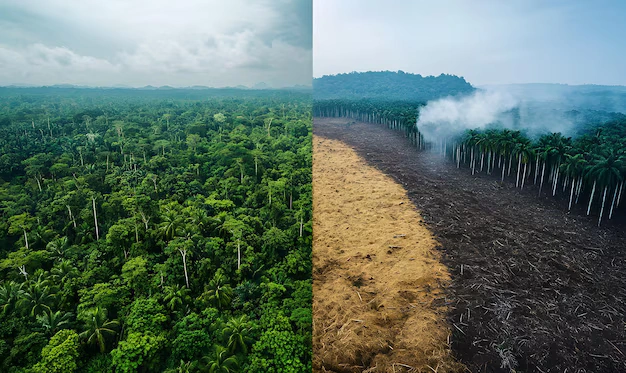
In the heart of Costa Rica’s Guanacaste province, farmer Miguel Santamaría stood at the edge of what was once his cattle pasture. Twenty years ago, he had cleared this land to make way for his herd. But now, something remarkable had happened: the forest had reclaimed its territory, growing back without any human intervention. This natural regeneration has left experts around the world fascinated and hopeful.
According to leading forestry researchers, the story of Santamaría’s land is just one example of a global phenomenon happening in the wake of deforestation. As human activity has slowed or stopped in certain regions, forests have proven remarkably resilient, springing back to life through their own innate processes.
This remarkable ability of forests to recover on their own has significant implications for the environment, the economy, and our collective future. Let’s dive into the details behind this ecological comeback and what it means for the world.
The Science Behind Natural Forest Recovery
When deforestation occurs, it can take a heavy toll on the delicate balance of an ecosystem. However, researchers have found that if human activity is halted, forests possess an incredible capacity for self-regeneration.
According to Dr. Sarah Thompson, a leading ecologist at the University of Costa Rica, this process is driven by a combination of seed dispersal, soil nutrient retention, and the natural resilience of indigenous plant species. “Once the pressure of human activity is removed,” she explains, “the forest’s own natural mechanisms kick in to restore the ecosystem.”
The speed and extent of this regeneration can vary depending on factors like climate, soil composition, and the level of disturbance. But in many cases, the transformation is nothing short of remarkable, with dense, vibrant forests reclaiming abandoned lands in a matter of decades.
Where Deforestation Stopped and Recovery Began
The phenomenon of natural forest regeneration has been observed in various parts of the world, from the Amazon basin to the mountains of Southeast Asia. In each case, the story is similar: when human activity like logging, agriculture, or urban expansion has slowed or ceased, the forest has shown an incredible ability to bounce back.
One notable example is the Mata Atlântica region of Brazil, where decades of deforestation had reduced the once-sprawling Atlantic rainforest to a mere fraction of its original size. However, in the past 30 years, as protected areas have expanded and human encroachment has declined, the forest has regrown to cover nearly 30% of its historical range.
- ➡You Won’t Believe What This Fearless Mother Bear Did to Help Her Struggling Cub Climb to Safety
- ➡Top Experts Reveal the Shocking Secret My Grandmother Told Me on Her Deathbed – Now I Understand Why Dad Never Came Home
- ➡Avoid $700 Fine Australia 2026: Roadwork Rules Explained
- ➡Licence Cancelled Without Notice? The 2026 Rule Catching Drivers Off Guard…
Similar stories can be found in Costa Rica, where Santamaría’s pasture is just one of many abandoned lands that have transformed back into lush, biodiverse forests. “It’s a remarkable testament to the resilience of these ecosystems,” says Dr. Thompson. “Given the chance, nature has an incredible capacity to heal itself.”
Wildlife Returns as Forests Regenerate Themselves
As the forests regrow, they don’t just restore the plant life – they also bring back a vibrant array of animal species. “When you remove the human disturbance, the wildlife quickly returns,” explains Dr. Emma Flores, a wildlife biologist at the National University of Costa Rica.
In the case of Santamaría’s land, Dr. Flores and her team have documented the return of numerous bird species, as well as the reappearance of mammals like howler monkeys, tapirs, and jaguars. “It’s like the forest is breathing life back into itself,” she says. “The diversity of species is a clear sign of the ecosystem’s recovery.”
This resurgence of wildlife is more than just an ecological triumph – it also has important implications for carbon sequestration and the overall health of the planet. As forests regrow, they absorb increasing amounts of atmospheric carbon, helping to mitigate the effects of climate change.
Carbon Storage in Self-Regenerating Forests
One of the most significant benefits of natural forest regeneration is its impact on carbon storage and climate change. As the forests regrow, they become powerful carbon sinks, absorbing and storing vast amounts of atmospheric carbon dioxide.
According to a study published in the journal Science, abandoned lands that have been left to regenerate naturally can accumulate carbon at rates of up to 11 metric tons per hectare per year. “That’s an astounding rate of carbon sequestration,” says Dr. Lucas Gómez, a climate policy expert at the University of Costa Rica. “It underscores the critical role that these self-regenerating forests can play in our efforts to combat climate change.”
As the world grapples with the urgent need to reduce greenhouse gas emissions, the ability of forests to reclaim abandoned lands and capture carbon offers a glimmer of hope. “This is a powerful reminder that nature, given the chance, can be one of our greatest allies in the fight against climate change,” adds Dr. Gómez.
Economic Benefits Without Replanting Costs
The natural regeneration of forests not only benefits the environment but also has significant economic implications. Unlike traditional reforestation efforts that require extensive planning, labor, and financial investment, these self-regenerating forests emerge at no direct cost to governments or private landowners.
- ➡Shocking Secrets of Queen Victoria’s Forgotten Royal Granddaughter: The Incredible Life of Princess Alice, Countess of Athlone
- ➡You Won’t Believe What This Homeless Man Did for a Stranger – The Ripple Effect Will Shock You
- ➡Goodbye Low Pension Payments: Australia’s March 2026 Increase Explained…
- ➡Could a Mysterious Signal from Space Actually Be Evidence of Extraterrestrial Life?
“It’s a win-win situation,” says Dr. María Fernanda Rodríguez, an environmental economist at the Costa Rican Ministry of Environment and Energy. “We get all the ecological benefits of a thriving forest ecosystem without the need for costly replanting or maintenance programs.”
This economic advantage could encourage more landowners and policymakers to embrace the potential of natural forest regeneration, potentially unlocking new revenue streams through carbon offsetting, ecotourism, and sustainable resource management. “The financial incentives are clear,” adds Dr. Rodríguez. “Now it’s about scaling up these efforts to maximize the impact.”
Challenges Facing Natural Forest Recovery
While the story of natural forest regeneration is largely positive, it’s not without its challenges. One of the primary obstacles is the ongoing threat of human encroachment and development pressure, which can undermine the recovery process.
“Even if deforestation has stopped in a particular area, the forest is still vulnerable to future threats,” explains Dr. Thompson. “Illegal logging, agricultural expansion, and urban sprawl can all undo the progress that’s been made.”
- ➡The Heartwarming Story of a Lonely Diner and the Waiter Who Noticed Her – A Viral Receipt That Reminded Us All to Be Kind
- ➡Everyone Is Talking About Queen Victoria’s Centenarian Granddaughter, Princess Alice
- ➡China Just Seized Control of Africa’s Lithium Reserves and It Changes Everything
- ➡Is Brazil’s Harpy Eagle Chick the Key to Saving the Species?
Another challenge is the potential for invasive species to disrupt the delicate balance of the regenerating ecosystem. “When a forest is left to its own devices, there’s always the risk of non-native plants or animals taking over and disrupting the natural succession,” says Dr. Flores. “Careful monitoring and management may be required to ensure the resilience of these self-regenerating systems.”
Future Outlook for Self-Regenerating Forests
Despite the challenges, the future outlook for self-regenerating forests is increasingly positive. As the world grapples with the urgent need to address climate change and biodiversity loss, the ability of these ecosystems to recover on their own offers a glimmer of hope.
“What we’re seeing is a powerful testament to the resilience of nature,” says Dr. Gómez. “With the right policies and protections in place, these self-regenerating forests could play a crucial role in our efforts to mitigate climate change and restore the health of our planet.”
As for Miguel Santamaría, the farmer who once cleared his land for cattle, he now stands in awe of the vibrant forest that has reclaimed his former pasture. “I never imagined I would see this,” he says, gazing out at the canopy of trees. “It’s a reminder that if we just let nature do its thing, it can heal itself in the most remarkable ways.”
Key Takeaways
| Insight | Explanation |
|---|---|
| Natural Forest Regeneration | Forests have an incredible capacity to regenerate themselves when human activity and disturbance is reduced or stopped. |
| Global Phenomenon | This process has been observed in various regions around the world, from the Amazon to the mountains of Southeast Asia. |
| Ecological Benefits | The return of wildlife and the restoration of biodiversity are clear signs of the ecosystem’s recovery. |
| Climate Impact | Self-regenerating forests act as powerful carbon sinks, helping to mitigate the effects of climate change. |
| Economic Advantages | Natural forest regeneration offers economic benefits without the need for costly replanting or maintenance programs. |
“Once the pressure of human activity is removed, the forest’s own natural mechanisms kick in to restore the ecosystem.” – Dr. Sarah Thompson, Ecologist, University of Costa Rica
“It’s a remarkable testament to the resilience of these ecosystems. Given the chance, nature has an incredible capacity to heal itself.” – Dr. Sarah Thompson, Ecologist, University of Costa Rica
“When you remove the human disturbance, the wildlife quickly returns. It’s like the forest is breathing life back into itself.” – Dr. Emma Flores, Wildlife Biologist, National University of Costa Rica
Also Read
- ➡23 Shocking Mars Discoveries That Completely Rewrite the History of the Red Planet
- ➡The Real Reason French Divers Uncovered a Marine Relic in Indonesia
- ➡The Hidden Cost of Calling Yourself an Introvert: How Exhaustion Masqueraded as Personality for 20 Years
- ➡The Chilling Voicemail That Haunted This Man for 5 Years
The story of natural forest regeneration is a powerful reminder that nature, given the chance, can be one of our greatest allies in the fight against climate change and environmental degradation. As we continue to grapple with the urgent challenges facing our planet, this remarkable phenomenon offers a glimmer of hope and a blueprint for a more sustainable future.
What is the key driver behind natural forest regeneration?
According to experts, the key driver behind natural forest regeneration is the removal of human activity and disturbance. Once the pressure of activities like logging, agriculture, or urban expansion is reduced or halted, the forest’s own natural mechanisms, such as seed dispersal, soil nutrient retention, and the resilience of indigenous plant species, kick in to restore the ecosystem.
How quickly can forests regenerate naturally?
The speed and extent of natural forest regeneration can vary depending on factors like climate, soil composition, and the level of previous disturbance. In some cases, dense, vibrant forests can reclaim abandoned lands in a matter of decades, while in other instances, the recovery process may take longer. Overall, the resilience of these ecosystems is remarkable, showcasing nature’s incredible capacity to heal itself when given the chance.
What are the key benefits of self-regenerating forests?
The benefits of self-regenerating forests are numerous and far-reaching. They include the restoration of biodiversity and wildlife, the sequestration of significant amounts of atmospheric carbon, and the economic advantages of regeneration without the need for costly replanting or maintenance programs. These self-regenerating forests offer a powerful solution in the fight against climate change and environmental degradation.
What are some of the challenges facing natural forest recovery?
While the story of natural forest regeneration is largely positive, it’s not without its challenges. Ongoing threats like illegal logging, agricultural expansion, and urban sprawl can undermine the recovery process and undo the progress that’s been made. Additionally, the potential for invasive species to disrupt the delicate balance of the regenerating ecosystem is a concern that requires careful monitoring and management.
How can policymakers and landowners support natural forest regeneration?
Policymakers and landowners can support natural forest regeneration by implementing policies and practices that protect these self-regenerating ecosystems from human disturbance. This can include designating more protected areas, enforcing strict regulations against illegal logging and land clearing, and providing incentives for landowners to allow their abandoned lands to regenerate naturally. By embracing the power of nature’s own healing processes, we can unlock the full potential of these forests to combat climate change and restore the health of our planet.
What are the long-term implications of widespread natural forest regeneration?
The long-term implications of widespread natural forest regeneration are profound. As these self-regenerating forests continue to grow and expand, they will play an increasingly critical role in sequestering atmospheric carbon, supporting biodiversity, and providing essential ecosystem services. This could have a transformative impact on our efforts to mitigate climate change, protect endangered species, and ensure a sustainable future for generations to come.
How can the public support the protection of self-regenerating forests?
The public can support the protection of self-regenerating forests by advocating for stronger environmental policies, supporting organizations and initiatives focused on forest conservation, and making conscious consumer choices that minimize their environmental footprint. Additionally, raising awareness about the remarkable resilience and benefits of these self-regenerating ecosystems can help to inspire action and secure their long-term future.
- ➡$1,321 Centrelink Payment Confirmed – What It Really Means in 2026…
- ➡She Risked It All to Defy Royal Fashion Rules — What Happened Next Shook the Monarchy
- ➡The Baffling River That Flows Uphill for Over 100 Miles – The Shocking Explanation Behind It
- ➡Shocking New Driving Age Revealed: What Every Driver Needs to Know Before It’s Too Late
What is the role of science and research in understanding natural forest regeneration?
Science and research play a crucial role in understanding the processes and dynamics of natural forest regeneration. Experts in fields like ecology, wildlife biology, and climate science are working to uncover the mechanisms that drive this phenomenon, as well as its broader implications for the environment and human well-being. Continued research and data-driven insights will be essential for guiding policymakers, landowners, and the public in their efforts to protect and harness the power of these self-regenerating forests.