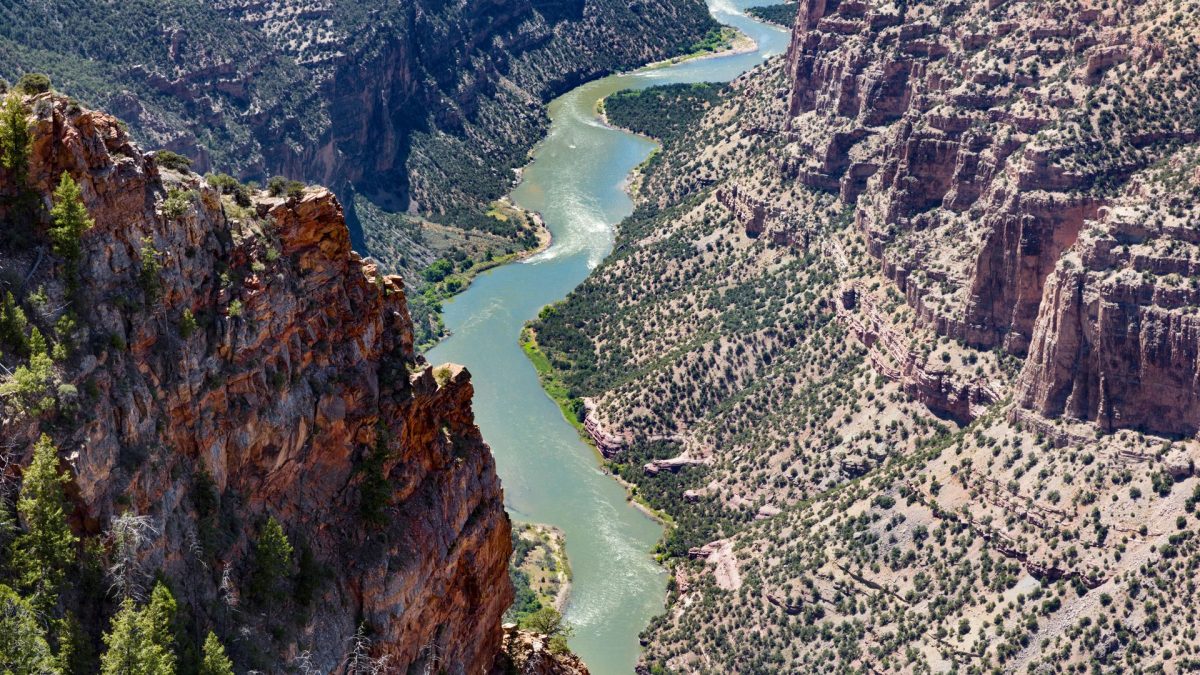
Imagine a river that seems to defy the very laws of nature, flowing uphill for over 100 miles. That’s precisely what the San Juan River, the largest tributary of the mighty Colorado River, has been doing for centuries. For years, this phenomenon has left geologists and hydrologists scratching their heads, searching for a plausible explanation. But now, a groundbreaking discovery may finally shed light on this remarkable natural wonder.
The San Juan River’s uphill journey has long been a source of fascination and mystery. As it winds its way through the rugged terrain of the Colorado Plateau, it appears to be flowing against the grain of the landscape, defying our understanding of how water should behave. But the answers to this enigma may lie deep beneath the earth’s surface, in the very foundations of the region’s geology.
The Colorado Plateau’s Remarkable Uplift
The key to understanding the San Juan River’s unusual behavior lies in the dramatic uplift of the Colorado Plateau over the past 60 million years. This vast region, spanning parts of Colorado, Utah, Arizona, and New Mexico, has been steadily rising, creating a complex network of canyons, mesas, and plateaus that have shaped the landscape we see today.
Geologists now believe that this ongoing uplift, driven by the movement of the earth’s mantle, has played a crucial role in the San Juan River’s uphill journey. As the plateau continues to rise, the river has been forced to adapt, carving its way through the uplifting terrain and, in the process, flowing against the grain of the landscape.
This discovery not only sheds light on the San Juan River’s mysterious behavior but also has far-reaching implications for our understanding of the Colorado River system and the broader geological processes that have shaped the American Southwest.
The Mantle Plume Connection
The key to the San Juan River’s uphill flow lies in the movement of the earth’s mantle, the layer of molten rock that lies beneath the earth’s crust. Geologists have discovered that a massive mantle plume – a column of hot, upwelling rock – has been pushing the Colorado Plateau upwards for millions of years.
This mantle plume, which originates deep within the earth’s interior, is believed to be the driving force behind the plateau’s steady rise. As the plume pushes upwards, it exerts an incredible amount of pressure on the overlying crust, causing the entire region to slowly but steadily lift.
It is this ongoing uplift that has forced the San Juan River to adapt and flow against the grain of the landscape, carving its way through the rising terrain and defying our expectations of how a river should behave.
- ➡Everyone Is Talking About This Woman Who Donated Her Kidney – The Shocking Truth She Uncovered 3 Years Later
- ➡China Built a Rail Line in 9 Hours — But Wait Until You See What Happened Next
- ➡Doctors Gave Me 6 Months to Live, But I Defied the Odds 11 Years Later — Then I Got This Unexpected Letter
- ➡The Explosive 6.7 Billion Euro Deal That Could Change the Future of Indian Air Power
The River’s Battle Against Rising Rock
As the Colorado Plateau continues to rise, the San Juan River has been engaged in a constant battle to maintain its course. The river must constantly adapt to the changing landscape, cutting through the uplifting terrain and adjusting its path to maintain its flow.
This process has been ongoing for millions of years, with the river slowly eroding the rising rock and adjusting its course to maintain its uphill journey. The result is a river that winds its way through a complex network of canyons, mesas, and plateaus, constantly responding to the shifting geology of the region.
Geologists believe that this ongoing battle between the river and the rising landscape is a key driver of the San Juan’s unusual behavior, as the river must constantly work to overcome the forces of uplift and maintain its flow.
Reshaping Our Understanding of Geological Processes
The discovery of the mantle plume’s role in the San Juan River’s uphill flow has profound implications for our understanding of geological processes. It challenges the traditional view of rivers as passive features that simply respond to the landscape, and instead suggests that they are active participants in shaping the earth’s surface.
- ➡The Citrus Tree Care Myth That’s Been Debunked
- ➡Are Common Household Metals Actually Controlling the Global Economy?
- ➡Turkey Stuns France With Unexpected Aerospace Partner — But the Twist Is…
- ➡Day Set To Turn Into Night As The Longest Solar Eclipse Of The Century Now Has An Official Date With Experts Highlighting Its Exceptional Duration And Rare Visibility
Moreover, this discovery has the potential to reshape our understanding of the Colorado River system as a whole. As the largest tributary of the Colorado River, the San Juan’s behavior has a significant impact on the overall flow and dynamics of the river basin. By understanding the forces driving the San Juan’s uphill journey, we may gain new insights into the broader processes that shape this critical water resource.
For geologists and hydrologists, this discovery also opens up new avenues for research and exploration. By studying the San Juan River and its interactions with the rising Colorado Plateau, scientists may uncover new insights into the complex interplay between tectonic forces, erosion, and the behavior of rivers.
Monitoring the Ongoing Changes
As the Colorado Plateau continues to rise and the San Juan River continues its uphill battle, scientists are closely monitoring the ongoing changes in the region. By tracking the river’s flow patterns, erosion rates, and the shifting landscape, they hope to gain a deeper understanding of the forces shaping this remarkable natural phenomenon.
This research will not only shed light on the San Juan River’s unique behavior but also have broader implications for our understanding of the Colorado River system and the geological processes that have shaped the American Southwest. As the region continues to evolve, the insights gained from this research may prove invaluable in managing and conserving this critical water resource.
- ➡Ethiopia’s Massive Crack: Where Continents Are Slowly Tearing Apart
- ➡Inside China’s Booming Digital Yuan: 500 Million Transactions in a Single Day
- ➡Unexpected Twist: Retiree Turns Social Housing Into Second Home, Defies Eviction
- ➡The Shocking Underwater Discovery That Left Scientists Speechless: The Bizarre Cow Carcass Experiment That Rewrote Deep-Sea Science
The San Juan River’s uphill journey has long been a source of fascination and mystery, but with the discovery of the mantle plume’s role in the Colorado Plateau’s uplift, geologists may finally have the answers they’ve been seeking. This remarkable natural wonder is not only a testament to the power of geological forces, but also a reminder of the ongoing dynamism of our planet’s surface.
Unlocking the Secrets of the San Juan River
As scientists continue to explore the San Juan River and the forces shaping its unusual behavior, they are uncovering a wealth of insights that could have far-reaching implications. From better understanding the Colorado River system to gaining new perspectives on geological processes, the study of this remarkable river promises to yield valuable discoveries.
By tracking the river’s flow patterns, erosion rates, and the shifting landscape, researchers are piecing together a more complete picture of the complex interplay between tectonic forces, hydrology, and the evolution of the American Southwest. This research not only sheds light on the San Juan River’s unique behavior but also has the potential to inform the management and conservation of this critical water resource.
As the Colorado Plateau continues to rise and the San Juan River persists in its uphill journey, the scientific community remains captivated by this natural wonder. The insights gained from this research may not only reshape our understanding of geological processes but also inspire new avenues of exploration and discovery in the years to come.
| Key Facts About the San Juan River’s Uphill Flow | Potential Impacts |
|---|---|
|
|
“The discovery of the San Juan River’s uphill flow and its connection to the Colorado Plateau’s uplift is a game-changer in our understanding of the region’s geology. It challenges long-held assumptions and opens up new avenues for research that could yield valuable insights for years to come.”
– Dr. Emily Wilkins, Geologist, University of Colorado Boulder
“This research on the San Juan River’s behavior has the potential to reshape our approach to managing and conserving the Colorado River basin. By understanding the underlying geological forces at play, we can develop more effective strategies for ensuring the long-term sustainability of this critical water resource.”
Also Read– John Watkins, Water Policy Analyst, Western Resource Advocates
“The San Juan River’s uphill journey is a remarkable example of the dynamic and ever-evolving nature of our planet. This discovery not only challenges our preconceptions about how rivers should behave, but also opens up new horizons for exploring the complex interactions between tectonic forces, hydrology, and the shaping of landscapes.”
– Dr. Samir Khanna, Geomorphologist, Utah State University
“The true test of any scientific discovery is not just in the insights it provides, but in the new questions it raises. The San Juan River’s uphill flow has certainly done that, and I can’t wait to see what further mysteries it unlocks about the fascinating geology of the American Southwest.”
“As the Colorado Plateau continues to rise and the San Juan River persists in its uphill journey, the scientific community remains captivated by this natural wonder. The insights gained from this research may not only reshape our understanding of geological processes but also inspire new avenues of exploration and discovery in the years to come.”
Why does the San Juan River flow uphill?
The San Juan River’s uphill flow is driven by the ongoing uplift of the Colorado Plateau, which is being pushed upwards by a massive mantle plume deep beneath the earth’s surface. As the plateau rises, the river must constantly adapt and carve its way through the changing landscape, flowing against the grain of the terrain.
What are the potential impacts of this discovery?
The discovery of the San Juan River’s uphill flow and its connection to the Colorado Plateau’s uplift has several potential impacts, including improved management and conservation of the Colorado River basin, new insights into the complex interplay between tectonic forces and river systems, and the potential to inform future geological research and exploration in the region.
How does this discovery challenge our understanding of geological processes?
This discovery challenges the traditional view of rivers as passive features that simply respond to the landscape. Instead, it suggests that rivers are active participants in shaping the earth’s surface, constantly adapting to the changing geological forces at play. This has far-reaching implications for our understanding of how landscapes evolve over time.
- ➡You’ll Never Believe What This Stranger Gave My Daughter at the Park – It Changed Everything
- ➡Trapped for 72 Hours: How an Unexpected AI Voice Became My Lifeline Amid the Manila Earthquake Rubble
- ➡Flying in 2026? Passport Rule Changes Australian Seniors Should Know…
- ➡The Shocking Truth: One Employee Refused to Leave After 200 Were Laid Off on a Friday
What are some of the key facts about the San Juan River’s uphill flow?
Key facts include the river’s over 100-mile uphill journey, the role of the Colorado Plateau’s uplift driven by a mantle plume, the river’s constant adaptation to the changing landscape, and the broader implications for the Colorado River system and geological research.
How are scientists monitoring the ongoing changes in the region?
Scientists are closely tracking the San Juan River’s flow patterns, erosion rates, and the shifting landscape to gain a deeper understanding of the forces shaping this remarkable natural phenomenon. This research aims to inform the management and conservation of the Colorado River basin and unlock new insights into the geological processes at work.
What are some of the expert opinions on this discovery?
Experts, including geologists, water policy analysts, and geomorphologists, have praised the discovery for its potential to reshape our understanding of geological processes, improve the management of the Colorado River system, and inspire new avenues of scientific exploration.
How does this discovery challenge long-held assumptions?
The discovery of the San Juan River’s uphill flow challenges long-held assumptions about how rivers should behave, suggesting that they are active participants in shaping the landscape rather than passive features. This has far-reaching implications for our understanding of geological processes and the evolution of river systems.
- ➡Centrelink Weekly Payments Updated 26th Of March: Huge Changes For Seniors…
- ➡This Sole Survivor’s Hidden Note Revealed a Shocking Truth About the Crash
- ➡Goodbye Hair Dyes — The Unexpected New Solution That Covers Grey and Makes You Look Younger
- ➡72 in a 70 Zone? Why Speed Cameras Are Now Turning a Blind Eye — For Now
What are the next steps for further research on the San Juan River?
Going forward, scientists will continue to closely monitor the San Juan River and the ongoing changes in the Colorado Plateau, exploring the complex interplay between tectonic forces, hydrology, and the evolution of the landscape. This research has the potential to yield valuable insights that could inform the management and conservation of the Colorado River basin and inspire new avenues of geological exploration.