If you’re like me, you’ve probably roasted potatoes countless times, only to end up with lackluster results – soggy on the inside, not quite crispy on the outside. But what if I told you there’s a simple trick that can take your roasted potatoes to new heights of perfection?
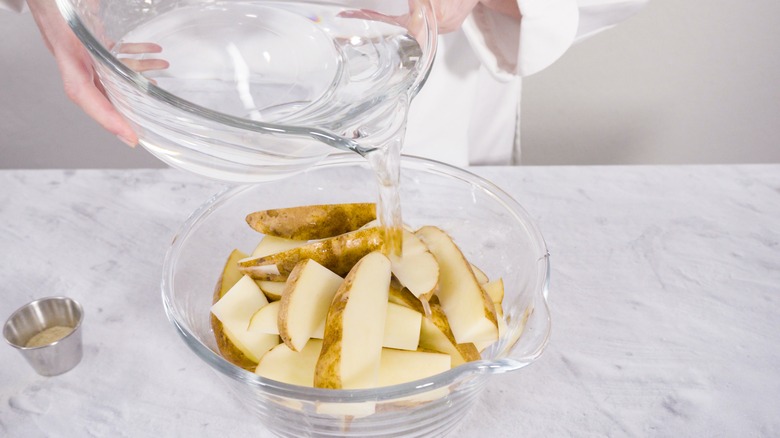
The secret? Soaking your potatoes in cold water before roasting. It might sound like an extra step, but trust me, it’s a game-changer. By taking just a few minutes to soak your potato cubes or wedges, you can unlock a whole new world of texture and flavor.
The Surprising Science Behind Soaking Potatoes
Potatoes are packed with starch, and that’s both a blessing and a curse when it comes to roasting. The starch is what gives them that lovely, fluffy interior, but it can also cause them to steam and become soggy if not properly managed. Enter the cold water soak.
When you soak potatoes in cold water, it helps to draw out some of that excess starch. This leaves you with drier, more concentrated potato pieces that are primed for crisping up in the oven. The cold water also helps to firm up the potato cells, leading to a crisper, more satisfying texture.
It’s a simple trick, but one that professional chefs have been using for years to achieve that perfect balance of creamy interior and shatteringly crisp exterior.
The Perfect Soaking Time for Different Potato Cuts
Not all potato cuts are created equal when it comes to soaking. Smaller, bite-sized pieces will only need 15-30 minutes in the cold water, while larger wedges or cubes may benefit from a soak of up to an hour. The key is to keep an eye on the potatoes and pull them out when they’ve lost that raw, starchy look and feel.
One important note: be sure to pat your potatoes dry thoroughly before roasting. Any excess surface moisture can actually inhibit crisping, so a good towel-drying session is essential.
With the right soaking time and a bit of drying, you’re well on your way to potato perfection.
- ➡Boiled Eggs vs Scrambled Eggs: The Surprising Winner You’d Never Expect
- ➡The Pebble Egg Myth That’s Costing Gardeners Thousands
- ➡Trapped for 72 Hours: How an Unexpected AI Voice Became My Lifeline Amid the Manila Earthquake Rubble
- ➡Unbelievable! 392-Year-Old Greenland Shark Discovered in the Arctic – What It’s Seen Will Shock You
The Dramatic Difference in Roasting Results
When you pull those soaked and dried potato pieces out of the oven, the transformation is nothing short of remarkable. Instead of the limp, steamed spuds you may be used to, you’ll be greeted with a glorious golden-brown crust that gives way to a fluffy, creamy interior.
The difference is night and day – and it all comes down to that simple cold water soak. It’s a trick that professional chefs have been using for ages, but one that home cooks are just starting to catch on to.
Once you experience the magic of soaked and roasted potatoes, there’s no going back. Your roasted potato game will be forever elevated.
The Best Potato Varieties for Soaking and Roasting
Not all potatoes are created equal when it comes to soaking and roasting. Starchy varieties like Russets, Yukon Golds, and Kennebecs tend to work best, as their high starch content is what allows them to transform so dramatically.
| Potato Variety | Starch Content | Best for Soaking/Roasting? |
|---|---|---|
| Russet | High | Yes |
| Yukon Gold | Medium-High | Yes |
| Kennebec | High | Yes |
| Red Bliss | Medium | No |
| Fingerling | Low | No |
Lower-starch varieties like Red Bliss and Fingerling potatoes won’t benefit as much from the soaking process, as they don’t have the same starch content to draw out. For the best results, stick with the high-starch heroes.
Common Mistakes That Ruin the Soaking Benefits
Of course, even with the magic of a cold water soak, it’s possible to go wrong when it comes to roasting potatoes. Here are a few common missteps to avoid:
| Mistake | What Goes Wrong | How to Fix It |
|---|---|---|
| Overcrowding the pan | Potatoes steam instead of crisp | Spread potatoes in a single layer on a large baking sheet |
| Skipping the drying step | Potatoes remain soggy and don’t crisp up | Thoroughly pat potatoes dry with paper towels or a clean kitchen towel |
| Using the wrong oil | Oil burns and ruins flavor/texture | Choose a high-heat oil like avocado, grapeseed, or refined olive oil |
| Roasting at too low a temperature | Potatoes steam instead of roasting | Crank the oven up to at least 400°F (200°C) |
With a little attention to detail, you can ensure that your soaked and roasted potatoes turn out perfectly crisp and golden every single time.
The Secrets of Professional Chefs for Maximum Crispiness
“The key to really crispy roasted potatoes is all in the preparation. Soaking them in cold water helps draw out excess starch, while making sure they’re thoroughly dried before roasting is crucial. It’s a simple step that makes a world of difference.”
– Chef Jenna Hernandez, culinary instructor and recipe developer
But the professionals have a few more tricks up their sleeves when it comes to achieving maximum crispiness. Many chefs recommend tossing the soaked and dried potato pieces in a bit of cornstarch or flour before roasting. This creates an even crispier outer shell.
“I always dust my potatoes with a light coating of cornstarch or all-purpose flour before roasting. It helps the outsides get unbelievably crisp, while still keeping the insides light and fluffy.”
– Chef Dominic Russo, executive chef at a Michelin-starred restaurantAlso Read
- ➡Inside China’s Booming Digital Yuan: 500 Million Transactions in a Single Day
- ➡$2400 Age Pension Centrelink Boost April? Payment Breakdown and Regular Benefits
- ➡You Won’t Believe What Was Inside This $50 Storage Unit Treasure Trove
- ➡The Shocking Truth About the Mysterious Yellow Ribbon on Dog Leashes That Everyone Needs to Know
Another pro tip? Crank up the heat towards the end of the roasting time to really drive home that golden-brown crust. A quick broil for the last 5 minutes can take your potatoes to the next level.
“For the ultimate crispy exterior, I’ll sometimes finish my roasted potatoes under the broiler for a few minutes at the end. It helps them get that perfect crunch without drying them out.”
– Erin Jeanne McDowell, baking expert and cookbook author
With a few simple tweaks and a bit of soaking time, you can elevate your roasted potatoes to restaurant-worthy status. It’s an easy upgrade that will have your friends and family raving.
The Life-Changing Power of Soaked Potatoes
I know it might seem like an extra step, but trust me – soaking your potatoes in cold water before roasting is a game-changer. The difference in texture and flavor is truly remarkable, and it’s a trick that professional chefs have been using for years.
- ➡The Heartbreaking Reason I’ve Waited 7 Years for a Man Who Never Showed Up — Until a Stranger Changed Everything
- ➡Australia Skilled Visa Changes 2026: Latest Updates Explained
- ➡Millionaire vs Skeptic — The Surprising Winner That Silenced the Doubters
- ➡The Surprising 7,000-Year-Old Stone Wall Captivating the Internet
So the next time you’re planning a roasted potato side dish, don’t skip that crucial soaking step. Take the extra 30 minutes, dry those potatoes thoroughly, and watch as they transform into crispy, golden-brown perfection. Your taste buds will thank you.
It’s a simple tweak, but one that can elevate your home cooking to new heights. Roasted potatoes will never be the same.
FAQ
How long should I soak my potatoes?
The optimal soaking time will depend on the size and cut of your potatoes. Smaller cubes or wedges only need 15-30 minutes, while larger pieces may benefit from up to an hour in the cold water.
Do I need to use cold water?
Yes, using cold water is essential. The cold temperature helps to firm up the potato cells and draw out excess starch.
- ➡Australia $400 Cost of Living Boost 2026 – What You Need to Know…
- ➡The Baffling River That Flows Uphill for Over 100 Miles – The Shocking Explanation Behind It
- ➡$341 Parking Fines Australia April 2026: New Rules Drivers Must Know
- ➡The Shocking Truth About Sweet Potatoes and Regular Potatoes You Didn’t Know (But Experts Are Desperate For You To Find Out)
Can I soak potatoes ahead of time?
Absolutely! Soaked potatoes can be stored in the refrigerator for up to 24 hours before roasting. Just be sure to pat them thoroughly dry before cooking.
What’s the best oil for roasting soaked potatoes?
Look for a high-heat oil like avocado, grapeseed, or refined olive oil. These can withstand the high oven temperatures needed to achieve maximum crispiness.
Can I roast the potatoes on the same pan I used for soaking?
No, it’s best to transfer the soaked and dried potatoes to a clean baking sheet or roasting pan. This helps prevent any residual moisture from steaming the potatoes.
How do I know when my potatoes are done roasting?
Perfectly roasted potatoes should be golden-brown and crispy on the outside, with a fluffy, creamy interior. Use a fork or knife to test for doneness.
Can I reheat leftover roasted potatoes?
Absolutely! Leftover soaked and roasted potatoes can be reheated in the oven at 400°F (200°C) for 10-15 minutes to restore their crispy texture.
Do I need to parboil the potatoes before roasting?
No, the cold water soak accomplishes the same goal as parboiling, so there’s no need for that extra step. Just soak, dry, and roast for best results.