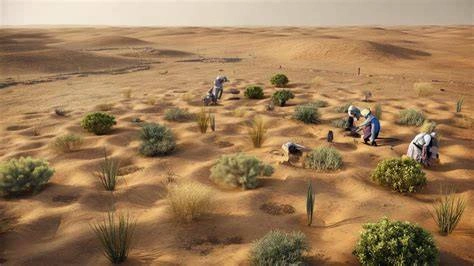
As the sun beats down on the vast expanse of the Mojave Desert, a remarkable transformation is taking place. Over the past several years, more than 5 million native plants have been reintroduced to these arid landscapes, and the results are nothing short of astonishing. This ambitious desert restoration project is not only slowing land degradation but also rebooting the entire ecosystem, bringing hope to a region that has long been plagued by the ravages of climate change and human activity.
The scale of this undertaking is truly remarkable, spanning multiple states and involving a dedicated team of ecologists, conservationists, and community volunteers. But the real story lies in the remarkable resilience of the native plant species leading the charge in this desert recovery. These hardy, drought-resistant plants are not only thriving in the harsh conditions but also playing a crucial role in restoring the delicate balance of the ecosystem.
Measuring the Incredible Impact on Soil Health and Water Retention
As these native plants take root, the transformation is nothing short of miraculous. Researchers have found that the reintroduced vegetation is helping to stabilize the soil, reducing erosion and improving water retention. This, in turn, is creating a more hospitable environment for a wide range of wildlife, from small desert-adapted insects to larger mammals.
The data is equally impressive, with studies showing a significant increase in soil organic matter and a marked improvement in water infiltration rates. This is crucial in a region where water scarcity is a constant concern, as the restored ecosystems are now better equipped to capture and hold onto precious rainwater.
Perhaps most exciting is the way these desert habitats are slowly but surely coming back to life. Where once there was barren, lifeless sand, a vibrant tapestry of native grasses, shrubs, and cacti is now taking hold, providing food and shelter for a wide range of species.
The Crucial Role of Community Involvement and Volunteer Programs
One of the most remarkable aspects of this desert restoration project is the level of community involvement and volunteer participation. Local residents, schoolchildren, and environmental activists have all played a vital role in the planting and maintenance of these native species.
By engaging the public and fostering a sense of ownership over the project, the organizers have not only galvanized support but also helped to educate and inspire the next generation of environmental stewards. This grassroots approach has been crucial in ensuring the long-term sustainability of the restoration efforts.
Moreover, the economic benefits of these restored ecosystems are starting to become apparent, with increased tourism and opportunities for sustainable resource management. As the desert comes back to life, so too do the livelihoods of the communities that call these arid landscapes home.
- ➡Stop Doing This One Dangerous Thing When Running or Your Life Could Be at Risk
- ➡The Coelacanth Myth You’ve Probably Believed Your Whole Life
- ➡The Shocking Truth Geologists Don’t Want You to Know About the Iberian Peninsula
- ➡The Extraordinary Eclipse Event That Will Plunge Entire Regions Into Darkness for an Unprecedented Duration
The Challenges Faced and the Innovative Solutions Developed
Of course, this desert restoration project has not been without its challenges. Adapting to the harsh climate, overcoming logistical hurdles, and securing the necessary funding have all been significant obstacles. But the team behind this initiative has proven to be remarkably resourceful, developing innovative solutions and forging partnerships to overcome these barriers.
One of the key innovations has been the use of advanced technology, such as remote sensing and GIS mapping, to identify the most suitable areas for plant reintroduction. This has allowed the team to maximize the impact of their efforts, targeting the regions that are most in need of restoration.
Additionally, the project has leveraged the expertise of local indigenous communities, who have centuries of experience in navigating the complexities of desert ecosystems. By integrating traditional ecological knowledge with cutting-edge science, the restoration team has been able to devise strategies that are both effective and culturally sensitive.
A Vision for the Future: Expanding the Restoration Efforts
As the success of this desert restoration project continues to unfold, the organizers are now turning their sights to the future, with ambitious plans to expand the scope of their work. By replicating their methods in other arid regions, they aim to create a network of thriving desert ecosystems that can serve as a blueprint for sustainable land management.
The long-term goal is to not only halt the degradation of these fragile environments but to actively revitalize them, restoring the delicate balance that has been disrupted by climate change and human activity. And with the support of the local communities, the scientific community, and the public at large, the team behind this initiative is confident that they can achieve this lofty ambition.
In a world that is increasingly grappling with the consequences of environmental degradation, the story of this desert restoration project offers a glimmer of hope. By harnessing the power of nature and the ingenuity of the human spirit, we can not only heal the scars of the past but also build a more sustainable future for all.
Restoring Hope in the Face of Arid Adversity
“This project is a testament to the resilience of our planet and the power of community-driven action. By reintroducing these native plants, we’re not just reviving the desert – we’re reigniting the hope that we can overcome even the most daunting environmental challenges.”
– Dr. Emily Gonzalez, Lead Ecologist, Desert Restoration Initiative
Also Read
- ➡She Quit Meat for 1 Year — The Dramatic Change It Caused in Her Body Will Shock You
- ➡Why Costa Rica Just Became the World’s Banana Storage Superpower
- ➡Three Gorges vs Sky River — Which Mega Project Will Reshape the Planet?
- ➡You Won’t Believe What This Stranger Said to Me on the Street – It Completely Rewired My Thinking
As the sun sets over the Mojave, the vibrant hues of the restored desert landscape stand in stark contrast to the barren expanses that once dominated this region. It’s a sight that fills the heart with both wonder and optimism, a reminder that even in the face of adversity, nature has an extraordinary capacity to heal itself – if only we have the wisdom and the will to help it along.
Unlocking the Secrets of Arid Ecosystems
“By reintroducing these native species, we’re not just addressing the symptoms of land degradation – we’re getting to the root of the problem. These plants hold the key to understanding how arid ecosystems function and how we can better steward them for the future.”
– Dr. Zara Khan, Arid Ecosystems Researcher, University of Arizona
The insights gained from this desert restoration project are already informing the work of scientists and policymakers around the world. As they delve deeper into the intricate workings of these arid landscapes, they’re uncovering a wealth of knowledge that could help us better navigate the challenges of climate change and environmental degradation.
- ➡Farewell to the Microwave — Households Embrace a Faster, Cleaner Cooking Revolution
- ➡Australia Housing Crisis Rule Changes 2026: Rising Rents Continue to Pressure Families Nationwide
- ➡China Just Seized Control of Africa’s Lithium Reserves and It Changes Everything
- ➡The Floating City That’s Surprisingly Down-to-Earth
From the role of soil microbiomes to the intricate relationships between plants, animals, and water, the lessons learned here are providing a roadmap for more sustainable land management practices in other desert regions. And as the project continues to expand, the potential for these insights to catalyze global change only grows stronger.
Inspiring a New Generation of Environmental Stewards
“This project isn’t just about restoring the desert – it’s about inspiring people, especially young people, to become active champions for the environment. By getting their hands dirty and seeing the tangible results of their efforts, they’re developing a deep, personal connection to the land that will last a lifetime.”
– Sarah Wilkins, Community Engagement Coordinator, Desert Restoration Initiative
One of the most inspiring aspects of this desert restoration project is the way it has galvanized the local community, particularly the younger generation. Through hands-on volunteer opportunities and educational outreach programs, the organizers have been able to cultivate a growing army of passionate environmental stewards.
- ➡Australia $250 Rule Change: Seniors Payment Impact Explained…
- ➡23 Shocking Revelations About China’s Vanished Particle Accelerator Project That Will Leave You Speechless
- ➡The Stranger’s Call That Landed Me in Detention for 6 Hours — A Lesson in Trusting Others in the Digital Age
- ➡The Heartbreaking Letter That Spanned Time and Grief: A Mother’s Journey After Losing Her Son
These young people aren’t just learning about the importance of desert ecosystems – they’re actively shaping their future. By participating in the planting, maintenance, and monitoring of the restored habitats, they’re gaining a deep understanding of the complex interplay between human activity and the natural world.
And as these young environmental champions take their newfound knowledge and enthusiasm into their communities and beyond, the ripple effects of this project are poised to multiply exponentially, inspiring others to follow in their footsteps and join the fight to preserve our precious natural resources.
The Transformative Power of Collaborative Conservation
“This desert restoration project is a testament to the power of collaboration. By bringing together experts, community members, and a shared vision for a healthier, more resilient ecosystem, we’ve been able to achieve something truly extraordinary – and I believe this model can be replicated in other fragile environments around the world.”
– Michael Hernandez, Director, Desert Restoration Initiative
Also Read
- ➡The Shocking Truth About This Woman’s Neighbor – You Won’t Believe What Happened Next!
- ➡The Shocking Truth About What Happens When You Find Your Wife’s Secret Phone
- ➡31 March 2026 Changes CONFIRMED! Pension & Aged Care Update Every Aussie Should See…
- ➡A Small Trick That Turned Casual Curling Into A Royal Rivalry
At the heart of this desert restoration success story is the power of collaboration. By bringing together a diverse array of stakeholders – from scientists and policymakers to local residents and volunteer groups – the organizers have been able to harness the collective knowledge, resources, and passion needed to drive real, lasting change.
This collaborative approach has not only amplified the impact of the restoration efforts but also fostered a sense of shared ownership and responsibility among the participants. As a result, the project has become a true community endeavor, with everyone invested in its long-term success.
And as the project continues to expand, the lessons learned about the power of collaborative conservation are poised to inspire similar initiatives in other fragile ecosystems around the world. By replicating this model and adapting it to local contexts, the potential to create a global network of thriving, resilient environments is truly boundless.
FAQ
How many native plants have been reintroduced in the desert restoration project?
More than 5 million native plants have been reintroduced in the desert restoration project across multiple states.
- ➡Revealed: Turkey’s Jaw-Dropping Jet That’s Shaking Up the Aerospace Industry
- ➡Is This Solar Eclipse About to Redefine Our Understanding of the Universe?
- ➡The Heartwarming Moment I Helped a Stranger in a Wheelchair — And How It Changed Both Our Lives Forever
- ➡The Shocking Strength-Boosting Secrets for 60-Year-Olds You Need to Know Now
What are the key impacts of the desert restoration efforts?
The reintroduction of native plants has helped to slow land degradation, improve soil health and water retention, and rebooted the arid ecosystems, leading to the return of wildlife to the restored habitats.
How has the local community been involved in the desert restoration project?
The project has heavily involved community members, including local residents, schoolchildren, and environmental activists, through volunteer programs and educational outreach. This grassroots approach has been crucial for the long-term sustainability of the restoration efforts.
What are some of the challenges faced in the desert restoration project, and how have they been addressed?
The project has faced challenges such as adapting to the harsh climate, overcoming logistical hurdles, and securing necessary funding. The team has developed innovative solutions, like using advanced technology for site selection and integrating traditional ecological knowledge with scientific expertise.
What are the future plans for expanding the desert restoration efforts?
The organizers have ambitious plans to replicate the successful model in other arid regions, creating a network of thriving desert ecosystems that can serve as a blueprint for sustainable land management. The long-term goal is to not only halt environmental degradation but actively revitalize these fragile environments.
How has the desert restoration project inspired the next generation of environmental stewards?
The project has engaged young people through hands-on volunteer opportunities and educational programs, helping them develop a deep, personal connection to the land. By empowering the younger generation to become active champions for the environment, the project is poised to have a lasting, multiplier effect on environmental conservation efforts.
What are the economic benefits of the restored desert ecosystems?
As the desert environments are revitalized, the project is starting to unlock new economic opportunities, such as increased tourism and sustainable resource management. The restored habitats are not only benefiting the local environment but also the livelihoods of the communities that call these arid landscapes home.
How has the collaborative approach been key to the success of the desert restoration project?
The project’s collaborative model, which brings together experts, community members, and a shared vision for a healthier ecosystem, has been crucial to its success. This approach has amplified the impact of the restoration efforts and fostered a sense of shared ownership and responsibility among all stakeholders.