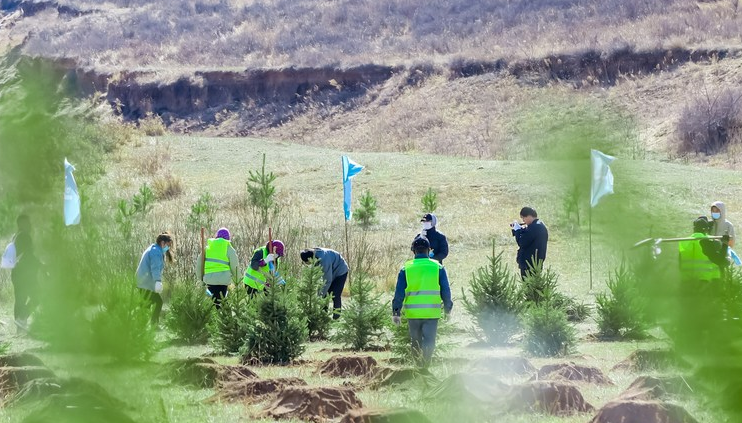
While the world watched in awe as China’s skylines transformed, few knew the untold story behind this environmental revolution. Behind the scenes, a massive reforestation effort has been quietly reshaping the country’s landscape, with over 1 billion trees planted since the 1990s. This insider’s look unveils the remarkable strategies and surprising benefits of China’s green transformation.
From the arid northern plains to the degraded southwestern regions, China’s relentless tree-planting campaign has been a game-changer. Local farmers, once plagued by encroaching deserts, now cultivate thriving orchards and lush forests, a testament to the power of human ingenuity and environmental stewardship.
As the world grapples with the dire consequences of climate change, China’s ambitious green initiative offers a glimmer of hope, proving that with the right approach, even the most daunting environmental challenges can be overcome.
Reclaiming the Land from the Dunes
In the once-barren regions of northern China, where sand dunes threatened to swallow entire villages, a remarkable transformation has taken place. Local farmers, once resigned to the relentless march of the deserts, have become the unsung heroes of China’s green revolution, working tirelessly to restore the land.
Through a combination of innovative planting techniques and ancient wisdom, these resilient individuals have managed to not only slow the expansion of the deserts but also to revive the once-degraded landscapes. Abandoned farmlands have been reclaimed, with lush orchards and verdant forests now thriving where sand dunes once ruled.
The impact of these efforts is not just environmental; it has also brought economic rewards to the local communities. Farmers now harvest a bounty of apricots, walnuts, and other valuable crops, demonstrating that environmental restoration and economic prosperity can go hand in hand.
Harnessing Technology and Traditional Knowledge
China’s reforestation success is a testament to its ability to seamlessly blend modern technology with centuries-old ecological wisdom. Satellite imagery and advanced mapping tools help identify the most critical areas for intervention, while traditional planting techniques passed down through generations ensure the survival and resilience of the new forests.
Local communities have played a pivotal role in this transformation, drawing on their intimate knowledge of the land and its unique challenges. By working closely with government agencies and scientific researchers, these grassroots stewards have become integral partners in the ongoing battle against desertification.
The result is a harmonious collaboration between cutting-edge technology and time-honored practices, creating a powerful synergy that has transformed the landscape and the lives of those who call it home.
Restoring Habitats and Reviving Wildlife
As the forests have returned to the once-barren landscapes, a remarkable resurgence of wildlife has followed. Species that had vanished from the region are now making a comeback, with rare and endangered animals reclaiming their rightful place in the restored ecosystems.
Researchers have documented the gradual but steady return of diverse plant and animal life, a testament to the resilience of nature when given the opportunity to heal. From the reappearance of the elusive Asiatic black bear to the thriving populations of migratory birds, the ecological recovery is a source of pride and inspiration for the local communities.
This environmental renaissance has not only revived the natural habitats but has also fostered a renewed sense of stewardship among the people, who now see themselves as custodians of the land and its diverse inhabitants.
- ➡$322 New Fee for an Australian Passport? Full Cost & Timeline Guide (2026)
- ➡Centrelink Weekly Payments Updated 26th Of March: Huge Changes For Seniors…
- ➡April 1, 2026 Age Pension Update: Critical Changes Every Australian Pensioner Needs to Know!
- ➡Why Saudi Arabia’s 1KM Megastructure is Dividing Opinions
Overcoming Challenges and Inspiring Global Change
Despite the remarkable progress, China’s reforestation efforts are not without their challenges. Ensuring the long-term sustainability of the newly established forests, adapting to the unpredictable effects of climate change, and maintaining the delicate balance between economic development and environmental preservation remain ongoing struggles.
Yet, China’s unwavering commitment to its green agenda has earned it a global reputation as a leader in environmental restoration. Other nations, facing their own ecological crises, are looking to China’s example for inspiration and guidance, recognizing the immense potential of large-scale reforestation to mitigate the impacts of climate change and revive degraded landscapes.
As the world continues to grapple with the urgent need for sustainable solutions, China’s billion-tree initiative stands as a testament to the power of human ingenuity, perseverance, and a deep reverence for the natural world. The lessons learned here have the potential to shape a greener, more resilient future for all.
The Path Forward: Securing a Sustainable Future
As China looks to the future, its reforestation efforts must adapt to the challenges posed by a rapidly changing climate. Researchers and policymakers are working tirelessly to ensure that the newly established forests are resilient and can withstand the unpredictable impacts of global warming.
- ➡The Shocking Reveal About the Asian Fighter Jet That Could Outshine the Rafale
- ➡The Mysterious Underwater Giant That Has Everyone Talking
- ➡Australian Pension Abroad 2026 Residency Rules, Payment Cuts & Centrelink Secrets Revealed…
- ➡You Won’t Believe the Life-Changing Discovery My Uber Driver Made on a “Wrong Turn”
Innovative approaches, such as drought-resistant tree species and precision irrigation techniques, are being explored to safeguard the long-term viability of the reforestation projects. At the same time, local communities remain at the heart of this endeavor, their deep connection to the land guiding the next chapter of China’s green transformation.
With unwavering determination and a steadfast commitment to environmental stewardship, China is poised to continue its remarkable journey, inspiring the world with its ability to tackle even the most daunting ecological challenges.
| Key Reforestation Milestones | Impact and Benefits |
|---|---|
| 1 Billion Trees Planted Since the 1990s | Slowed desert expansion, restored degraded land, and revived wildlife habitats |
| Innovative Planting Techniques and Traditional Knowledge | Seamless blend of modern technology and centuries-old ecological wisdom |
| Economic Rewards for Local Communities | Thriving orchards, sustainable crop cultivation, and new income sources |
| Resurgence of Endangered Wildlife | Asiatic black bears, migratory birds, and other species reclaiming their habitats |
“China’s reforestation efforts demonstrate the power of bold, long-term environmental initiatives. By combining cutting-edge technology and traditional ecological knowledge, they’ve been able to transform landscapes and revive habitats at a truly remarkable scale.”
Also Read
- ➡The Shocking Truth Behind the 1,095 Letters That Haunted a Man for Years
- ➡She Scrubbed Her Shower for Years — The Secret Hotel Trick Left It Sparkling Like New
- ➡The Surprising Habit That Boosts Focus, Sleep, and Decision-Making
- ➡Lavender Bloom Breaks Records Across Southern France as Soil Bacteria Ignite Early Flowering
Dr. Sarah Zhang, Environmental Policy Expert
“The resilience and adaptability of the local communities have been the driving force behind China’s green revolution. Their unwavering commitment to restoring the land is an inspiration to us all.”
Jian Li, Forestry Researcher at the Chinese Academy of Sciences
“China’s reforestation success offers a glimmer of hope in the face of global environmental challenges. It’s a testament to what can be achieved when governments, scientists, and local people work together towards a common goal.”
Also Read
- ➡The U.S. Navy’s New Supercarrier — But It Wasn’t Built for the Reasons You Think
- ➡The Chilling Discovery That Forced This Family to Sell Their Home Overnight
- ➡The Dangerous Toilet Hack You’re Probably Using Right Now (And Why You Need to Stop)
- ➡Australia Housing Crisis Rule Changes 2026: Rising Rents Continue to Pressure Families Nationwide
Emily Huang, Climate Policy Analyst
As the world continues to grapple with the pressing issue of climate change, China’s billion-tree initiative stands as a shining example of what can be achieved through bold, long-term environmental action. This insider’s look into the untold story of China’s green transformation serves as a powerful reminder that with the right approach, even the most daunting challenges can be overcome.
FAQs
What is the goal of China’s reforestation efforts?
The primary goals of China’s reforestation efforts are to slow the expansion of deserts, restore degraded land, and revive wildlife habitats across the country.
How have local communities been involved in the reforestation process?
Local communities have played a crucial role in China’s reforestation efforts, contributing their traditional ecological knowledge and working closely with government agencies and researchers to ensure the success of the projects.
- ➡China’s New Stealth Drone Can Fly for 72 Hours Straight Without Landing
- ➡Boiled Eggs vs Scrambled Eggs: The Surprising Winner You’d Never Expect
- ➡What the Government Doesn’t Want You to Know About the New Inheritance Laws
- ➡You’ll Never Believe What Happened When I Sat Next to a Stranger on a Flight – It Completely Changed My Life!
What are some of the economic benefits of the reforestation efforts?
The reforestation efforts have brought economic rewards to local communities, with farmers now cultivating thriving orchards and sustainable crops, providing new income sources and improving their livelihoods.
How has the reforestation impacted wildlife populations?
The restoration of habitats has led to a resurgence of diverse plant and animal life, including the return of endangered species like the Asiatic black bear and thriving populations of migratory birds.
What challenges does China face in maintaining the sustainability of its reforestation projects?
Ensuring the long-term viability of the newly established forests, adapting to the unpredictable effects of climate change, and balancing economic development with environmental preservation are some of the ongoing challenges China faces.
How is China’s reforestation initiative inspiring global change?
China’s successful reforestation efforts have earned it a reputation as a global leader in environmental restoration, with other nations looking to its example for guidance and inspiration in addressing their own ecological crises.
What are the key strategies China is using to secure a sustainable future for its forests?
Innovative approaches, such as drought-resistant tree species and precision irrigation techniques, are being explored to ensure the long-term resilience of the reforestation projects in the face of climate change.
How can other countries learn from China’s reforestation experience?
The lessons learned from China’s billion-tree initiative, including the importance of blending modern technology with traditional ecological knowledge and engaging local communities, can provide valuable insights for other nations seeking to tackle their own environmental challenges.