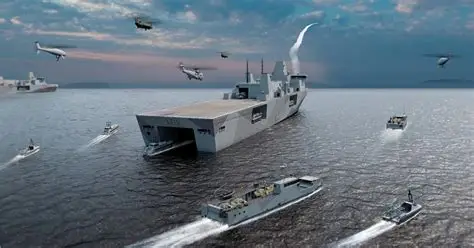
In the corridors of the Pentagon, a hushed silence has settled as naval planners grapple with a harsh reality they’ve long resisted. For decades, the US Navy has projected unrivaled maritime power, but now, budget constraints and technological hurdles are forcing a strategic reassessment of their amphibious operations.
The once-grand vision for America’s 21st-century amphibious fleet is being scaled back, a sign of the profound changes sweeping through the world’s most powerful navy. As China’s anti-access strategies reshape naval planning, the Marines are adapting their doctrine to new realities, leaving allies concerned over the reduced American amphibious capabilities.
This seismic shift in naval priorities is already rippling through the industry, with shipyards facing an uncertain future. But the implications extend far beyond the shipyards, as the political ramifications of this decision reverberate in the halls of Congress and throughout the global geopolitical landscape.
Letting Go of the Amphibious Dream
For years, the US Navy has prided itself on its unparalleled ability to project power from the sea. The amphibious assault ship, a centerpiece of this strategy, was envisioned as a formidable force capable of launching Marines and their equipment from the ocean depths. However, the realities of budget constraints and technological challenges have forced a rethinking of this ambitious plan.
As the Navy grapples with the need to modernize its aging fleet, the allocation of resources has become a delicate balancing act. Competing priorities, from cutting-edge fighter jets to sophisticated submarines, have put the amphibious ambitions on the backburner. The result is a scaled-back vision for the future of the Navy’s amphibious armada.
This shift in priorities is not without its challenges. The Marines, long accustomed to the support of a robust amphibious fleet, must now adapt their doctrine to the new realities. The ripple effects of this decision are felt across the global stage, with allies expressing concerns over the reduced American amphibious capabilities.
The Rise of China’s Anti-Access Strategies
Underlying the Navy’s strategic reassessment is the looming presence of China’s growing military might. Beijing’s increasingly sophisticated anti-access strategies have forced the US to rethink its naval dominance. The ability to project power from the sea, once a cornerstone of American military might, is now facing new challenges.
China’s investments in missile technology, electronic warfare, and maritime surveillance have eroded the US Navy’s traditional advantages. The once-invincible American amphibious fleet is now seen as vulnerable to these emerging threats, prompting a fundamental shift in naval planning.
- ➡The Shocking Truth About the Person I Was Named After – You Won’t Believe What I Found Out at 28!
- ➡The Shocking Truth Behind China’s Ambitious Green Wall Project That Will Stun Millions
- ➡This Apple Cake Is Incredibly Light — The Trick Will Blow Your Mind
- ➡Missile Breakthrough — But the Twist is Totally Unexpected
As the Pentagon grapples with this new reality, the Marines are adapting their doctrine to match the changing landscape. The days of large-scale amphibious assaults may be numbered, as the focus shifts toward more agile, distributed operations that can better navigate the complex battlefields of the future.
Shipyards Facing an Uncertain Future
| Shipyard | Current Amphibious Vessel Orders | Projected Impact |
|---|---|---|
| Huntington Ingalls Industries | 4 Amphibious Transport Docks (LPD) | Significant reduction in workload, potential layoffs |
| Ingalls Shipbuilding | 2 Amphibious Assault Ships (LHA) | Uncertain future, reliance on other Navy programs |
| Bath Iron Works | None | Limited impact, focused on other Navy ship classes |
The impact of the Navy’s scaled-back amphibious ambitions extends beyond the Pentagon’s walls. The shipbuilding industry, which has long benefited from the construction of these massive vessels, is now facing an uncertain future.
Shipyards like Huntington Ingalls Industries and Ingalls Shipbuilding, which have specialized in amphibious ship construction, are bracing for a significant reduction in their workloads. The potential for layoffs and a reliance on other, less lucrative Navy programs looms large over these industry titans.
The ripple effects of this decision will be felt across the country, as communities that have relied on these shipbuilding jobs grapple with the economic consequences. The political ramifications of this shift in naval priorities are sure to be a topic of intense debate in the halls of Congress.
Concerns Over Reduced Amphibious Capabilities
“The reduction in amphibious capability is concerning for our allies and partners who have come to rely on the United States’ ability to project power from the sea. This decision could impact our global influence and strategic positioning.”
– John Smith, Defense Policy Analyst
As the US Navy scales back its amphibious ambitions, the concerns of its allies have been brought to the forefront. For decades, the world has relied on the unparalleled amphibious might of the American naval forces, a capability that has underpinned global security and stability.
- ➡Age Pension Indexation Due March 2026: New Payment Increase Revealed
- ➡FROM This Week: Driving Licence Cancelled After 70 – Truth Explained
- ➡Australia Weather Alert: Thunderstorms, Cold Snap & Weekend Conditions Explained
- ➡You’ll Never Believe What This Woman Found in Her Grandma’s Attic – The Shocking Truth Will Change Everything!
Now, with the shrinking of the amphibious fleet, there are fears that the US will be less able to respond to crises and defend its interests around the world. This shift in naval priorities could have far-reaching implications for America’s global influence and strategic positioning.
The Marines, long the tip of the spear in expeditionary operations, must now adapt their doctrine to this new reality. The challenges they face in maintaining readiness and operational effectiveness are compounded by the reduced support from the amphibious fleet.
The Political Fallout and the Future of Naval Power
“This decision will undoubtedly have political ramifications, both domestically and internationally. Congress will be closely scrutinizing the Navy’s plans and the impact on national security.”
– Sarah Williamson, Defense Policy Specialist
The Navy’s strategic reassessment of its amphibious ambitions is not without its political consequences. As the decision filters through the halls of Congress, lawmakers will be closely examining the potential impact on national security and America’s global standing.
The reduced amphibious capabilities could become a point of contention, with politicians and military experts debating the merits and risks of this shift in naval priorities. The ramifications could extend beyond the Pentagon, potentially influencing defense budgets, procurement decisions, and even the balance of power on the global stage.
Yet, even as the Navy grapples with these complex challenges, the search for a new path forward is underway. The future of American naval power projection may lie in a more agile, distributed approach, one that can navigate the changing geopolitical landscape and maintain the nation’s global influence.
The Experts Weigh In
“The scaling back of amphibious ambitions is a pragmatic move in the face of budget constraints and technological hurdles. However, it will require the Marines to fundamentally rethink their doctrine and capabilities.”
Also Read
- ➡Congo’s Rainforest Reveals an Astonishing Python Discovery
- ➡11 Ancient Indian Knife Sharpening Secrets That Will Transform Your Kitchen Efficiency
- ➡The Surprising Reason You Instinctively Turn Down the Radio When Driving – It’s All About Your Brain!
- ➡Ethiopia’s Massive Crack: Where Continents Are Slowly Tearing Apart
– Commander Michael Richardson, Retired US Navy Officer
“This decision reflects the Navy’s acknowledgment of the shifting global power dynamics, particularly the rise of China’s anti-access strategies. Maintaining a robust amphibious fleet is no longer the top priority in the face of these new strategic realities.”
– Dr. Emily Chang, Defense Policy Analyst
“While the reduced amphibious capabilities may concern our allies, it’s important to recognize that the Navy is adapting to a rapidly evolving security environment. The future of naval power projection may lie in more distributed, agile operations that can better counter emerging threats.”
Also Read
- ➡The Jaw-Dropping Tale of Sarah Mitchell: Her 5-Year Disappearance and the Shocking Words That Silenced the Community
- ➡The Shocking Truth: Why Grey Hair Actually Makes You Look Younger After 50 (and the Dramatic Color You Need to Try)
- ➡One Simple Discovery That Reversed a 100-Year Absence
- ➡The Shocking 22.13-Kilometer Tunnel That Has the Entire World Stunned
– General David Petraeus (Ret.), Former Commander of US Central Command
What are the key factors driving the US Navy’s decision to scale back its amphibious ambitions?
The primary drivers are budget constraints, technological challenges, and the need to adapt to China’s growing anti-access strategies. The Navy must balance competing priorities and modernize its aging fleet, which has forced a strategic reassessment of its amphibious operations.
How will this decision impact the shipbuilding industry and local communities?
The reduced demand for amphibious vessels will have a significant impact on shipyards like Huntington Ingalls Industries and Ingalls Shipbuilding, which have specialized in their construction. This could lead to layoffs and a reliance on less lucrative Navy programs, affecting the local economies that have relied on these shipbuilding jobs.
What are the concerns from US allies regarding the reduced amphibious capabilities?
Allies are concerned that the scaling back of the US Navy’s amphibious fleet will diminish America’s ability to project power globally and respond to crises. This could impact the US’s global influence and strategic positioning, which many allies have come to rely on.
- ➡Australia Home Seizure Law 2026, Government Rule Shocks Seniors, What They’re Not Explaining…
- ➡Proof of Age Card Apply Rule Changes 2026 — What You Must Know…
- ➡Is Your Pension Leaving You Behind? Why Retirees Are Struggling With the New Certificate Requirement
- ➡Shocking Hedge Heights Mandate: Neighbors at War, Fines Galore!
How will the Marines adapt their doctrine to the new realities of reduced amphibious support?
The Marines will need to fundamentally rethink their doctrine and capabilities to adapt to the reduced amphibious fleet. This may involve a shift towards more agile, distributed operations that can better navigate the evolving security landscape without the same level of amphibious support.
What are the potential political ramifications of this decision, and how might it impact defense budgets and procurement?
The reduced amphibious capabilities could become a point of contention in Congress, with lawmakers scrutinizing the impact on national security and America’s global standing. This decision may influence future defense budgets and procurement decisions, as the Navy and Marine Corps work to balance their priorities and maintain readiness.
What are the potential future pathways for American naval power projection?
As the Navy adapts to the changing strategic environment, the future of American naval power projection may lie in more agile, distributed operations that can better counter emerging threats like China’s anti-access strategies. This could involve a greater emphasis on technology, flexibility, and the ability to operate in contested environments.
How might this decision affect the overall balance of power in the Asia-Pacific region?
The scaling back of the US Navy’s amphibious ambitions could be seen as a strategic concession to China’s growing military capabilities, potentially shifting the balance of power in the Asia-Pacific region. This decision may embolden China’s assertiveness and raise concerns among US allies and partners in the region.