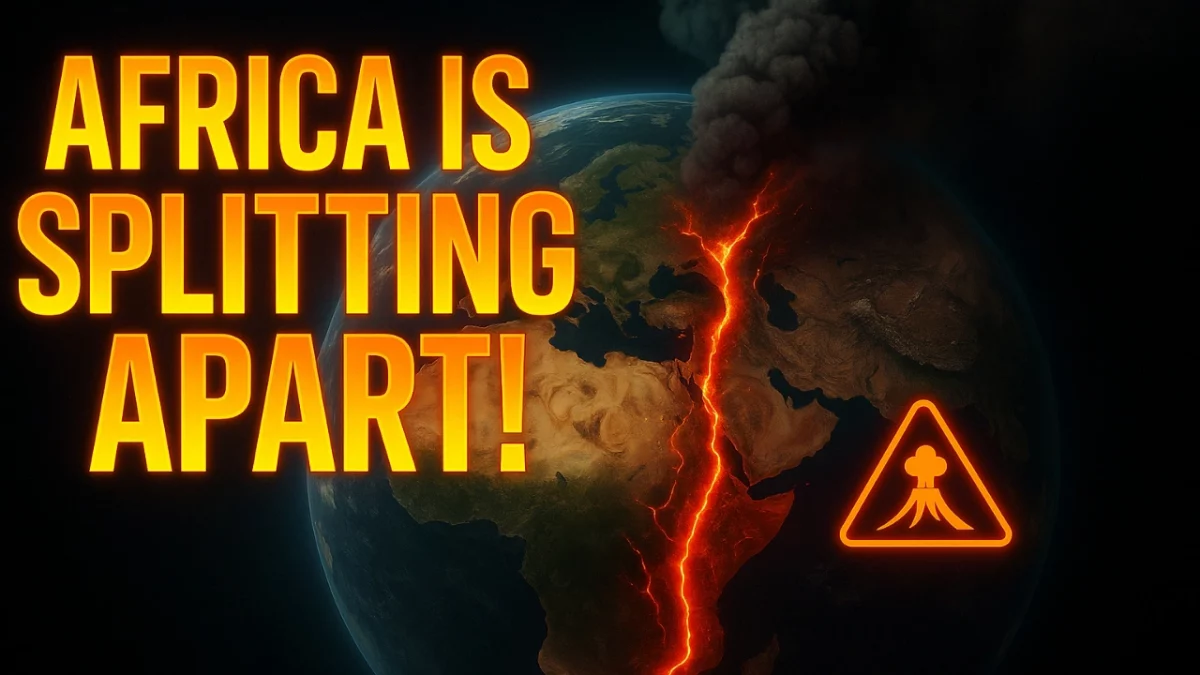
Nestled in the heart of Ethiopia’s Afar region, farmer Alemayehu witnessed something extraordinary unfolding on his land. Overnight, a massive crack had appeared, stretching across the once-solid ground. This was no ordinary fissure – it signaled the beginning of a dramatic geological event that could eventually lead to the birth of a new ocean.
Alemayehu’s story is just one small piece of a much larger puzzle that scientists have been closely studying for decades: the slow but steady splitting of the African continent. The East African Rift System, a vast geological feature that runs from the Red Sea down to Mozambique, is the epicenter of this remarkable process, and it is providing crucial insights into how continents can gradually drift apart over millions of years.
Geological Forces Driving Africa’s Continental Split
The East African Rift System is the result of powerful tectonic forces deep beneath the Earth’s surface. As the African and Somali plates move away from each other, a rift or valley is slowly forming, carving a path that could eventually lead to the creation of a new ocean basin. This process is driven by the upwelling of hot magma from the Earth’s mantle, which is pushing the plates apart and causing the land to stretch and crack.
The evidence of this continental drift is visible in the dramatic landscape of the Afar region, where the 2005 Ethiopian rift event opened a massive chasm over 30 meters deep and several kilometers long. This was just one of many such events that have been documented in the region, as the relentless forces of plate tectonics continue to reshape the land.
- ➡Australia: New Fuel Allowance End Date as Social Welfare Scheme Extended
- ➡The Shocking Truth I Discovered About My Family at 30 – You Won’t Believe What Happened Next
- ➡Australia Licence Renewal Fee Rule Changes: What You Need to Know in 2026
- ➡New Laws to Crack Down on Petrol Prices in Australia (2026 Explained)
Experts believe that if this process continues, the African continent will eventually split in two, with the eastern portion drifting away to form a new, independent landmass. This would be a geological first, as no one has ever witnessed the birth of a new ocean in modern times.
The Future Ocean: What Scientists Predict
According to the leading scientists studying the East African Rift System, the eventual formation of a new ocean is a distinct possibility. As the rift continues to widen and deepen, the land will continue to stretch and thin, eventually allowing seawater to flood the newly formed valley and create a new body of water.
This process is expected to take millions of years to unfold, but the early signs are already visible. The Red Sea, for example, is considered a precursor to this future ocean, as it is the result of a rift that began forming around 30 million years ago. Likewise, the Gulf of Aden, located between the Horn of Africa and the Arabian Peninsula, is another example of an oceanic rift in its early stages.
Scientists are closely monitoring the changes in the East African Rift System, using a variety of tools and techniques to better understand the complex geological processes at work. From satellite imagery to on-the-ground surveys, they are gathering data that will help them predict the timeline and potential impacts of this remarkable continental split.
- ➡The Shocking Truth About the Mysterious Yellow Ribbon on Dog Leashes That Everyone Needs to Know
- ➡Newborn Supplement Australia 2026: Who Gets It and How to Apply…
- ➡Age Pension Myths 2026 EXPOSED: What’s True, What’s Costing You Money!
- ➡Australia NEW Citizenship Laws Could Change EVERYTHING! | Australia Immigration News 2026…
Impact on Local Communities and Ecosystems
The slow but steady splitting of the African continent has significant implications for the communities and ecosystems that call this region home. As the rift widens and deepens, it can disrupt traditional land-use patterns, displace populations, and threaten the delicate balance of local environments.
In the Afar region, for example, the appearance of the massive crack has forced some farmers to abandon their land, as the ground has become too unstable and dangerous to cultivate. This, in turn, has put a strain on the local economy and food security, as communities struggle to adapt to these dramatic changes.
Beyond the immediate impacts on human settlements, the East African Rift System also has the potential to alter the region’s biodiversity and ecosystem dynamics. As the rift continues to evolve, it could lead to the formation of new habitats and the displacement of various plant and animal species, with far-reaching consequences for the overall environmental balance.
Comparing Earth’s Major Rifts: Africa in Global Context
The East African Rift System is not the only place on Earth where continental splitting is occurring. Similar processes are underway in other regions, such as the Rio Grande Rift in the southwestern United States and the Baikal Rift in Russia. However, the scale and significance of the East African Rift make it a truly unique and fascinating geological feature.
- ➡$215.40 Rent Assistance 2026: Who Gets the Full Payment?
- ➡The Incredible 2-Year Secret Love Story You Never Knew About Until His Funeral
- ➡A Solitary Rower’s Unexpected Encounter with Migrating Whales — What Happened Next Will Amaze You
- ➡The Shocking Reveal About the Asian Fighter Jet That Could Outshine the Rafale
One key difference between the East African Rift and other major rifts is the potential for the formation of a new ocean. While the Rio Grande Rift and the Baikal Rift are not expected to produce new oceans, the East African Rift is on a trajectory that could eventually lead to the birth of a completely new body of water – a geological first in modern times.
By studying the East African Rift in the context of these other major rifts, scientists can gain a deeper understanding of the complex tectonic processes that shape our planet, and the ways in which these forces can lead to the creation of new landmasses and oceans over vast stretches of geological time.
What This Means for Our Understanding of Earth
The ongoing split of the African continent is not just a local phenomenon – it has far-reaching implications for our understanding of the Earth’s geology and the dynamic processes that shape our planet. By closely studying the East African Rift System, scientists are gaining new insights into the fundamental mechanisms that drive continental drift and the formation of new oceans.
These insights have the potential to reshape our understanding of plate tectonics, the movement of the Earth’s tectonic plates, and the ways in which these movements can lead to dramatic geological events over vast timescales. Furthermore, the data gathered from the East African Rift System can help scientists better predict and prepare for future geological changes, both in Africa and elsewhere around the world.
As the African continent continues to split and the prospect of a new ocean looms on the horizon, the scientific community is closely watching and studying this remarkable phenomenon. The insights gained from this process will not only deepen our understanding of the Earth’s past but also inform our predictions about its future – a future that may include the birth of a brand-new ocean.
Future Research and Monitoring Efforts
With the ongoing split of the African continent, the scientific community is intensifying its efforts to study and monitor the East African Rift System. This includes a range of research and monitoring activities, from satellite imagery and aerial surveys to on-the-ground seismic monitoring and geological mapping.
One of the key priorities for researchers is to better understand the timeline and potential impacts of the continental split. By gathering more data on the rate of rifting, the depth and width of the rift, and the associated geological events, scientists hope to refine their predictions about the eventual formation of a new ocean and the potential consequences for the region’s ecosystems and communities.
Additionally, there is a growing emphasis on collaborative, interdisciplinary research that brings together experts from various fields, including geology, geography, hydrology, and environmental science. This holistic approach is essential for addressing the complex, multifaceted challenges posed by the East African Rift System and its potential impacts.
- ➡F-15 vs F-16 vs F-22 vs F-35 — The Surprising Dogfight Winner That’s Redefining Middle East Air Power
- ➡She Just Took Over His Whole Company – And It Happened Faster Than Anyone Expected
- ➡The Bullied Student Who Transformed His School With a Remarkable Act of Generosity
- ➡Could the Airbus A350 1000 Actually Outshine the Iconic Boeing 777 9?
Future Ocean: A New Chapter in Earth’s History
The potential birth of a new ocean in the East African Rift System represents a truly remarkable and historic event in the ongoing story of our planet. If this process continues as predicted, it would mark the first time in modern history that a new ocean has formed, offering scientists an unprecedented opportunity to witness and study the complex geological forces that shape the Earth’s surface.
As the African continent slowly splits in two, the scientific community is poised to closely monitor and document every step of this extraordinary transformation. From the initial cracking of the ground to the eventual flooding of the rift valley, the data and insights gathered from this process will have far-reaching implications for our understanding of plate tectonics, continental drift, and the dynamic nature of our planet.
While the timescale for the formation of a new ocean may be measured in millions of years, the implications of this event are already being felt in the present day. The impact on local communities, ecosystems, and even global climate patterns will be a subject of intense study and ongoing concern, as the world grapples with the consequences of this remarkable geological event.
FAQs
What is causing the split in the African continent?
The split is being driven by tectonic forces deep beneath the Earth’s surface, as the African and Somali plates move apart, allowing hot magma to upwell and push the land apart.
- ➡What Italian Chefs Don’t Want You to Know About Perfect Pasta Sauce
- ➡Prune Your Lemon Tree vs. Neglect It — The Shocking Difference in Harvests Will Blow Your Mind
- ➡Everything You Thought You Knew About Inheritance is Wrong
- ➡Australian Disability Support Pension vs Age Pension (April 2026): Key Differences Explained…
How fast is the continent splitting?
The splitting is a slow, gradual process that is happening over millions of years. Current estimates suggest the rift is widening by a few centimeters per year, with major events like the 2005 Ethiopian rift opening occurring occasionally.
Will a new ocean actually form?
Yes, if the current trends continue, scientists believe a new ocean will eventually form in the East African Rift System. This process is expected to take millions of years, as the rift continues to widen and deepen.
How will this impact local communities and ecosystems?
The splitting of the continent will disrupt traditional land-use patterns, displace populations, and threaten the delicate balance of local environments. This could have significant consequences for food security, economic stability, and biodiversity in the region.
Is this happening anywhere else on Earth?
Yes, similar continental rifting processes are occurring in other parts of the world, such as the Rio Grande Rift in the southwestern United States and the Baikal Rift in Russia. However, the East African Rift System is unique in its potential to form a new ocean.
- ➡The Shocking Truth About What Happens When You Find Your Wife’s Secret Phone
- ➡The Shocking Truth Behind India’s Booming Aviation Sector You Won’t Believe!
- ➡Is China’s Particle Accelerator Dream Too Ambitious Even for the World’s Fastest-Growing Economy?
- ➡Why Italy’s Space Engineers Are Rewriting the Laws of Time
How are scientists studying and monitoring the rift?
Researchers are using a variety of tools and techniques, including satellite imagery, aerial surveys, seismic monitoring, and geological mapping, to gather data on the rate, depth, and width of the rift. This information is crucial for understanding the timeline and potential impacts of the continental split.
What are the broader implications for our understanding of Earth?
The East African Rift System is providing valuable insights into the fundamental mechanisms that drive continental drift and the formation of new oceans. This knowledge has the potential to reshape our understanding of plate tectonics and the dynamic processes that shape our planet over vast timescales.
What are the next steps for future research and monitoring?
Ongoing research and monitoring efforts will focus on refining the timeline and potential impacts of the continental split, as well as fostering interdisciplinary collaboration to address the complex challenges posed by this remarkable geological event.