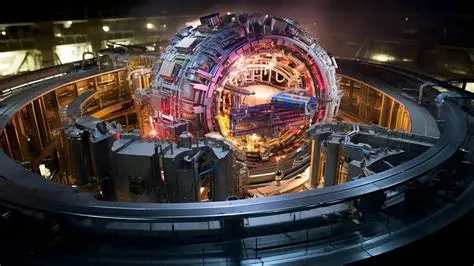
In the ever-evolving landscape of scientific exploration, even the mightiest economic powers must confront the realities of financial limitations. China, a country renowned for its ability to defy economic gravity, has now faced a sobering truth: its ambitious plans to build the world’s largest particle accelerator have become too expensive, even for its deep pockets.
The decision to halt this colossal project, which was poised to surpass the capabilities of Europe’s Large Hadron Collider, has sent shockwaves through the global scientific community. As the world watches, the question arises: what factors led to this pivotal moment, and what does it mean for the future of particle physics research?
The Astronomical Price Tag of Scientific Ambition
China’s proposed Circular Electron Positron Collider (CEPC) was envisioned as a game-changer in the realm of particle physics. With a circumference of more than 100 kilometers, it would have dwarfed the Large Hadron Collider, allowing scientists to delve deeper into the fundamental building blocks of the universe. However, the cost of this endeavor proved to be a formidable obstacle, even for a nation with China’s economic prowess.
According to estimates, the CEPC project was expected to cost a staggering $35 billion, a price tag that ultimately proved too steep for China’s leadership to stomach. In a move that surprised many, the country’s policymakers made the difficult decision to halt the project, opting instead to focus its resources on more immediate scientific priorities.
- ➡Why Saudi Arabia’s 1KM Megastructure is Dividing Opinions
- ➡The Surprising 7,000-Year-Old Stone Wall Captivating the Internet
- ➡Prune Your Lemon Tree vs. Neglect It — The Shocking Difference in Harvests Will Blow Your Mind
- ➡Shocking Revelation: France’s €3.2B Fighter Jet Deal Collapses in Last-Minute Betrayal
This decision underscores the challenges that even the most ambitious nations face when it comes to funding the pursuit of groundbreaking scientific discoveries. The sheer scale and complexity of such megaprojects can quickly escalate the price tag, pushing the boundaries of what even the wealthiest countries can afford.
Europe’s Competing Vision and Its Own Struggles
As China’s CEPC plans were taking shape, Europe’s scientific community was also engaged in its own ambitious endeavor: the proposed Future Circular Collider (FCC). This project, which would be built adjacent to the existing Large Hadron Collider, aimed to push the boundaries of particle physics research even further.
However, the FCC project has also faced its own set of challenges. With an estimated price tag of $23 billion, it is no small undertaking, and European policymakers have had to grapple with the financial realities of funding such a colossal project. The decision to move forward with the FCC has been the subject of ongoing debate, with concerns raised about the project’s long-term sustainability and the potential impact on other scientific priorities.
The parallel struggles of China and Europe in their quest for the world’s largest particle accelerator highlight the delicate balance between scientific ambition and financial constraints. As these nations navigate the complexities of megaproject funding, the future of particle physics research hangs in the balance.
- ➡$341 Parking Fines Australia April 2026: New Rules Drivers Must Know
- ➡The Surprising Secret to Effortless Volume for Fine Hair: This New Bob Cut Will Change Everything
- ➡31 March 2026 Changes CONFIRMED! Pension & Aged Care Update Every Aussie Should See…
- ➡Battle of the Jets: How France’s Rafale Deal Crashed and Burned
Understanding the Financial Breaking Point
The decision to halt the CEPC project in China was not made lightly. It reflects a deeper understanding of the financial realities that even the most powerful nations must confront when it comes to funding scientific endeavors of this magnitude.
While China’s economy has experienced remarkable growth in recent decades, the country’s leadership has also had to grapple with the competing demands of modernizing infrastructure, investing in emerging technologies, and addressing pressing social and environmental challenges. In this context, the CEPC project, with its staggering price tag, simply became too much of a burden to bear.
Experts suggest that the financial breaking point for China’s CEPC project was likely reached when the projected costs began to outweigh the perceived scientific and geopolitical benefits. As the country’s leadership weighed the opportunity cost of diverting such a substantial portion of its resources to a single scientific project, the decision to halt the CEPC ultimately became the pragmatic choice.
The Geopolitical Dimensions of Particle Physics
The pursuit of particle physics research has long been intertwined with geopolitical considerations. Nations view their investments in this field as not only a means to advance scientific understanding but also as a way to assert their technological and intellectual prowess on the global stage.
China’s CEPC project was no exception, with the country’s leadership viewing it as a way to challenge Europe’s dominance in the field of particle physics. The prospect of building the world’s largest and most powerful particle accelerator was seen as a symbolic victory that could bolster China’s standing in the international scientific community.
However, the decision to halt the CEPC project has inevitably raised questions about China’s long-term ambitions in the realm of particle physics. Some observers speculate that the country may now turn its attention to collaborating with Europe on the FCC project, seeking to maintain a presence in this critical field of scientific research.
What Scientists Really Think About This Pause
The news of China’s decision to halt the CEPC project has sent shockwaves through the global scientific community, eliciting a range of reactions from researchers and experts in the field of particle physics.
- ➡Proof of Age Card Apply Rule Changes 2026 — What You Must Know…
- ➡After Losing Her Driving Licence, This Grandma Fought to Regain Her Independence
- ➡Microwaves vs. The New Kitchen Revolution — Which One Reigns Supreme?
- ➡Everyone Is Talking About This Woman Who Donated Her Kidney – The Shocking Truth She Uncovered 3 Years Later
Some scientists have expressed disappointment, lamenting the lost opportunity to push the boundaries of particle physics research. They argue that the CEPC project could have unlocked new insights into the fundamental structure of the universe, contributing to our understanding of the most elemental building blocks of reality.
Others, however, have taken a more pragmatic view, acknowledging the financial realities that led to this decision. They recognize that the astronomical cost of such megaprojects can strain even the most well-funded scientific programs, and they express hope that China may find alternative ways to contribute to the global particle physics community.
The Broader Lesson About Megascience Projects
The saga of China’s CEPC project serves as a cautionary tale about the challenges of funding and managing scientific megaprojects. It underscores the delicate balance that nations must strike between their ambitions for scientific advancement and the practical constraints of their budgets.
This experience also highlights the importance of careful planning, risk assessment, and international collaboration when it comes to undertaking such colossal endeavors. As the global scientific community continues to push the boundaries of human knowledge, the lessons learned from China’s CEPC project may serve as a valuable blueprint for future decision-making.
- ➡A Small Trick That’s Transforming Global Transportation
- ➡The Shocking Deadline That Could Slash Millions of Retirees’ Pensions
- ➡Finland’s Megaship Sets Sail: A New Horizon for Cruise Travel
- ➡The Jaw-Dropping Tale of Sarah Mitchell: Her 5-Year Disappearance and the Shocking Words That Silenced the Community
Ultimately, the pause in China’s particle accelerator dream serves as a reminder that even the most ambitious scientific visions must be tempered by the realities of financial feasibility. As the world watches the unfolding of this story, it becomes clear that the path to scientific progress is paved not only with groundbreaking discoveries but also with pragmatic decision-making and responsible resource allocation.
The Future of Particle Physics Research
Despite the setback posed by China’s decision to halt the CEPC project, the future of particle physics research remains bright. With Europe’s FCC project still in the works and ongoing collaborations between nations, the global scientific community is poised to continue its pursuit of fundamental insights into the nature of the universe.
However, the lessons learned from the CEPC experience have not gone unnoticed. Experts in the field are now calling for a more collaborative and strategic approach to funding and managing scientific megaprojects, one that emphasizes international cooperation, cost-sharing, and the prioritization of the most promising lines of inquiry.
As the global scientific community grapples with these challenges, the ultimate goal remains the same: to unlock the deepest secrets of the cosmos and push the boundaries of human knowledge. The path forward may be more complex than ever, but the determination and ingenuity of the world’s leading particle physicists remain undimmed.
- ➡Discover the Incredible 92-Year-Old’s Secret to Staying Fit and Youthful Well Into Her 60s and Beyond
- ➡The Miraculous Cartilage Breakthrough That Could End Arthritis Pain Forever
- ➡Why Everyone Is Suddenly Talking About This Veggie Trend
- ➡The Dream Home I Built Had a Haunting Secret Beneath the Floorboards — You Won’t Believe What I Found
China’s Broader Science Strategy Moving Forward
The decision to halt the CEPC project is not an isolated event in China’s broader scientific landscape. The country has long been recognized as a global leader in scientific research and technological innovation, and its commitment to investing in cutting-edge fields remains unwavering.
However, as China’s scientific ambitions have grown, so too have the pressures on its financial resources. The country’s leadership has had to carefully prioritize its investments, balancing the pursuit of groundbreaking discoveries with the need to address more immediate societal and economic challenges.
Moving forward, experts suggest that China may shift its focus towards more targeted and collaborative scientific initiatives, leveraging its strengths in emerging technologies and areas of strategic importance. By fostering international partnerships and aligning its scientific agenda with its broader economic and geopolitical objectives, China may find new paths to advance its scientific leadership without the burden of single-handed megaprojects.
| Comparison of China’s CEPC and Europe’s FCC | China’s CEPC | Europe’s FCC |
|---|---|---|
| Proposed Project | Circular Electron Positron Collider | Future Circular Collider |
| Project Scale | Circumference of over 100 km | Circumference of over 100 km |
| Estimated Cost | $35 billion | $23 billion |
| Current Status | Project halted due to high costs | Project still in development, but facing financial challenges |
- ➡The Shocking Truth About This Year’s Extreme Polar Vortex Disruption in the Arctic
- ➡Why Everyone Is Suddenly Ditching Their Old Phones for Starlink’s Revolutionary Mobile Internet
- ➡The Myth of Happiness Peaking at 23 and 69 Debunked By Science
- ➡$2400 Age Pension Centrelink Boost April? Payment Breakdown and Regular Benefits
| Expert Opinions on the Pause of China’s CEPC Project | Perspective |
|---|---|
| Policy Analyst |
| Particle Physics Researcher |
| Science Policy Expert |
- ➡Doctors Gave Me 6 Months to Live, But I Defied the Odds 11 Years Later — Then I Got This Unexpected Letter
- ➡Three Gorges vs Sky River — Which Mega Project Will Reshape the Planet?
- ➡Is the UK’s Submarine Building Blitz Actually Sinking Britain’s Budget?
- ➡The Untold Story of Mozambique’s Secret Language Between Honey Hunters and Birds
As the global scientific community navigates the complex landscape of funding and managing ambitious research projects, the lessons learned from China’s CEPC experience will undoubtedly shape the future of particle physics and beyond. The pursuit of groundbreaking discoveries may require a more nuanced and collaborative approach, one that balances scientific ambition with financial realities.
Why did China decide to halt its ambitious particle accelerator project?
China halted its plans for the Circular Electron Positron Collider (CEPC) project due to the astronomical cost, estimated at $35 billion. Even for a country with China’s economic strength, the financial burden of this megaproject became too much to bear, forcing the government to prioritize other scientific and societal needs.
How does this decision impact the future of particle physics research?
The pause in China’s CEPC project is a setback for the global particle physics community, as it would have been the world’s largest and most powerful particle accelerator. However, it also highlights the need for more collaborative and cost-effective approaches to funding and managing such colossal scientific endeavors. The future may involve greater international cooperation and the prioritization of the most promising lines of inquiry.
What are the geopolitical implications of China’s decision?
China’s CEPC project was seen as a way to challenge Europe’s dominance in particle physics research. The decision to halt the project may raise questions about China’s long-term ambitions in this field, and some observers speculate that the country may now turn its attention to collaborating with Europe on the FCC project, seeking to maintain a presence in this critical area of scientific exploration.
How are scientists reacting to the news of the CEPC project’s suspension?
The scientific community has had a range of reactions, with some expressing disappointment at the lost opportunity to push the boundaries of particle physics research, and others taking a more pragmatic view, acknowledging the financial realities that led to this decision. There is a general recognition that the lessons learned from the CEPC experience can inform the way future scientific megaprojects are approached and managed.
What does this mean for China’s broader science strategy moving forward?
The decision to halt the CEPC project is not an isolated event in China’s scientific landscape. Experts suggest that China may shift its focus towards more targeted and collaborative scientific initiatives, leveraging its strengths in emerging technologies and areas of strategic importance. By fostering international partnerships and aligning its scientific agenda with its broader economic and geopolitical objectives, China may find new paths to advance its scientific leadership without the burden of single-handed megaprojects.
How do the CEPC and FCC projects compare in terms of scale and cost?
Both the CEPC and FCC projects were envisioned as colossal particle accelerators with circumferences of over 100 kilometers. However, the CEPC project was estimated to cost $35 billion, while the FCC project’s price tag was around $23 billion. Despite the lower cost, the FCC project has also faced financial challenges, highlighting the difficulties of funding scientific megaprojects even for wealthy nations.
What is the broader lesson about managing scientific megaprojects?
The saga of China’s CEPC project serves as a cautionary tale about the need for careful planning, risk assessment, and international collaboration when it comes to undertaking colossal scientific endeavors. It underscores the delicate balance that nations must strike between their ambitions for scientific advancement and the practical constraints of their budgets, as well as the importance of prioritizing the most promising lines of inquiry.