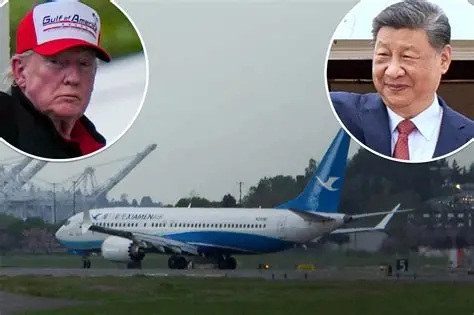
The aviation world was taken by surprise this week as Chinese airlines unexpectedly began the process of returning leased Boeing aircraft to American lessors. After nearly four years of strained relations between the U.S. and China, this move has sent shockwaves through the global aviation industry, leaving many wondering what’s next for the future of Boeing in the Chinese market.
The sudden shift in China’s aircraft fleet strategy has sparked intense speculation and debate among industry analysts, policymakers, and aviation enthusiasts alike. As the dust settles, it’s clear that this decision is driven by a complex web of economic, geopolitical, and strategic factors that extend far beyond the simple logistics of aircraft transfers.
Unraveling the Economic Factors Behind the Exodus
At the heart of this issue are the economic realities facing both Chinese airlines and the global aviation industry as a whole. The prolonged pandemic, supply chain disruptions, and economic headwinds have taken a significant toll, forcing airlines to reevaluate their fleet compositions and long-term investments.
Industry experts suggest that the decision to return Boeing aircraft is a strategic move by Chinese carriers to optimize their operations and streamline their fleets. By shedding older, less efficient models, they can position themselves to weather the current economic storm more effectively.
Furthermore, the growing strength of China’s domestic aviation manufacturing industry, led by the Commercial Aircraft Corporation of China (COMAC), has likely played a role in this shift. As Chinese airlines gain confidence in homegrown alternatives, the appeal of relying on American-made planes may have diminished.
Implications for Boeing’s China Foothold
The exodus of Boeing aircraft from China has far-reaching implications for the American aviation giant’s market position in the world’s second-largest economy. After years of dominance, Boeing now faces the prospect of a diminished presence, potentially ceding ground to its domestic competitors.
This development is sure to rattle the leadership at Boeing, who have long viewed China as a critical growth market. The loss of these aircraft orders and deliveries will undoubtedly impact the company’s bottom line, as well as its long-term strategic plans for the region.
However, industry analysts caution against writing off Boeing’s future in China entirely. The company’s ability to navigate the geopolitical landscape and forge new partnerships will be crucial in determining its continued relevance in this crucial market.
Strategic Implications for U.S.-China Aviation Relations
Beyond the immediate impact on Boeing, the return of Chinese-leased aircraft raises questions about the broader state of U.S.-China aviation relations. The move comes amid ongoing trade tensions, technological competition, and geopolitical posturing between the two superpowers.
Some experts believe this shift could be a strategic chess move by China, designed to exert pressure on the U.S. and assert its own autonomy in the aviation industry. By reducing its reliance on American-made planes, China may be signaling a desire to reduce its vulnerability to potential supply chain disruptions or political tensions.
However, others argue that this decision is more pragmatic than political, driven primarily by economic factors and the need to optimize fleet operations. Regardless of the underlying motivations, the reverberations of this move will be felt across the global aviation landscape.
Response from Leasing Companies and Financial Markets
The return of leased Boeing aircraft to American lessors has also attracted significant attention from the financial sector. Leasing companies, which have played a crucial role in facilitating aircraft transactions between China and the U.S., are closely monitoring the situation.
- ➡The Baffling River That Flows Uphill for Over 100 Miles – The Shocking Explanation Behind It
- ➡The Shocking Truth: One Employee Refused to Leave After 200 Were Laid Off on a Friday
- ➡A French Nuclear Giant Fuels Britain’s Power — But Taxpayers Foot the Bill
- ➡The Surprising Reason Kate Middleton’s Gown Stole the Show at the State Banquet
Some industry analysts predict that the influx of returned planes could lead to a temporary oversupply in the global leasing market, putting downward pressure on lease rates and asset values. This, in turn, could have ripple effects on the balance sheets of leasing firms and the broader aviation finance ecosystem.
However, others remain cautiously optimistic, noting that the leasing industry has weathered similar challenges in the past and is well-equipped to adapt to the changing market dynamics. The ability of lessors to quickly redeploy these aircraft to new operators will be a key factor in determining the overall impact on the industry.
China’s Domestic Aviation Manufacturing Ambitions
Underlying this entire saga is China’s long-standing ambition to establish a robust domestic aviation manufacturing industry. The rise of COMAC and its efforts to develop homegrown aircraft models, such as the C919 and the ARJ21, have been closely watched by the global aviation community.
The return of Boeing aircraft to American lessors could be seen as a strategic move by Chinese airlines to create space for the integration of COMAC planes into their fleets. As China’s domestic aviation industry matures, the country may be positioning itself to reduce its reliance on foreign manufacturers and assert greater control over its aviation ecosystem.
This shift, if sustained, could have far-reaching implications for the global aviation industry, potentially reshuffling the competitive landscape and altering the balance of power in the years to come.
What the Future Holds for Boeing and Chinese Aviation
As the aviation world grapples with the implications of China’s aircraft return, one thing is clear: the future of the industry is poised for further transformation. The delicate dance between geopolitics, economic realities, and technological advancements will continue to shape the trajectory of Boeing, China’s aviation market, and the global industry as a whole.
Whether this move marks a temporary realignment or a harbinger of more profound changes remains to be seen. What is certain, however, is that the aviation industry will be closely watching the unfolding events, eager to understand the long-term strategic and competitive implications of this unexpected twist.
| Key Factors Driving China’s Aircraft Returns | Potential Impacts on Boeing and U.S.-China Relations |
|---|---|
|
|
- ➡Are Chinese Cars Really That Bad? What You Need to Know About China’s Export Crackdown
- ➡The Shocking Truth Behind Why He Left Her at the Altar – You Won’t Believe What Happened Next
- ➡Travel Passport Rules for Non-Citizens in Australia (2026 Update)…
- ➡A Small Trick That Makes Cake Moist and Tender Forever
| Experts Weigh In on the Aircraft Return | Quotes from Industry Insiders |
|---|---|
|
|
|
|
As the aviation world grapples with the implications of China’s aircraft return, one thing is clear: the future of the industry is poised for further transformation. The delicate dance between geopolitics, economic realities, and technological advancements will continue to shape the trajectory of Boeing, China’s aviation market, and the global industry as a whole.
Whether this move marks a temporary realignment or a harbinger of more profound changes remains to be seen. What is certain, however, is that the aviation industry will be closely watching the unfolding events, eager to understand the long-term strategic and competitive implications of this unexpected twist.
How will this impact Boeing’s operations and market share in China?
The return of leased Boeing aircraft to American lessors is expected to significantly impact Boeing’s market position and operations in China. With Chinese airlines reducing their reliance on American-made planes, Boeing’s foothold in the world’s second-largest aviation market could diminish. This shift may force the company to reevaluate its long-term strategy and investments in the region.
What are the potential geopolitical implications of this move?
The aircraft return has raised concerns about the broader state of U.S.-China aviation relations. Some experts view this as a strategic move by China to exert pressure on the U.S. and assert its autonomy in the industry, potentially signaling a desire to reduce its vulnerability to potential supply chain disruptions or political tensions.
- ➡Applying for a New Adult Passport in Australia: New Rules (2026 Update)
- ➡Everyone Is Talking About This Woman Who Donated Her Kidney – The Shocking Truth She Uncovered 3 Years Later
- ➡What Italian Chefs Don’t Want You to Know About Perfect Pasta Sauce
- ➡The Surprising Secret Your Grandma Knew About Boiling Rosemary (And How It Can Transform Your Home)
How will leasing companies and financial markets respond to the influx of returned planes?
The return of leased Boeing aircraft to American lessors could lead to a temporary oversupply in the global leasing market, potentially putting downward pressure on lease rates and asset values. This, in turn, could have ripple effects on the balance sheets of leasing firms and the broader aviation finance ecosystem.
What is the significance of China’s domestic aviation manufacturing ambitions?
The return of Boeing aircraft to American lessors could be seen as a strategic move by Chinese airlines to create space for the integration of COMAC planes into their fleets. As China’s domestic aviation industry matures, the country may be positioning itself to reduce its reliance on foreign manufacturers and assert greater control over its aviation ecosystem.
How will this impact the competitive landscape in the global aviation industry?
The shift towards China’s domestic aviation manufacturing capabilities, if sustained, could have far-reaching implications for the global aviation industry. It has the potential to reshape the competitive landscape and alter the balance of power in the years to come, as China seeks to assert its presence and reduce its dependence on foreign manufacturers.
What are the potential economic factors driving this aircraft return?
Industry experts suggest that the decision to return Boeing aircraft is a strategic move by Chinese carriers to optimize their operations and streamline their fleets. The prolonged pandemic, supply chain disruptions, and economic headwinds have taken a toll, forcing airlines to reevaluate their fleet compositions and long-term investments.
- ➡17 Hobbies That Can Rewire Your Aging Brain And Prevent Loneliness
- ➡France vs Australia – Who’s Building the Colossal $75 Billion Rail Project?
- ➡She Quit the French Air Force for 5 Years — What She Built Next Left Everyone Speechless
- ➡Just Discovered: Spain’s Ingenious Solution to the Water Infrastructure Crisis
How might this impact the future of Boeing’s presence in China?
While this move may initially appear as a setback for Boeing in China, industry analysts caution against writing off the company’s future in the market entirely. Boeing’s ability to navigate the geopolitical landscape and forge new partnerships will be crucial in determining its continued relevance and market position in this crucial aviation market.
What are the potential implications for the global aviation industry as a whole?
The return of Chinese-leased Boeing aircraft and the growing strength of China’s domestic aviation manufacturing industry could have far-reaching implications for the global aviation industry. It has the potential to reshape the competitive landscape and alter the balance of power, as countries and companies jockey for position in this rapidly evolving market.