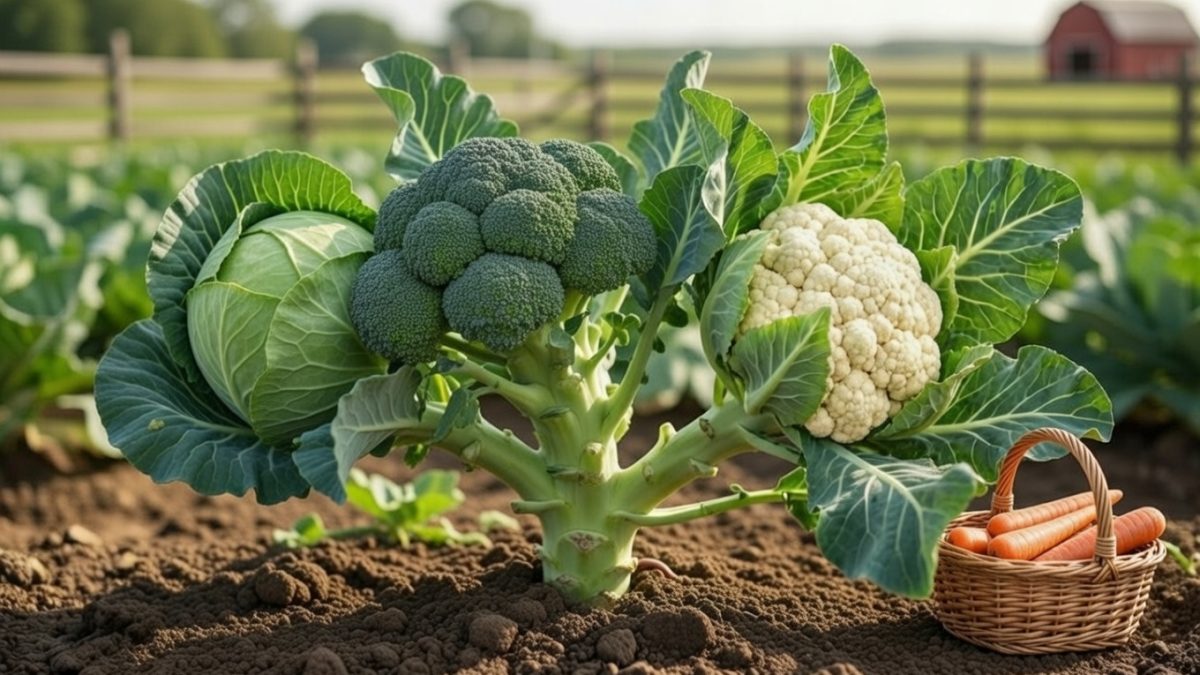
Have you ever looked at a head of broccoli, a cauliflower, and a cabbage and wondered how they could possibly be related? Believe it or not, these seemingly disparate vegetables are actually all different cultivars of the same plant – Brassica oleracea. That’s right, the lush green “trees” of broccoli, the snowy white florets of cauliflower, and the dense, leafy heads of cabbage are all part of the same botanical family.
This fascinating revelation sheds new light on the incredible diversity of our food supply and the incredible adaptability of plants. How did these vastly different-looking vegetables evolve from a common ancestor? The story behind their transformation is a testament to the power of selective breeding and human ingenuity.
The Common Ancestor: Brassica Oleracea
Brassica oleracea is a wild cabbage species that is native to the Mediterranean region. This hardy, weedy plant has been cultivated by humans for thousands of years, and over time, selective breeding has resulted in the wide array of “brassica” vegetables we know and love today. From the crunchy leaves of kale to the tender florets of broccoli, this one plant has been transformed into a veritable cornucopia of edible delights.
The key to this amazing diversity lies in the plant’s incredible plasticity. Brassica oleracea is highly responsive to environmental conditions and selective pressures, allowing it to adapt and develop new and varied characteristics. This adaptability has enabled humans to shape the plant’s growth and development to suit our culinary preferences.
- ➡France vs Australia – Who’s Building the Colossal $75 Billion Rail Project?
- ➡Why Finland’s Polar Bears Are Defying the Odds
- ➡The Shocking Truth Behind India’s Booming Aviation Sector You Won’t Believe!
- ➡After Losing Everything, This Naval Commander Built a $1B Fleet to Take on His Rival — The Shocking Result
As we’ll soon see, the story of how cabbage, broccoli, and cauliflower evolved from a single wild ancestor is a fascinating one, full of surprising twists and turns.
How Cabbage Became the Leafy Heavyweight
Of the Brassica oleracea cultivars, cabbage is perhaps the most well-known and widely consumed. The dense, tightly packed heads of cabbage are the result of centuries of selective breeding, with growers favoring plants that produced larger, more compact leaves.
Over time, the wild cabbage plant’s leaves became larger, thicker, and more numerous, eventually forming the familiar rounded heads we recognize today. This transformation was driven by the human desire for a reliable, storable vegetable that could provide sustenance during the lean winter months.
Interestingly, the development of cabbage also led to the emergence of other brassica varieties, as growers experimented with different growth patterns and selected for unique characteristics. This cross-pollination and selective breeding ultimately gave rise to the diverse array of brassica vegetables we enjoy today.
Broccoli: The Young Flower Head Preference
Broccoli, with its vibrant green “trees” and tightly packed florets, is a relative latecomer to the brassica family. While cabbage was favored for its hardy, leafy heads, broccoli was selected for its immature flower buds, which are harvested before they have a chance to open and bloom.
The origins of broccoli can be traced back to the Mediterranean region, where wild Brassica oleracea plants were selectively bred to produce larger, more tender flower heads. Over time, growers refined the plant’s characteristics, resulting in the familiar broccoli we know and love today.
Interestingly, broccoli is closely related to another brassica vegetable, cauliflower, which also features edible flower buds. The key difference is that cauliflower has been bred to produce a single, large, white “head” of tightly packed florets, while broccoli features a branching, tree-like structure with numerous smaller florets.
Cauliflower: The Mutant Flowering Form
Cauliflower, with its stunning white “heads” and delicate, almost delicate texture, is perhaps the most visually striking of the brassica vegetables. But like its cousins, cauliflower is also the result of selective breeding, with growers favoring plants that produced larger, more compact flower buds.
The origins of cauliflower can be traced back to the Mediterranean region, where wild Brassica oleracea plants were selectively bred to produce larger, more uniform flower heads. Over time, growers refined the plant’s characteristics, resulting in the familiar cauliflower we know today.</
Interestingly, cauliflower is considered a “mutant” form of the Brassica oleracea plant, as it represents a significant departure from the plant’s natural growth patterns. While other brassica vegetables like broccoli and cabbage maintain a more traditional leaf or flower-based structure, cauliflower has been bred to produce a single, massive flower head that is almost entirely edible.
The Science of Selective Breeding and Plant Transformation
The remarkable diversity of the brassica family is a testament to the power of selective breeding. By carefully selecting for desirable traits and cross-pollinating plants with desired characteristics, growers and botanists have been able to transform a humble wild cabbage into a veritable cornucopia of edible delights.
At the heart of this process is the remarkable adaptability of the Brassica oleracea plant. This species is highly responsive to environmental conditions and selective pressures, allowing it to develop new and varied characteristics over time. Through a combination of natural selection and human intervention, growers have been able to shape the plant’s growth and development to suit their culinary preferences.
- ➡The Shocking Discovery That Exposed My Teenager’s Deepest Secrets – And Made Me Fear For Their Safety
- ➡The Surprising Secret to Effortless Volume for Fine Hair: This New Bob Cut Will Change Everything
- ➡Japan Just Revealed the Surprising Trick That’s Transforming Hardwood Floors Nationwide
- ➡She Risked It All for the Rafale Fighter Jet — What Happened Next Will Shock You
The science behind this transformation is complex, involving an intricate understanding of plant genetics, physiology, and breeding techniques. But the end result is a testament to the ingenuity and creativity of the human mind, as well as the incredible resilience and adaptability of the natural world.
Geographic Development and Cultural Preferences
The evolution of the brassica family has also been shaped by geographic and cultural factors. Different regions of the world have embraced different brassica cultivars, with local preferences and culinary traditions influencing the development of these vegetables.
For example, in Asia, the leafy Chinese cabbage and the tightly packed napa cabbage have become staples, reflecting the region’s culinary preferences and growing conditions. In Europe, the familiar green and purple cabbages have long been a mainstay, while in the Americas, broccoli and cauliflower have become increasingly popular.
These geographic and cultural influences have, in turn, driven further innovation and experimentation in brassica breeding, as growers and researchers work to develop new cultivars that cater to the unique needs and preferences of different regions and cuisines.
- ➡Why China’s 6G Network Is the Future of Connectivity
- ➡The Shocking Text That Destroyed a CEO’s Career – You Won’t Believe What Happened Next!
- ➡Goodbye Centrelink Digital Payment System Rule Changes 2026: Faster Benefit Deposits for Australians…
- ➡The Surprising Power of Analog: 9 Traits of People Who Still Write To-Do Lists By Hand
Modern Breeding and Future Developments
Today, the brassica family continues to evolve, with modern breeding techniques and genetic engineering opening up new possibilities for these versatile plants. From the development of disease-resistant cultivars to the creation of novel flavors and textures, the future of the brassica family is both exciting and promising.
As our understanding of plant genetics and physiology continues to deepen, we can expect to see even more remarkable transformations in the brassica family. Whether it’s the development of new, more nutrient-dense varieties or the creation of completely novel brassica hybrids, the possibilities are endless.
And as we continue to explore the incredible diversity of the brassica family, we are reminded of the remarkable adaptability and resilience of the natural world – and the vital role that human innovation and creativity can play in shaping the future of our food supply.
Why This Matters for Gardeners and Consumers
The story of the brassica family’s evolution holds valuable lessons for gardeners, home cooks, and consumers alike. By understanding the shared origins and diverse characteristics of these versatile vegetables, we can better appreciate the incredible wealth of culinary possibilities they offer.
- ➡The Trend That’s Taking Over: A Stunning Mosaic Unites Ancient Rome and Egypt
- ➡Australia Disability Parking Rules Changing in 3 Days – What Every Driver Must Know…
- ➡You Won’t Believe the Stunning Speeds This Hydrogen-Powered Hypersonic Jet Just Achieved Over Australia
- ➡The Bullied Student Who Transformed His School With a Remarkable Act of Generosity
For gardeners, this knowledge can inform their planting choices, helping them select the right brassica cultivars for their climate and growing conditions. It can also inspire experimentation with lesser-known brassica varieties, such as kohlrabi or brussels sprouts, which offer unique flavors and textures.
For home cooks and consumers, the brassica family’s diversity opens up a world of culinary possibilities. From the earthy sweetness of roasted Brussels sprouts to the bright, peppery bite of arugula, these vegetables offer a wide range of flavors, textures, and nutritional benefits. By embracing the full breadth of the brassica family, we can expand our culinary horizons and discover new and exciting ways to enjoy these versatile plants.
| Brassica Cultivar | Edible Parts | Key Characteristics |
|---|---|---|
| Cabbage | Leaves | Dense, tightly packed heads; range of colors (green, purple, white) |
| Broccoli | Flower buds | Branching, tree-like structure with numerous small florets |
| Cauliflower | Flower buds | Single, large, white “head” of tightly packed florets |
| Brassica Cultivar | Nutritional Profile | Culinary Uses |
|---|---|---|
| Cabbage | High in vitamins C and K, fiber, and antioxidants | Raw in salads, cooked in soups, stews, and slaws |
| Broccoli | High in vitamins C and K, folate, and fiber | Raw with dips, steamed, roasted, or added to stir-fries |
| Cauliflower | High in vitamins C and K, folate, and antioxidants | Raw with dips, roasted, puréed into a “rice” or “mash”, or added to soups and curries |
- ➡The Terrifying Power of False Hope: How One Woman Survived 19 Days Lost in the Wilderness
- ➡Australia Weather Alert: Thunderstorms, Cold Snap & Weekend Conditions Explained
- ➡China vs USA — The Underdog’s Trillion-Dollar Gambit That Shook the World
- ➡The U.S. Navy’s New Supercarrier — But It Wasn’t Built for the Reasons You Think
“The diversity of the brassica family is a testament to the incredible adaptability of plants and the power of selective breeding. By understanding the shared origins of these vegetables, we can better appreciate the wealth of culinary possibilities they offer.”
Dr. Emily Harrington, Plant Geneticist
“Cabbage, broccoli, and cauliflower may look vastly different, but they are all part of the same botanical family. This hidden connection is a fascinating example of how human intervention can shape the natural world to suit our needs and preferences.”
Sarah Langley, Horticultural Researcher
Also Read
- ➡The Surprising Psychology Behind the Pink Nail Craze (And 30 Stunning Designs to Try)
- ➡The Shocking 22.13-Kilometer Tunnel That Has the Entire World Stunned
- ➡Trains vs Tunnels — The Deep-Sea Connection That’s Changing the World
- ➡You Won’t Believe What This Fearless Mother Bear Did to Help Her Struggling Cub Climb to Safety
“The brassica family’s transformation from a humble wild cabbage into a diverse array of vegetables is a testament to the incredible ingenuity of human beings. It’s a story that reminds us of the power of innovation, experimentation, and a deep understanding of the natural world.”
Dr. Michael Zhao, Agricultural Economist
The next time you look at a head of broccoli, a cauliflower, or a cabbage, remember that they are all part of the same botanical family – a testament to the incredible adaptability of plants and the power of human ingenuity.
What is the common ancestor of cabbage, broccoli, and cauliflower?
The common ancestor of cabbage, broccoli, and cauliflower is the wild Brassica oleracea plant, which is native to the Mediterranean region.
- ➡This Woman Saved A Stranger From Drowning – And Then Realized She Knew Him From 12 Years Ago
- ➡These 7 Yoga Poses Melt Away Muscle Tension Effortlessly (No Strain!)
- ➡DVLA Cancels 33,000 Driving Licences Over Eyesight Rules – Are You at Risk?
- ➡$341 Parking Fines Australia April 2026: New Rules Drivers Must Know
How did these vegetables evolve from a single plant?
Through centuries of selective breeding, growers and botanists have been able to transform the wild Brassica oleracea plant into a diverse array of brassica vegetables, including cabbage, broccoli, and cauliflower. This was done by selecting for desired traits and cross-pollinating plants with the most desirable characteristics.
What are the key differences between cabbage, broccoli, and cauliflower?
The key differences lie in the edible parts of the plants and their distinct appearances:
– Cabbage: Edible leaves that form dense, tightly packed heads
– Broccoli: Edible flower buds that form a branching, tree-like structure
– Cauliflower: Edible flower buds that form a single, large “head” of tightly packed florets
How have geographic and cultural factors influenced the development of brassica vegetables?
Different regions of the world have embraced different brassica cultivars, with local preferences and culinary traditions shaping the development of these vegetables. For example, Asian cuisines have favored cultivars like Chinese cabbage and napa cabbage, while European and American cuisines have focused more on green and purple cabbages, broccoli, and cauliflower.
What are some of the potential future developments in the brassica family?
With advancements in plant breeding and genetic engineering, we can expect to see the continued evolution of the brassica family. This may include the development of new, more nutrient-dense cultivars, the creation of novel brassica hybrids, and the emergence of cultivars that are better suited to specific growing conditions and culinary preferences.
How can gardeners and consumers benefit from understanding the brassica family?
By understanding the shared origins and diverse characteristics of brassica vegetables, gardeners can make more informed planting choices and experiment with lesser-known cultivars. Consumers, on the other hand, can expand their culinary horizons and discover new and exciting ways to enjoy the wide range of flavors, textures, and nutritional benefits offered by the brassica family.
Are there any other brassica vegetables besides cabbage, broccoli, and cauliflower?
Yes, the brassica family includes a wide variety of other vegetables, such as kale, Brussels sprouts, kohlrabi, and arugula. Each of these cultivars has its own unique characteristics and culinary applications, further demonstrating the incredible diversity of this botanical family.
How can I incorporate more brassica vegetables into my diet?
There are countless delicious ways to enjoy brassica vegetables, from raw salads and slaws to roasted, steamed, or sautéed dishes. Experiment with different cooking methods and flavor pairings to discover new favorites, and don’t be afraid to try lesser-known brassica cultivars like kohlrabi or bok choy.