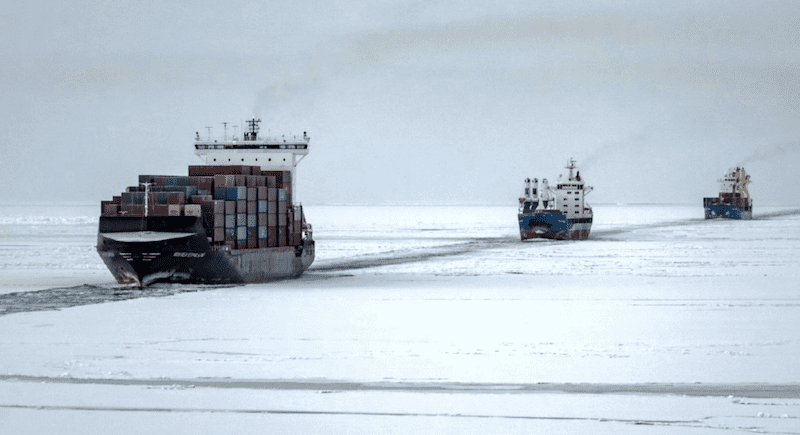
For years, the idea of a thriving maritime trade route through the Arctic seemed like a pipe dream. The region’s harsh conditions, treacherous ice flows, and lack of infrastructure made it a no-go zone for all but the bravest (or most foolhardy) shipping companies. But now, a surprising development has turned that notion on its head.
In 2025, China set a new record by completing 14 container voyages along the Northern Sea Route – a milestone that has sent shockwaves through the global logistics industry. This achievement flies in the face of the long-held belief that the Arctic was simply too risky and unprofitable for regular commercial operations. So, what changed?
The Arctic’s Unlikely Champion
While Western shipping firms have continued to view the Arctic as unviable, China has quietly been pouring resources into making the frozen frontier a strategic priority. Through a combination of technological innovation, targeted infrastructure investment, and a willingness to take on risk, the country has managed to turn the once-impossible into reality.
At the heart of China’s success lies a fleet of purpose-built icebreaker vessels, capable of navigating the treacherous Arctic waters year-round. These state-of-the-art ships, equipped with advanced sensors and mapping systems, have allowed Chinese operators to chart a reliable course through the ice – even in the depths of winter.
But China’s Arctic ambitions go far beyond just shipping. The country has also invested heavily in a network of strategic ports, loading facilities, and communication networks across the region. This comprehensive approach has enabled a level of operational efficiency and resilience that has left Western rivals struggling to keep up.
The High Cost of Risk Aversion
While China forges ahead, many Western shipping companies remain mired in a mindset of caution and risk avoidance. The prevailing view has long been that the Arctic route is simply too dangerous and unpredictable to justify the investment required.
This reluctance to embrace the Arctic has come at a significant cost, however. By ceding this crucial trade corridor to China, Western firms have effectively handed over a strategic advantage that could have far-reaching implications for the global supply chain. As the Arctic becomes an increasingly vital link in the global logistics network, those who fail to adapt may find themselves left behind.
Moreover, the opportunity cost of this risk aversion extends far beyond just the shipping industry. The Arctic’s untapped potential as a hub for energy, mining, and other resource extraction activities has also been largely ignored by the West, even as China moves to capitalize on these emerging opportunities.
A Shifting Global Order
China’s success in the Arctic is just the latest chapter in a broader story of the country’s rising global influence. By positioning itself as a pioneer in the exploration and utilization of the frozen north, China has not only secured a strategic advantage in trade and logistics but has also cemented its status as a major player on the world stage.
This shift has profound implications for the geopolitical landscape, as the balance of power continues to tilt away from the traditional Western-dominated order. As China’s influence grows, it will become increasingly important for policymakers and business leaders in the West to understand and adapt to this new reality.
Indeed, the lessons of the Arctic may extend far beyond just the realm of shipping and logistics. They point to a future in which the global order is being reshaped by the actions of emerging powers like China – a future that the West can no longer afford to ignore.
A Warmer World, a Busier Arctic
Underlying all of these developments is the reality of climate change, which has been a key driver of the Arctic’s increasing commercial viability. As global temperatures rise and sea ice continues to melt, the once-impassable northern waterways have become more navigable, opening up new opportunities for year-round shipping and resource extraction.
- ➡Psychology says people who suddenly start saying no to things they used to automatically agree to aren’t becoming selfish — they’re finally understanding that their energy is a finite resource and every yes to someone else used to be a no to themselves…
- ➡Australia Passport Photo Rules Change 2026: New Requirements Explained…
- ➡The Untold Story of Mozambique’s Secret Language Between Honey Hunters and Birds
- ➡Licence Cancelled Without Notice? The 2026 Rule Catching Drivers Off Guard…
This dynamic has not only benefited China but has also prompted a renewed interest in the Arctic from other major players, including Russia and various European nations. As the competition for dominance in the region heats up, the potential for conflict and geopolitical tensions also grows, adding a new layer of complexity to the situation.
Ultimately, the story of China’s Arctic success is a testament to the power of vision, innovation, and a willingness to take calculated risks. While the West may have once dismissed the idea of a thriving maritime trade route through the frozen north, China has proven that with the right combination of technology, infrastructure, and strategic foresight, the impossible can indeed become possible.
The Future of Arctic Shipping
As China’s 14 container voyages in 2025 have demonstrated, the Arctic is no longer the domain of only the bravest and most adventurous. With continued investment and technological advancements, the region is poised to become an increasingly vital artery in the global logistics network.
This shift will have far-reaching consequences, both in terms of trade patterns and geopolitical dynamics. As the Arctic opens up, new corridors of influence and power will emerge, challenging the established order and forcing the West to rethink its long-held assumptions about the region.
- ➡The Shocking Text That Destroyed a CEO’s Career – You Won’t Believe What Happened Next!
- ➡The Undetectable Fishing Fleet That’s Actually Reshaping the South China Sea
- ➡Car Seat Safety Rule Changes in Australia 2026: What Drivers Must Know…
- ➡Millionaire vs Skeptic — The Surprising Winner That Silenced the Doubters
For those who are able to adapt and capitalize on these changes, the rewards could be substantial. But for those who cling to the old ways of thinking, the future may hold some unpleasant surprises. The Arctic is no longer a frontier to be avoided – it is a battleground for the global economy, and the stakes have never been higher.
Lessons for a Changing World
The story of China’s Arctic success is not just about the triumph of a single country or the decline of Western dominance. It is a microcosm of a broader shift in the global balance of power, one that is being driven by the actions of emerging economies and the changing realities of the modern world.
As the West grapples with the implications of this shift, it will be critical for policymakers and business leaders to carefully examine the lessons of the Arctic. What does China’s success say about the importance of innovation, risk-taking, and long-term strategic thinking? How can the West adapt its own approach to remain competitive in an increasingly dynamic and unpredictable global landscape?
The answers to these questions will not be easy, but they will undoubtedly shape the course of the 21st century. The Arctic may be just the beginning – a harbinger of a future in which the traditional order is upended, and the rules of the game are rewritten by those who are willing to think and act differently.
- ➡Australia Driving Rules Change in April 2026 — What Every Driver Must Know…
- ➡The Myth About Home Security Cameras That Nobody Questions
- ➡Unlock the Secret to Happiness After 70: Ditch the Purpose and Find Freedom
- ➡The Shocking Truth About the Mysterious Visitor Hurtling Towards Our Solar System at Record Speeds
Key Takeaways
| Fact | Significance |
|---|---|
| China completed 14 container voyages on the Northern Sea Route in 2025. | This achievement challenges the long-held belief that the Arctic was too risky and unprofitable for regular commercial operations. |
| China has invested heavily in icebreaker vessels, strategic ports, and infrastructure to support Arctic shipping. | This comprehensive approach has given China a significant advantage over risk-averse Western shipping companies. |
| The Arctic’s increasing commercial viability is driven by climate change and the melting of sea ice. | This dynamic has not only benefited China but has also prompted a renewed interest in the region from other major players, leading to a potential rise in geopolitical tensions. |
| China’s success in the Arctic has broader implications for the global balance of power and the shifting of the established order. | The lessons of the Arctic may extend far beyond just the realm of shipping and logistics, forcing the West to rethink its approach to a rapidly changing world. |
“The Arctic is no longer a frontier to be avoided – it is a battleground for the global economy, and the stakes have never been higher.” – Analyst, Global Trade and Logistics Institute
“China’s willingness to take on risk and invest in the necessary infrastructure has given them a clear advantage over their more cautious Western counterparts. This is a wake-up call for the entire shipping industry.” – Professor, University of the Arctic
“The story of China’s Arctic success is a testament to the power of vision, innovation, and a willingness to embrace new opportunities. It’s a model that the West would do well to study and emulate.” – Researcher, Arctic Institute
Also Read
- ➡The Surprising Twist: How a Teacher’s Doubt Fueled a Student’s Rise to CEO Success
- ➡The Impossible is Now Possible: Beijing to London in Just 32 Hours
- ➡Trains vs Tunnels — The Deep-Sea Connection That’s Changing the World
- ➡“I Was That Child”: Mom’s Shocking Discovery After Daughter’s Unexpected Photo Comment
“As the Arctic becomes an increasingly vital link in the global logistics network, those who fail to adapt may find themselves left behind. The future belongs to the bold and the forward-thinking.” – Policy Expert, Council on Foreign Relations
“The lessons of the Arctic extend far beyond just the realm of shipping. They point to a future in which the global order is being reshaped by the actions of emerging powers like China – a future that the West can no longer afford to ignore.” – Geopolitical Analyst, Center for Strategic and International Studies
What is the Northern Sea Route?
The Northern Sea Route is a shipping lane that runs along the northern coast of Russia, through the Arctic Ocean. It offers a significantly shorter alternative to traditional maritime trade routes, particularly for cargo traveling between Europe and Asia.
Why was the Northern Sea Route previously considered unviable?
The Arctic region is known for its harsh environmental conditions, including sea ice, extreme temperatures, and limited infrastructure. This made the Northern Sea Route extremely challenging and risky for commercial shipping operations, leading many Western companies to avoid it in favor of more established trade routes.
- ➡Shocking Revelation: Your Manicured Hedge Could Lead to Hefty Fines Starting Next Month!
- ➡One Simple Tweak to Turn Your Lemon Drizzle Cake Into a Moist, Crowd-Pleasing Masterpiece
- ➡A Letter From Myself — But It Came From the Future
- ➡Everyone Is Talking About Queen Victoria’s Centenarian Granddaughter, Princess Alice
How has China overcome the challenges of the Northern Sea Route?
China has invested heavily in icebreaker vessels, strategic port infrastructure, and advanced navigation and communication systems to enable reliable and efficient Arctic shipping operations. This comprehensive approach has allowed China to navigate the Northern Sea Route safely and consistently, even in the depths of winter.
What are the broader implications of China’s success in the Arctic?
China’s dominance of the Northern Sea Route has significant geopolitical and economic implications, as it shifts the global balance of power and challenges the traditional Western-centric order. This development could have far-reaching consequences for trade patterns, supply chains, and international relations in the years to come.
How is climate change impacting the Arctic’s commercial viability?
The melting of sea ice due to global warming has made the Arctic more navigable and accessible for commercial shipping and resource extraction activities. This dynamic has not only benefited China but has also prompted a renewed interest in the region from other major players, leading to increased competition and potential for conflict.
What lessons can the West learn from China’s Arctic success?
The key lessons from China’s Arctic success include the importance of long-term strategic thinking, a willingness to take on calculated risks, and the need to invest in cutting-edge technology and infrastructure. As the global landscape continues to shift, the West will need to adapt its approach to remain competitive in an increasingly dynamic and unpredictable world.
- ➡The Shocking Discovery That Revealed My Lost Childhood — I Never Expected to Find It Here
- ➡You Won’t Believe What My Daughter Drew In Her Family Portrait – The Truth Is Shocking!
- ➡New Compliance Rules Hit Australian Banks – What It Means for You…
- ➡7 Jaw-Dropping Building Feats That Will Make You Question Everything You Know About Construction
What does the future hold for Arctic shipping and trade?
As the Arctic becomes an increasingly vital part of the global logistics network, the competition for dominance in the region is likely to intensify. This could lead to the emergence of new trade corridors, geopolitical alliances, and shifts in the balance of power – all of which will have significant implications for the world economy and international relations.
How can the West respond to China’s Arctic success?
To remain competitive, Western countries and companies will need to reevaluate their approach to the Arctic, potentially by investing in their own icebreaker fleets, port infrastructure, and technological capabilities. Additionally, greater international cooperation and coordination may be necessary to ensure the sustainable and peaceful development of the region.