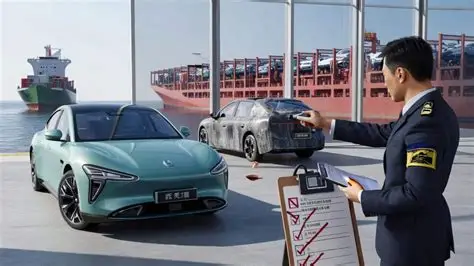
The streets of Paris have long been dominated by the sleek silhouettes of European luxury cars, but a growing number of Chinese-made vehicles are now jockeying for space in the city’s bustling showrooms. However, this influx of foreign marques has not been without its challenges, as French consumers and regulators grow increasingly wary of the perceived quality issues plaguing some Chinese automotive exports.
Now, it seems Beijing has had enough. In a move that could reshape the global automotive landscape, China is preparing to crack down on the export of “poor quality” cars and vehicles without adequate spare parts, a decision that will undoubtedly have far-reaching consequences for its domestic manufacturers and their ambitions to conquer foreign markets.
The French Battleground for China’s Car Exports
The parking lots of major French dealerships have become a microcosm of the larger struggle unfolding between China and the West when it comes to automotive dominance. Amid the gleaming European models, Chinese-branded cars sit quietly, their price tags enticing but their reputations often tarnished by concerns over build quality, reliability, and access to necessary parts.
For years, French consumers have grown increasingly frustrated with the perceived shortcomings of some Chinese-made vehicles, leading to a surge in customer complaints and calls for stricter regulation. This backlash has not gone unnoticed in Beijing, which now appears poised to take drastic action to protect the reputation of its burgeoning car industry on the global stage.
As one automotive analyst noted, “The French market has become a kind of testing ground for Chinese automakers, and the results have been mixed at best. The quality control issues and spare parts problems have really caught the attention of both regulators and consumers, and China can no longer afford to ignore the fallout.”
Beijing’s Unprecedented Quality Crackdown
In a move that industry insiders are calling unprecedented, China has signaled its intent to ban the export of “poor quality” cars and vehicles without adequate spare parts. This decision represents a dramatic shift in Beijing’s approach to its domestic automotive sector, which has long been seen as a source of national pride and a key driver of economic growth.
The implications of this crackdown are far-reaching, as Chinese automakers face the prospect of being shut out of lucrative foreign markets like France if they fail to meet the new quality standards. “This is a major wake-up call for the industry,” says a Beijing-based automotive expert. “China can no longer rely on low prices and rapid expansion to conquer global markets. It has to focus on building vehicles that can truly compete on quality and reliability.”
The decision to impose these stringent new export controls also highlights the growing importance of the French market in shaping the global automotive landscape. As one of the largest and most influential car-buying nations, France’s consumer preferences and regulatory environment have become a crucial battleground for Chinese automakers seeking to establish a foothold beyond their domestic borders.
- ➡This Country Tunneled Through Solid Rock for 30 Years — The Secret They Uncovered Will Amaze You
- ➡Inside China’s Booming Digital Yuan: 500 Million Transactions in a Single Day
- ➡Australia Child Passport Rules 2026: New Changes Every Parent Must Know…
- ➡Passport Rule Changes for Over 60s in Australia (2026 Update)…
The Spare Parts Crisis Exposing Fundamental Weaknesses
At the heart of the ongoing controversy surrounding Chinese automotive exports is the issue of spare parts availability. Time and again, French consumers have found themselves stranded, unable to access the necessary replacement components for their Chinese-made vehicles, leading to lengthy and frustrating repair delays.
This spare parts crisis has not only fueled consumer discontent but has also exposed deep-seated weaknesses within the Chinese automotive supply chain. “Many of these companies simply haven’t invested enough in building out robust, global distribution networks for their parts,” explains a French industry analyst. “That’s a fundamental flaw that they’ll need to address if they want to compete on an international stage.”
The lack of readily available spare parts has also raised concerns about the long-term viability of Chinese automotive brands in France and beyond. As one French consumer advocacy group put it, “You can’t expect people to buy a car if they can’t easily get it fixed when something goes wrong. That’s a recipe for disaster in any market.”
French Consumers Demand Higher Standards
The growing backlash against Chinese automotive exports in France has been fueled in large part by the country’s stringent consumer protection laws, which place a strong emphasis on product quality, safety, and after-sales support. French buyers have proven themselves to be discerning and demanding customers, unwilling to settle for vehicles that fail to meet their high expectations.
- ➡Passport Renewal Rules Change in Australia (2026 Update)
- ➡Big Win for Retirees: Tax-Free Pensions and Boosted Benefits Approved for Australian Seniors…
- ➡The Shocking Coincidence That Brought My Online BFF and Me Together IRL After 8 Years of Friendship
- ➡Flying in 2026? Passport Rule Changes Australian Seniors Should Know…
This consumer-driven push for higher standards has not gone unnoticed by Chinese automakers, who are now grappling with the realization that their traditional business model – focused on rapid growth and low prices – may not be enough to succeed in the lucrative French market. As one industry executive put it, “The French consumer is a force to be reckoned with, and they’re making it clear that they won’t tolerate subpar products, no matter where they come from.”
The French government has also played a key role in shaping the ongoing debate, with regulators taking a hard stance on issues like product recalls and warranty coverage. “There’s no doubt that the French are setting a new global precedent when it comes to how they approach automotive quality and consumer protection,” notes a Paris-based policy analyst. “And that’s something that China is going to have to grapple with as it seeks to expand its reach beyond its own borders.”
The Global Ripple Effects of China’s Export Ban
The potential ramifications of China’s decision to ban the export of “poor quality” cars and vehicles without adequate spare parts extend far beyond the French market. As the world’s largest automotive producer and one of the fastest-growing exporters, any significant shift in China’s trade policies is sure to have global implications.
For other countries and regions that have become increasingly reliant on Chinese-made vehicles, the prospect of a supply disruption or quality-driven export restrictions could be particularly troubling. “This is not just a French problem – it’s a global issue,” warns an industry analyst. “If China starts clamping down on its exports, it could have major repercussions for markets all around the world.”
- ➡The Surprising Reason You Instinctively Turn Down the Radio When Driving – It’s All About Your Brain!
- ➡Japan Just Revealed the Surprising Trick That’s Transforming Hardwood Floors Nationwide
- ➡Applying for a New Adult Passport in Australia: New Rules (2026 Update)
- ➡Japan Just Revealed Its Shocking Rice Stockpile and It Changes Everything
Beyond the immediate impact on vehicle availability and consumer choice, the broader economic implications of China’s export crackdown could also be significant. As one industry expert noted, “The automotive sector is a major driver of economic growth and employment in many countries. Anything that disrupts the global supply chain or limits access to affordable vehicles could have far-reaching consequences for jobs, investment, and overall economic performance.”
The Future of Chinese Automotive Exports Hangs in the Balance
As China grapples with the fallout from its decision to ban the export of “poor quality” cars and vehicles without adequate spare parts, the future of its burgeoning automotive industry on the global stage hangs in the balance. The outcome of this pivotal moment will not only shape the fortunes of Chinese automakers but could also redefine the competitive landscape of the international car market for years to come.
For some industry observers, the move represents a necessary step in the maturation of China’s automotive sector, a long-overdue reckoning with quality control issues that have threatened to undermine the country’s global ambitions. “This is a chance for Chinese automakers to really step up and prove that they can compete on the world stage,” says one Beijing-based analyst. “But it’s also a wake-up call that they can’t rely on cheap prices and rapid expansion alone – they need to focus on building products that can truly stand up to international scrutiny.”
The success or failure of China’s quality crackdown will have profound implications not just for the automotive industry but for the country’s broader economic and geopolitical standing. As the global balance of power continues to shift, the ability of Chinese companies to successfully navigate the treacherous waters of international markets will be a crucial test of the nation’s broader ambitions and capabilities.
- ➡Shocking Truth: The Brain’s Nighttime Struggle to Process Emotions Keeps You Awake (Nobody Told You This)
- ➡Centrelink Cost of Living Payments Released Monday 2026 — Full Eligibility & Who Gets Paid…
- ➡The Shocking Truth: One Employee Refused to Leave After 200 Were Laid Off on a Friday
- ➡After Losing Everything, This Naval Commander Built a $1B Fleet to Take on His Rival — The Shocking Result
Success Stories Offer a Glimpse of the Future
Amid the challenges and uncertainties facing Chinese automakers, there are glimmers of hope in the form of success stories that point to the industry’s potential. A handful of Chinese brands have managed to break through the quality concerns and establish a solid foothold in the French market, demonstrating that with the right focus on innovation, customer service, and a commitment to excellence, it is possible for Chinese cars to thrive on the global stage.
One such example is the rapid rise of the electric vehicle (EV) maker BYD, which has gained a loyal following among French consumers thanks to its sleek designs, cutting-edge technology, and a robust network of service and support centers. “BYD has shown that Chinese automakers can compete at the highest levels when they prioritize quality and customer satisfaction,” notes a Paris-based automotive journalist. “That’s the kind of blueprint that the rest of the industry needs to follow if they want to succeed in markets like France.”
As the battle for global automotive dominance continues to intensify, the fate of China’s car export ambitions will likely hinge on the ability of its manufacturers to learn from both their successes and failures. The path forward may be challenging, but the potential rewards – in terms of economic growth, technological leadership, and geopolitical influence – are undeniably high.
FAQ
What sparked China’s decision to ban the export of “poor quality” cars?
The growing backlash against Chinese automotive exports in the French market, particularly due to concerns over build quality, reliability, and access to spare parts, has led Beijing to take drastic action. China is now poised to implement a quality crackdown on its car exports in a bid to protect the reputation of its domestic industry.
- ➡1960s vs 1970s Kids – The Surprising Mental Strengths That Became Weaknesses
- ➡The Heartwarming Moment I Helped a Stranger in a Wheelchair — And How It Changed Both Our Lives Forever
- ➡One Simple Change That Revolutionized Air Travel Safety Forever
- ➡Shock Closure of Gulf Airspace: The Real Story Behind the Chaos at Dubai and Riyadh Airports!
How will this export ban affect the global automotive industry?
The potential ramifications of China’s decision to ban the export of “poor quality” cars and vehicles without adequate spare parts extend far beyond the French market. As the world’s largest automotive producer and one of the fastest-growing exporters, any significant shift in China’s trade policies could have major ripple effects on markets around the world, disrupting supply chains and limiting consumer choice.
What are the key challenges facing Chinese automakers as they seek to expand globally?
Chinese automakers are grappling with a range of challenges as they seek to expand their global footprint, including issues related to product quality, reliability, and after-sales support. The lack of a robust spare parts distribution network has been a particular pain point, exposing fundamental weaknesses in the supply chains of many Chinese brands.
Are there any success stories that offer hope for the future of Chinese automotive exports?
Yes, there are a few Chinese brands that have managed to break through the quality concerns and establish a solid foothold in the French market. One notable example is the electric vehicle (EV) maker BYD, which has gained a loyal following thanks to its sleek designs, cutting-edge technology, and a robust network of service and support centers. These success stories point to the potential for Chinese automakers to compete on the global stage if they prioritize innovation, customer service, and a commitment to excellence.
What role have French consumers and regulators played in shaping the debate around Chinese automotive exports?
French consumers have been a driving force behind the growing backlash against Chinese automotive exports, fueled by the country’s stringent consumer protection laws and a demand for high-quality products. Regulators have also played a key role, taking a hard stance on issues like product recalls and warranty coverage, and setting new global precedents when it comes to automotive quality and consumer protection.
How will China’s export crackdown impact the broader economic landscape?
The economic implications of China’s export crackdown could be significant, as the automotive sector is a major driver of growth and employment in many countries. Disruptions to the global supply chain or limitations on access to affordable vehicles could have far-reaching consequences for jobs, investment, and overall economic performance in markets around the world.
What is the long-term outlook for Chinese automotive exports?
The future of Chinese automotive exports on the global stage remains uncertain, as the success or failure of the country’s quality crackdown will have profound implications for the industry and China’s broader economic and geopolitical ambitions. While the path forward may be challenging, the potential rewards are high, and the ability of Chinese automakers to navigate this pivotal moment will be a crucial test of their competitiveness and innovation capabilities.
How are industry experts and analysts reacting to China’s export ban?
Industry experts and analysts have generally viewed China’s decision to ban the export of “poor quality” cars and vehicles without adequate spare parts as a necessary wake-up call for the country’s automotive industry. Many see it as an opportunity for Chinese automakers to step up and prove that they can compete on the world stage, but they also caution that it will require a fundamental shift in focus from rapid growth and low prices to a greater emphasis on quality, reliability, and customer satisfaction.