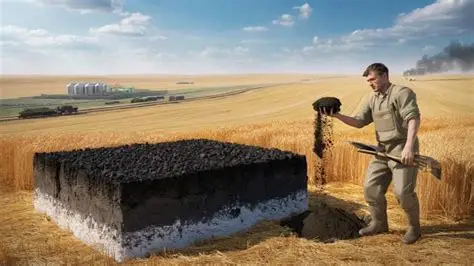
Beneath the vast steppes of Eastern Europe lies a treasure more valuable than oil or precious metals – a rich, dark earth that has shaped civilizations for millennia. This extraordinary soil, known as chernozem, has long been the secret weapon behind the agricultural prowess of Ukraine, Russia, and Kazakhstan, propelling these nations to the forefront of global food production.
What makes chernozem so extraordinary? With layers up to a meter deep, this “black gold” of agriculture is considered the most fertile soil on Earth, packed with essential nutrients and organic matter that has nourished crops for centuries. Its unique properties have played a pivotal role in transforming these nations into major breadbaskets, defying the boundaries of traditional growing regions.
But the story of chernozem is about more than just agricultural might – it’s a tale of geopolitical influence, environmental challenges, and the high-stakes battle for food security on a global scale.
The Formation of Chernozem: A Millennia-Old Process
Chernozem, the black soil that has captured the world’s attention, is the result of a gradual process that has unfolded over millennia. Formed by the decomposition of grasses and the accumulation of organic matter, this soil type is found primarily in the temperate grasslands of Eastern Europe, where the climate and vegetation have combined to create the perfect conditions for its formation.
- ➡Shocking Discovery: Man Finds His Own Obituary Online – You Won’t Believe What Happened Next!
- ➡The Surprising Secrets Grandparents Use to Win Over Grandkids
- ➡She Faked Her Own Death for 6 Months — the Unexpected Lesson from Who Showed Up
- ➡Hired to Replace the Boss, But Forced to Clean Toilets on Day One — The Unbelievable Truth Revealed
The key to chernozem’s fertility lies in its unique composition, which includes high levels of humus, a crucial component that enhances water-holding capacity and nutrient availability. This exceptional soil can hold up to 60% of its weight in water, making it highly resilient to drought and capable of supporting lush vegetation even in the harshest of environments.
As the world grapples with the challenges of climate change and food security, the importance of chernozem cannot be overstated. This natural treasure has played a pivotal role in shaping the agricultural landscapes of Ukraine, Russia, and Kazakhstan, enabling these nations to become major producers and exporters of vital crops such as wheat, corn, and barley.
Ukraine’s Agricultural Dominance: Leveraging the Black Earth
Ukraine, often referred to as the “breadbasket of Europe,” has long been synonymous with the rich, black soil that covers much of its vast territory. Chernozem, which can reach depths of up to 1 meter in some regions, has been the backbone of Ukraine’s agricultural prowess, allowing the country to emerge as a global leader in the production and export of grains and other foodstuffs.
The sheer abundance of this fertile soil has enabled Ukraine to capitalize on its agricultural potential, transforming the country into a major player in the global food market. With an estimated 25% of the world’s most fertile black earth located within its borders, Ukraine has become a vital component of global food security, accounting for a significant portion of the world’s wheat, corn, and sunflower oil exports.
However, the continued dominance of Ukraine’s agricultural sector is not without its challenges. As climate change and environmental degradation threaten the sustainability of chernozem, the country must navigate the delicate balance between maximizing its natural resources and ensuring the long-term preservation of this precious soil.
Russia’s Vast Chernozem Belt and the Wheat Empire
While Ukraine may be the most well-known for its chernozem-rich lands, Russia’s vast expanse of fertile black soil is no less impressive. Stretching across the country’s Central and Southern regions, the Russian Chernozem Belt is a veritable treasure trove, accounting for nearly 25% of the world’s total chernozem reserves.
This abundance of high-quality soil has been a driving force behind Russia’s ascent as a global agricultural powerhouse, with the country emerging as the world’s largest exporter of wheat. The country’s ability to harness the potential of its chernozem-laden lands has allowed it to become a dominant player in the global grains market, solidifying its position as a key player in the world’s food supply.
Yet, like Ukraine, Russia faces the challenge of balancing its agricultural prowess with the need to preserve the long-term sustainability of its chernozem reserves. As climate change and intensive farming practices take a toll on the soil, the country must develop innovative strategies to ensure the continued productivity of its agricultural heartland.
Kazakhstan’s Hidden Black Gold Reserves
While Ukraine and Russia have long been recognized for their chernozem-fueled agricultural might, the unsung hero of the region may well be Kazakhstan. This vast Central Asian nation, often overshadowed by its more prominent neighbors, boasts an impressive wealth of black gold – chernozem – that has quietly propelled it into the ranks of the world’s leading wheat producers.
Kazakhstan’s chernozem reserves, estimated to cover nearly a third of the country’s total land area, have been a vital asset in the nation’s agricultural transformation. With layers of this nutrient-rich soil reaching up to 1 meter in depth, Kazakhstan has been able to cultivate vast expanses of productive farmland, making it a key player in the global grains trade.
Yet, as with Ukraine and Russia, the challenge for Kazakhstan lies in managing its chernozem resources sustainably. As the demand for agricultural products continues to rise, the country must balance its economic ambitions with the need to protect the long-term health of its precious black soil.
The Unique Properties that Make Chernozem Superior
Chernozem’s status as the “black gold” of agriculture is not merely a fanciful moniker – it is a reflection of the soil’s truly remarkable properties. From its unparalleled fertility to its exceptional water-holding capacity, this extraordinary soil type has captured the attention of farmers, scientists, and policymakers around the world.
- ➡The Bullied Student Who Transformed His School With a Remarkable Act of Generosity
- ➡China Built a Rail Line in 9 Hours — But Wait Until You See What Happened Next
- ➡Shock Closure of Gulf Airspace: The Real Story Behind the Chaos at Dubai and Riyadh Airports!
- ➡Centrelink Launchs New Age Pension Payment System — What It Really Means…
At the heart of chernozem’s superiority is its high organic matter content, which can account for up to 15% of the soil’s composition. This abundance of humus, a crucial component of healthy soil, endows chernozem with the ability to retain moisture, resist erosion, and provide an abundance of essential nutrients for plant growth.
But the advantages of chernozem go beyond its fertility. The soil’s unique structure, characterized by a granular, crumbly texture, allows for excellent aeration and root penetration, further enhancing its agricultural potential. This, combined with its natural resistance to compaction and its ability to buffer against pH changes, makes chernozem an exceptionally well-suited medium for a wide range of crops.
Global Food Security and the Breadbasket Nations
As the world grapples with the challenges of climate change and the growing demand for food, the importance of chernozem-rich nations like Ukraine, Russia, and Kazakhstan has never been more apparent. These “breadbasket” countries, with their vast reserves of fertile black soil, have become essential pillars of global food security, providing a reliable source of vital agricultural commodities to markets around the world.
The impact of these chernozem-fueled agricultural powerhouses extends far beyond their own borders. By exporting their bountiful harvests of wheat, corn, and other staple crops, they help to stabilize global food prices, ensure the availability of essential foodstuffs, and support the food security of nations that lack the natural resources to be self-sufficient in agricultural production.
- ➡She Risked It All for the Rafale Fighter Jet — What Happened Next Will Shock You
- ➡China vs USA — The Underdog’s Trillion-Dollar Gambit That Shook the World
- ➡The Heartbreaking Letter That Spanned Time and Grief: A Mother’s Journey After Losing Her Son
- ➡Doctors Gave Me 6 Months to Live, But I Defied the Odds 11 Years Later — Then I Got This Unexpected Letter
Yet, as the world’s population continues to grow and the effects of climate change become increasingly pronounced, the long-term sustainability of this global food system is under threat. Preserving the health and productivity of chernozem-rich lands will be crucial in the years to come, as these nations navigate the complex challenges of balancing economic growth, environmental protection, and food security.
Conservation Challenges and Sustainable Management
Despite the immense value of chernozem, the long-term preservation of this precious soil resource is not without its challenges. Intensive agricultural practices, coupled with the impacts of climate change, have placed significant strain on the health and productivity of these fertile lands, raising concerns about their future sustainability.
Soil erosion, nutrient depletion, and the degradation of soil structure are just some of the threats facing chernozem-rich regions. As farmers and policymakers grapple with these issues, the need for innovative, sustainable land management practices has become increasingly urgent.
From the implementation of conservation tillage techniques to the adoption of crop rotation and cover cropping strategies, a multifaceted approach is required to safeguard the long-term viability of chernozem. Additionally, investment in research and development, as well as the promotion of sustainable farming methods, will be crucial in ensuring that these breadbasket nations can continue to feed the world while preserving the health of their most valuable natural resource.
- ➡You Won’t Believe What My Daughter Drew In Her Family Portrait – The Truth Is Shocking!
- ➡She Gave Up Her 9-to-5 for a Life at Sea — What Happened Next Will Shock You
- ➡She Discovered the Secret to Cold Fusion – And the Government Didn’t Want You to Know
- ➡The Surprising Superpower That’s Actually Invading Your Privacy
Economic Impact and Agricultural Investment Trends
The importance of chernozem-rich nations to the global economy cannot be overstated. These agricultural powerhouses have become essential players in the international trade of vital commodities, driving markets and shaping economic outcomes around the world.
Ukraine, Russia, and Kazakhstan have all leveraged their abundant chernozem reserves to become major exporters of wheat, corn, and other grains, generating significant revenue and contributing to the overall stability of global food supplies. The economic impact of these nations’ agricultural sectors is far-reaching, with their exports playing a crucial role in supporting the food security and economic development of countries across the globe.
As the world grapples with the challenges of climate change and population growth, the demand for the agricultural products of chernozem-rich nations is expected to continue to rise. This has led to a surge in investment, both domestic and international, in the modernization and expansion of these countries’ agricultural sectors. From the adoption of precision farming technologies to the development of sustainable irrigation systems, the future of chernozem-fueled agriculture is poised to be a key driver of global economic and food security.
FAQs
What is chernozem, and why is it considered the most fertile soil on Earth?
Chernozem is a type of soil found primarily in the temperate grasslands of Eastern Europe, characterized by its deep, rich, black color and exceptional fertility. It is considered the most fertile soil on Earth due to its high organic matter content, nutrient-rich composition, and exceptional water-holding capacity.
- ➡Government Confirms Age Pension in Australia…
- ➡China’s Secret Weapon: 50 Military Bases Across the Pacific by 2030
- ➡This Remote Work Study Just Revealed a Surprising Key to Happiness (And It’s Not What You Think)
- ➡The Shocking Discovery That Revealed My Lost Childhood — I Never Expected to Find It Here
How have Ukraine, Russia, and Kazakhstan become major breadbaskets thanks to chernozem?
The abundance of chernozem, with layers up to 1 meter deep in some regions, has enabled these countries to become global leaders in the production and export of vital crops like wheat, corn, and barley. The soil’s unique properties have allowed them to cultivate vast expanses of highly productive farmland, transforming them into agricultural powerhouses that play a crucial role in global food security.
What are the challenges facing the long-term sustainability of chernozem-rich lands?
The main challenges include soil erosion, nutrient depletion, and the degradation of soil structure due to intensive agricultural practices and the impacts of climate change. Preserving the health and productivity of these precious lands requires the adoption of sustainable land management strategies, investment in research and development, and the promotion of eco-friendly farming methods.
How important are Ukraine, Russia, and Kazakhstan to the global economy as agricultural exporters?
These chernozem-rich nations have become essential players in the international trade of vital agricultural commodities, generating significant revenue and contributing to the overall stability of global food supplies. Their exports play a crucial role in supporting the food security and economic development of countries around the world.
What are the latest investment trends in the agricultural sectors of Ukraine, Russia, and Kazakhstan?
There has been a surge in both domestic and international investment in the modernization and expansion of these countries’ agricultural sectors. This includes the adoption of precision farming technologies, the development of sustainable irrigation systems, and the overall drive to enhance the productivity and sustainability of chernozem-fueled agriculture.
- ➡A Small Trick That’s Transforming Global Transportation
- ➡This Simple Aluminum Foil Trick Will Transform Your Freezer Forever (You Won’t Believe the Results!)
- ➡China’s Surprise Rise to AI Chip Supremacy Rattles Silicon Valley
- ➡She Quit the French Air Force for 5 Years — What She Built Next Left Everyone Speechless
How are these countries balancing the need for economic growth and food security with the imperative to preserve their precious chernozem resources?
Navigating this delicate balance is a critical challenge for these nations. They must develop innovative strategies that allow them to capitalize on the agricultural potential of their chernozem-rich lands while also implementing sustainable land management practices to ensure the long-term health and productivity of this precious natural resource.
What role do Ukraine, Russia, and Kazakhstan play in global food security?
As major exporters of essential agricultural commodities like wheat, corn, and barley, these chernozem-fueled breadbasket nations play a vital role in stabilizing global food prices, ensuring the availability of vital foodstuffs, and supporting the food security of countries that lack the natural resources to be self-sufficient in agricultural production.
How does the unique composition and structure of chernozem contribute to its exceptional fertility and suitability for agriculture?
Chernozem’s high organic matter content, which can account for up to 15% of the soil’s composition, endows it with exceptional moisture-retaining capabilities, nutrient-rich properties, and resistance to erosion. Its granular, crumbly texture also allows for excellent aeration and root penetration, making it an ideal medium for a wide range of crops.