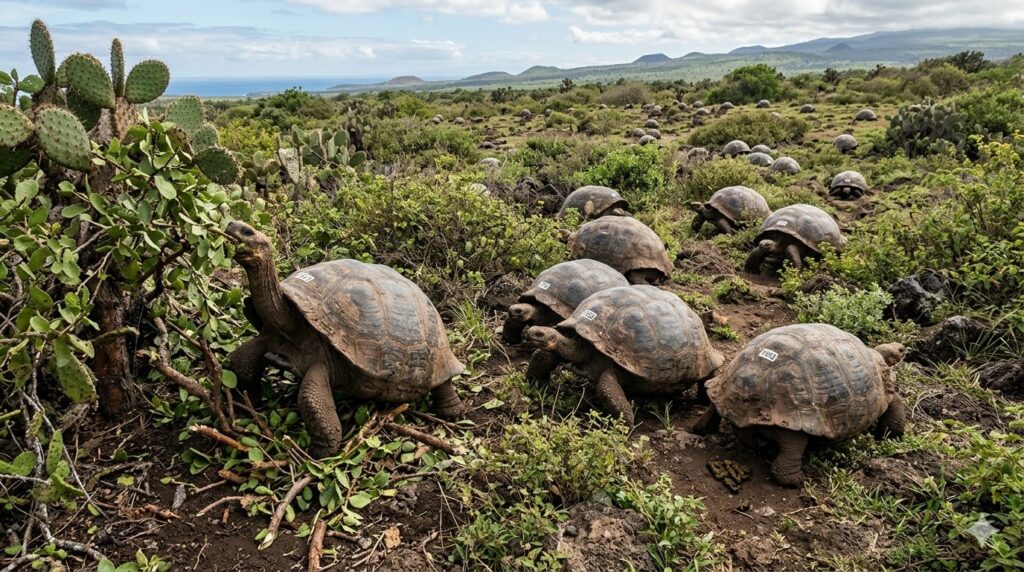
Imagine a barren, lifeless landscape suddenly springing back to vibrant life. That’s exactly what’s happening on the Galápagos Islands, where a remarkable conservation story is unfolding. More than 1,500 giant tortoises, once on the brink of extinction, have been reintroduced to this unique archipelago – and they’re transforming the very fabric of the environment.
These ancient reptiles, revered as living legends, are not just passive inhabitants. They’re active engineers, reshaping the landscape through their voracious appetites and tireless wanderings. As they tear through the undergrowth, they’re clearing the way for new growth, dispersing seeds, and reigniting the ecological processes that once defined this legendary place.
The Galápagos Islands, famous for their incredible biodiversity and Charles Darwin’s groundbreaking observations, have faced their fair share of challenges. But this tortoise-driven renaissance is a glimmer of hope, a testament to the power of conservation and the resilience of nature. Join us as we uncover the astonishing story of how these living relics are bringing the Galápagos back to life.
Reversing the Extinction Crisis: The Tortoises’ Triumphant Return
The Galápagos Islands have long been a symbol of both the wonders and the fragility of our natural world. These remote volcanic outposts, home to a dazzling array of unique species, have also borne witness to the devastating impact of human activities. In the past, invasive species, habitat destruction, and unsustainable exploitation have pushed many of the islands’ iconic creatures to the brink of extinction.
- ➡Goodbye Low Pension Payments: Australia’s March 2026 Increase Explained…
- ➡Psychology says people who suddenly start saying no to things they used to automatically agree to aren’t becoming selfish — they’re finally understanding that their energy is a finite resource and every yes to someone else used to be a no to themselves…
- ➡Australia Home Seizure Law 2026, Government Rule Shocks Seniors, What They’re Not Explaining…
- ➡The Shocking Reason I Was Secretly Uninvited from the Company Party – And What the CEO Emailed the Next Day
But in a remarkable turnaround, a concerted effort by conservationists, scientists, and the Ecuadorian government has breathed new life into the Galápagos. At the heart of this ecological revival are the giant tortoises, those ancient reptilian giants that once roamed the islands in the thousands. Through strategic reintroduction programs, more than 1,500 of these charismatic creatures have been brought back to their ancestral homes, setting the stage for a remarkable transformation.
As these majestic tortoises reclaim their rightful place in the Galápagos ecosystem, they’re not just occupying the landscape – they’re actively shaping it. Their voracious appetites and relentless movements are tearing down the shrubs and vegetation that had overtaken the islands, clearing the way for new growth and the return of a more diverse and vibrant plant community.
The Shrub-Clearing Effect: How Tortoises are Rewriting the Galápagos Landscape
The giant tortoises of the Galápagos are no mere spectators in their own comeback story. These behemoths, weighing up to 500 pounds and capable of living for over a century, are true ecosystem engineers. As they roam the islands, their powerful jaws and sturdy legs are systematically dismantling the dense thickets of invasive shrubs and vines that had come to dominate the landscape.
This shrub-clearing effect is more than just a cosmetic change – it’s a profound ecological shift that is reshaping the very foundation of the Galápagos ecosystem. By opening up the landscape, the tortoises are allowing sunlight to penetrate the soil, stimulating the growth of native plant species that had been suppressed for decades. Fragile seedlings and saplings are now able to take root and flourish, heralding the return of a more diverse and resilient botanical community.
- ➡The Shocking Underwater Discovery That Left Scientists Speechless: The Bizarre Cow Carcass Experiment That Rewrote Deep-Sea Science
- ➡The Shocking Truth Geologists Don’t Want You to Know About the Iberian Peninsula
- ➡China’s Space Station Discovers Mysterious Unidentified Orbiting Object
- ➡The Unexpected Superpower Hiding in Your Pocket
But the tortoises’ impact goes beyond just clearing the way. As they move through the landscape, their massive bodies and powerful limbs are compacting the soil, creating ideal conditions for the germination and establishment of new plants. This natural tilling and aeration process is essential for the regeneration of the Galápagos’ unique flora, setting the stage for a true botanical renaissance.
Seed Dispersal and the Botanical Resurrection
The tortoises’ influence on the Galápagos ecosystem extends far beyond their physical presence and shrub-clearing abilities. These living behemoths are also playing a crucial role in the dispersal and propagation of the islands’ native plants, acting as living seed-spreading vessels.
As the tortoises forage and move across the landscape, they inadvertently carry and deposit seeds from one area to another, helping to establish new populations of flora. Their large size and wide-ranging movements allow them to transport seeds over significant distances, effectively linking isolated patches of vegetation and facilitating the exchange of genetic material between plant communities.
This seed dispersal process is especially vital for the Galápagos’ unique and highly specialized plant species, many of which have evolved intricate relationships with the islands’ native fauna. The return of the giant tortoises has reignited these essential ecological connections, setting the stage for a botanical resurrection that is restoring the Galápagos’ iconic landscape.
- ➡She Discovered the Secret to Cold Fusion – And the Government Didn’t Want You to Know
- ➡The Myth About Bluefin Tuna That Scientists Just Debunked
- ➡A Small Trick That Deepens Your Bond With Your Dog Forever
- ➡The Surprising Comeback of Gray Hair: How Embracing Your Natural Color is the New Fountain of Youth
The Cascade of Ecological Reconnection
The reintroduction of the giant tortoises to the Galápagos has set off a remarkable cascade of ecological reconnection, with ripple effects that are transforming the entire island system. As these living titans reclaim their rightful place in the food web, they are reestablishing vital links that had been severed by decades of environmental degradation.
| Ecological Role | Impact on the Galápagos |
|---|---|
| Seed Dispersal | Facilitating the spread and regeneration of native plant species |
| Habitat Modification | Clearing shrubs and vines to allow for the regrowth of a more diverse vegetation community |
| Nutrient Cycling | Enriching the soil through their waste, supporting the growth of plants and microorganisms |
| Prey and Predator Interactions | Providing a food source for carnivores and scavengers, while controlling the populations of smaller herbivores |
As the tortoises’ ecological influence ripples through the Galápagos, they are serving as catalysts for a profound restoration of the islands’ natural order. From the regeneration of plant communities to the reconnection of predator-prey relationships, the return of these ancient reptiles is reshaping the very fabric of this unique and fragile ecosystem.
But the tortoises’ impact goes beyond just the physical landscape. Their presence is also inspiring a renewed sense of hope and wonder among the Galápagos’ human inhabitants, who are witnessing firsthand the power of conservation and the resilience of nature. As these living icons reclaim their rightful place in the islands’ ecology, they are also capturing the hearts and minds of people around the world, fueling a global movement to protect and restore our planet’s most precious natural wonders.
- ➡The Stranger’s Call That Landed Me in Detention for 6 Hours — A Lesson in Trusting Others in the Digital Age
- ➡Rafale vs Eurofighter – Which Fighter Jet Dominates the Asian Skies?
- ➡The Unexpected Gift: I Donated Blood for a Decade and Finally Met the Person It Saved
- ➡Why Italy’s Space Engineers Are Rewriting the Laws of Time
Challenges and Ongoing Management Concerns
While the return of the giant tortoises to the Galápagos has been a remarkable success story, it is not without its challenges. Conservationists and land managers are constantly working to address a range of ongoing issues and threats that could undermine the progress that has been made.
One of the primary concerns is the continued presence of invasive species, which can still pose a significant threat to the tortoises and the overall ecosystem. Exotic plants, predators, and pathogens can all disrupt the delicate balance that the tortoises are helping to restore, requiring vigilant monitoring and targeted eradication efforts.
Additionally, the Galápagos Islands face the ever-present threat of climate change, which could bring about shifts in temperature, rainfall patterns, and other environmental factors that could impact the tortoise populations and the broader ecosystem. Adapting conservation strategies to address these long-term challenges will be crucial for ensuring the continued success of the tortoise reintroduction program.
The Broader Implications for Global Conservation
The remarkable story unfolding in the Galápagos Islands holds important lessons and implications for conservation efforts around the world. The reintroduction of the giant tortoises, and the subsequent transformation of the ecosystem, demonstrates the incredible power of restoring key species and reviving broken ecological processes.
- ➡The Surprising Habit That Boosts Focus, Sleep, and Decision-Making
- ➡April 1, 2026 Age Pension Update: Critical Changes Every Australian Pensioner Needs to Know!
- ➡You’ll Never Guess This 101-Year-Old’s Incredible Daily Routine That Keeps Her Healthy and Vibrant
- ➡She Gave Her Freezer One Tiny Trick — The Result Left Her Speechless
“The Galápagos tortoise reintroduction program is a shining example of how conservation can truly make a difference. By strategically returning these iconic creatures to their rightful place, we’re not just saving a species – we’re reigniting an entire system, with benefits that ripple across the entire island ecosystem.” – Dr. Maria Hernandez, Ecologist and Galápagos Conservation Specialist
This success story also highlights the critical importance of maintaining biodiversity and the interconnectedness of natural systems. By reestablishing the tortoises’ role as ecosystem engineers, conservationists have demonstrated the cascading effects that can occur when a keystone species is restored to its rightful place.
“The Galápagos tortoise reintroduction is a powerful reminder that nature is resilient, if given the chance. When we remove the barriers and allow these natural processes to unfold, the results can be truly transformative. This is a model that can and should be replicated in other threatened ecosystems around the world.” – Dr. Liam O’Brien, Senior Research Fellow, Global Conservation Institute
As the world grapples with the ongoing biodiversity crisis, the Galápagos experience offers hope and inspiration. It shows that through strategic, science-based interventions and a commitment to long-term sustainability, we can not only save endangered species, but also restore the delicate balance of entire ecosystems. The Galápagos tortoise story is a testament to the power of conservation and a blueprint for a more resilient, biodiverse future.
- ➡The Surprising Twist: How a Teacher’s Doubt Fueled a Student’s Rise to CEO Success
- ➡China Just Seized Control of Africa’s Lithium Reserves and It Changes Everything
- ➡Is Your Pension Leaving You Behind? Why Retirees Are Struggling With the New Certificate Requirement
- ➡$215.40 Rent Assistance 2026: Who Gets the Full Payment?
Looking Forward: The Next Phases of Restoration
As the Galápagos Islands continue to experience this remarkable ecological renaissance, driven by the return of the giant tortoises, there is a sense of cautious optimism and a clear vision for the future. Conservationists, scientists, and policymakers are already looking ahead to the next phases of restoration, aimed at solidifying and expanding the gains that have been made.
One of the key priorities is to continue the strategic reintroduction of tortoises, ensuring that their populations are robust and well-distributed across the islands. This will involve carefully monitoring the existing populations, identifying areas in need of reinforcement, and carefully translocating additional individuals to bolster the overall tortoise numbers and genetic diversity.
Alongside the tortoise reintroduction efforts, the Galápagos conservation team is also focused on the eradication and management of invasive species – both plants and animals – that could undermine the progress that has been made. This will require sustained, long-term investments in targeted control measures, as well as the implementation of early detection and rapid response protocols to address new threats as they emerge.
What is the ultimate goal of the Galápagos tortoise restoration program?
The ultimate goal of the Galápagos tortoise restoration program is to reestablish robust, self-sustaining populations of these iconic reptiles across the islands, and to fully restore the ecological processes and biodiversity that they support. This will involve not just increasing tortoise numbers, but also ensuring that they can thrive and fulfill their essential roles as ecosystem engineers, seed dispersers, and keystone species.
How are the Galápagos authorities ensuring the long-term sustainability of the tortoise populations?
The Galápagos National Park and its partners are taking a multi-pronged approach to ensure the long-term sustainability of the tortoise populations. This includes ongoing monitoring and population assessments, the strategic translocation of individuals to reinforce existing populations, the eradication of invasive species that threaten the tortoises, and the implementation of comprehensive biosecurity measures to prevent the introduction of new threats.
What other species are benefiting from the tortoise reintroduction program?
The return of the giant tortoises is having a cascading effect on the entire Galápagos ecosystem, benefiting a wide range of other native species. From the regeneration of plant communities to the reconnection of predator-prey relationships, the tortoises are serving as catalysts for the restoration of the islands’ broader biodiversity. Other iconic Galápagos species, such as the Darwin’s finches, marine iguanas, and Galápagos mockingbirds, are all seeing positive impacts as the ecosystem regains its natural balance.
How are local communities in the Galápagos involved in the conservation efforts?
The Galápagos tortoise restoration program is a true collaborative effort, with the active involvement of local communities. Residents of the islands are participating in monitoring and patrolling activities, supporting the eradication of invasive species, and engaging in educational outreach to promote the importance of conservation. This community-based approach helps to ensure the long-term sustainability of the program and fosters a deep sense of ownership and pride among the Galápagos’ human inhabitants.
What are the broader implications of the Galápagos tortoise success story for global conservation efforts?
The remarkable resurgence of the Galápagos tortoise populations and the resulting transformation of the islands’ ecosystem holds valuable lessons for conservation efforts around the world. This success story demonstrates the power of restoring keystone species and reigniting vital ecological processes, and serves as a model for how strategic, science-based interventions can help to reverse the tide of biodiversity loss. The Galápagos experience offers hope and inspiration, showing that with dedication, innovation, and a commitment to long-term sustainability, we can indeed restore the balance of nature and safeguard the future of our planet’s most precious natural wonders.
What are the ongoing challenges and threats facing the Galápagos tortoise population?
While the Galápagos tortoise reintroduction program has been a remarkable success, there are still ongoing challenges and threats that conservationists must address. Invasive species, both plant and animal, continue to pose a significant risk to the tortoises and the broader ecosystem. Additionally, the islands are vulnerable to the impacts of climate change, which could bring about shifts in temperature, rainfall patterns, and other environmental factors that could affect the tortoise populations. Vigilant monitoring, targeted eradication efforts, and the implementation of adaptive management strategies will be crucial for ensuring the long-term sustainability of the tortoise populations and the Galápagos ecosystem as a whole.
How can people around the world support the Galápagos tortoise conservation efforts?
There are several ways that people around the world can support the Galápagos tortoise conservation efforts:
1. Donate to reputable conservation organizations working in the Galápagos, such as the Galápagos Conservancy or the Charles Darwin Foundation.
2. Spread awareness about the Galápagos tortoise story and the importance of ecosystem restoration through social media, sharing articles, and engaging with others.
3. Support sustainable tourism initiatives in the Galápagos that prioritize conservation and minimize environmental impact.
4. Advocate for stronger global policies and funding to protect biodiversity and address the root causes of ecosystem degradation.
5. Adopt sustainable practices in their own lives, such as reducing waste, minimizing their carbon footprint, and supporting eco-friendly products and companies.
By getting involved and supporting the Galápagos tortoise conservation efforts, people around the world can play a crucial role in safeguarding this remarkable natural heritage and inspiring similar restoration projects in other threatened ecosystems.