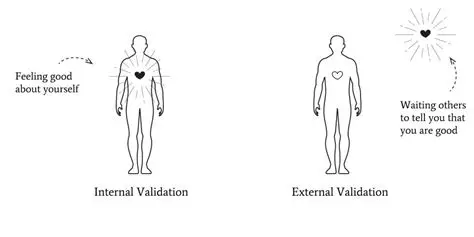
In a world where social media reigns supreme and corporate culture demands endless approval, many adults find themselves in a precarious position. They’ve traded their internal compass for a constant need for external validation, leaving them incapable of true self-reliance. This alarming trend has far-reaching implications, and understanding the root causes is crucial for regaining control over our own lives.
The architecture of internal validation, once a hallmark of adulthood, has collapsed under the weight of modern societal pressures. As we navigate the ever-evolving landscape of personal and professional relationships, the line between healthy interdependence and debilitating codependency has become increasingly blurred.
The consequences of this crisis extend far beyond the realm of individual well-being, impacting our ability to make autonomous decisions, pursue our passions, and ultimately shape the future of our communities. It’s time to confront the dangerous truth about modern adult independence and take action to reclaim our power.
The Corporate Trap: How Modern Workplaces Erode Self-Reliance
The corporate world, with its hierarchical structures and relentless pursuit of productivity, has become a breeding ground for validation-seeking behavior. Employees, driven by the need to impress their superiors and earn the approval of their peers, often sacrifice their own decision-making abilities in favor of following the herd.
This corporate culture, where consensus and conformity are prized above all else, can have a devastating impact on an individual’s sense of self-worth and autonomy. As workers become increasingly dependent on the opinions of others, they lose the confidence and critical thinking skills necessary to navigate complex problems on their own.
The rise of remote work and the blurring of work-life boundaries have further exacerbated this issue, as employees find themselves in a constant state of performance anxiety, seeking validation from a screen rather than from within.
Social Media’s Grip on Adult Minds: Rewiring the Brain for Perpetual Dependency
The ubiquity of social media platforms has played a significant role in the erosion of adult independence. These digital ecosystems, designed to capture our attention and keep us engaged, have effectively rewired our brains to crave external validation and approval.
The endless stream of likes, shares, and comments has become a form of social currency, fueling a constant need for affirmation and recognition. As adults become increasingly reliant on these digital interactions to feel valued, they lose the ability to self-validate and make decisions based on their own internal compass.
- ➡The Real Reason Why This 10-Minute Chocolate Cake Recipe Is Taking the Internet by Storm
- ➡Applying for a New Adult Passport in Australia: New Rules (2026 Update)
- ➡You Won’t Believe the Gigantic Harpy Eagle Chick Discovered in Brazil’s Untamed Pantanal Rainforest!
- ➡Why Everyone Is Suddenly Talking About This Veggie Trend
This reliance on external validation not only undermines personal growth and self-confidence but also makes adults more susceptible to the manipulation of social media algorithms, ultimately eroding their autonomy and decision-making capabilities.
Parental Influence and the Undermining of Adult Independence
The role of parents in shaping adult independence cannot be overstated. While the intent may be to nurture and protect their children, many well-meaning parents inadvertently sabotage their offspring’s ability to become self-reliant individuals.
From hovering over their children’s decisions to providing constant emotional and financial support, some parents unwittingly create a dependency that persists long after their children have reached adulthood. This dynamic can lead to a lack of self-confidence, an inability to take risks, and a reliance on external validation to make even the most basic life choices.
Overcoming this parental influence and reclaiming one’s autonomy can be a challenging and complex process, requiring a delicate balance of compassion, boundary-setting, and a commitment to personal growth.
- ➡Top Energy Experts Reveal How France’s Renewable Revolution Is Leaving Europe in the Dust
- ➡Japan’s Rovers vs China’s Rovers — The Surprise Winner May Shock You
- ➡Australia: New Fuel Allowance End Date as Social Welfare Scheme Extended
- ➡This Sole Survivor’s Hidden Note Revealed a Shocking Truth About the Crash
The Educational System’s Contribution to Validation Dependency
The educational system, which plays a crucial role in shaping the minds of future adults, has also contributed to the epidemic of validation dependency. The focus on standardized testing, grade-based achievements, and external accolades has instilled in students the belief that their worth is tied to the approval of authority figures.
As students progress through the educational system, they are often rewarded for conformity, compliance, and the ability to meet predetermined standards, rather than for developing their critical thinking skills, creativity, and self-reliance. This emphasis on external validation can hinder the development of an individual’s internal locus of control, making them more susceptible to the validation-seeking behaviors that plague modern adults.
Addressing the systemic biases within the educational system and fostering an environment that nurtures self-discovery and autonomous decision-making is crucial for breaking the cycle of validation dependency.
Recovery Attempts and the Strengthening of Dependency
In the face of this growing crisis, many adults make sincere efforts to regain their independence and self-reliance. However, these recovery attempts can sometimes inadvertently strengthen the very dependency they are trying to overcome.
Seeking external help, such as therapy or self-help programs, can become a new form of validation-seeking behavior, where individuals rely on the guidance and approval of professionals to make decisions, rather than cultivating their own internal decision-making abilities.
Similarly, the pursuit of “self-improvement” through social media challenges, productivity hacks, and personal branding can further reinforce the need for external validation, as individuals strive to present a polished, curated version of themselves to the world.
Breaking this cycle requires a deep understanding of the root causes of validation dependency and a willingness to engage in honest self-reflection, focusing on the development of genuine self-trust and self-acceptance.
The Future of Human Autonomy: Reclaiming Our Power
The erosion of adult self-reliance has far-reaching implications for the future of human autonomy. As individuals become increasingly dependent on external validation, their ability to navigate complex challenges, adapt to changing circumstances, and make independent decisions is compromised.
- ➡31 March 2026 Changes CONFIRMED! Pension & Aged Care Update Every Aussie Should See…
- ➡Trapped for 72 Hours: How an Unexpected AI Voice Became My Lifeline Amid the Manila Earthquake Rubble
- ➡$2400 Age Pension Centrelink Boost April? Payment Breakdown and Regular Benefits
- ➡The Shocking Truth Chefs Don’t Want You to Know About Roasted Garlic Pasta
This trend not only affects individual well-being but also has the potential to undermine the resilience and adaptability of entire communities, as adults struggle to take ownership of their lives and contribute to the greater good.
Reclaiming our power and restoring the architecture of internal validation is crucial for the future of humanity. By addressing the root causes of validation dependency and fostering a culture that values self-reliance, critical thinking, and personal responsibility, we can empower adults to become the architects of their own lives and shape a more autonomous, resilient, and fulfilling future.
| Key Factors Contributing to Validation Dependency | Potential Consequences of Validation Dependency |
|---|---|
| Corporate culture and the need for approval | Inability to make autonomous decisions |
| Social media’s rewiring of the adult brain | Loss of self-confidence and critical thinking skills |
| Parental influence and the creation of dependency | Difficulty in taking risks and pursuing personal passions |
| The educational system’s focus on external validation | Undermining of community resilience and adaptability |
“The greatest weapon against stress is our ability to choose one thought over another.” – William James, Psychologist
Also ReadWilliam James, Psychologist
As we navigate the complex landscape of modern adult life, it’s crucial to remember that the power to reclaim our autonomy lies within us. By cultivating self-awareness, fostering self-trust, and rejecting the allure of external validation, we can break the cycle of dependency and become the architects of our own lives.
“The only person you are destined to become is the person you decide to be.” – Ralph Waldo Emerson, Philosopher
Ralph Waldo Emerson, Philosopher
Also Read
- ➡She Gave Up Her 9-to-5 for a Life at Sea — What Happened Next Will Shock You
- ➡Boiled Eggs vs Scrambled Eggs: The Surprising Winner You’d Never Expect
- ➡She Grew Up Free-Range in the ’70s — What She Learned Will Make You Rethink Modern Parenting
- ➡After Losing Her Driving Licence, This Grandma Fought to Regain Her Independence
True self-reliance is not about isolation or independence from others, but rather the ability to make informed decisions, take responsibility for our actions, and contribute to the greater good. By embracing this mindset, we can create a future where adults are empowered, resilient, and capable of shaping the world around them.
“The greatest gift you can give yourself is the habit of making decisions.” – Brendon Burchard, Author and Motivational Speaker
Brendon Burchard, Author and Motivational Speaker
FAQs
What are the main drivers of validation dependency in modern adults?
The primary drivers of validation dependency include corporate culture, social media, parental influence, and the educational system’s focus on external validation rather than fostering self-reliance and critical thinking.
- ➡Centrelink Payment Dates Changing in April 2026 – Seniors Must Check…
- ➡You’ll Never Believe What Tiny Details Experts Use to Crush Elephant Observation Challenges
- ➡Ethiopia Just Built the Mega-Airport That Could Revolutionize Global Aviation
- ➡The Surprising Habit That Boosts Focus, Sleep, and Decision-Making
How does validation dependency impact an individual’s decision-making abilities?
Validation dependency can lead to a loss of self-confidence, an inability to make autonomous decisions, and a reliance on the opinions of others, undermining an individual’s ability to navigate complex challenges and pursue their own goals.
What are the long-term consequences of validation dependency on communities and society?
The erosion of adult self-reliance can undermine the resilience and adaptability of entire communities, as individuals struggle to take ownership of their lives and contribute to the greater good. This trend can have far-reaching implications for the future of human autonomy and societal well-being.
How can individuals break the cycle of validation dependency?
Breaking the cycle of validation dependency requires a multi-faceted approach, including cultivating self-awareness, fostering self-trust, rejecting the allure of external validation, and engaging in honest self-reflection to develop genuine self-acceptance and decision-making abilities.
What role can the educational system play in promoting self-reliance and adult independence?
The educational system can contribute to the development of self-reliance by shifting its focus from external validation and conformity to nurturing critical thinking, creativity, and autonomous decision-making skills in students. This shift can empower future adults to become the architects of their own lives.
How can corporations and employers foster a culture that supports adult independence?
Corporations and employers can play a crucial role in promoting adult independence by shifting away from a culture of constant approval and consensus-driven decision-making. Instead, they can encourage employees to take ownership of their work, make autonomous decisions, and develop their problem-solving abilities.
What are the potential benefits of reclaiming self-reliance and internal validation?
Reclaiming self-reliance and internal validation can lead to increased self-confidence, improved decision-making skills, the ability to take calculated risks, and a greater sense of personal fulfillment. This, in turn, can contribute to the resilience and adaptability of individuals, communities, and society as a whole.
How can parents support their adult children in developing self-reliance?
Parents can support their adult children’s self-reliance by setting healthy boundaries, encouraging independent decision-making, and providing emotional support without enabling dependency. This can help adult children develop the confidence and skills necessary to navigate life’s challenges on their own.